Camarillo has a car culture that is hard to miss. From the monthly Old Town Car Cruises to the dedicated car corral at Wings Over Camarillo, this city takes its vehicles seriously. With that passion comes a practical question: where do you store a vehicle you are not driving every day?
Whether you own a restored classic, a seasonal convertible, a motorcycle, or a daily driver you need to park off-site while deployed or relocating, vehicle storage in Camarillo can help solve space and parking challenges. This guide covers what to know, from how Camarillo's coastal-adjacent climate can affect vehicles to what to look for in a storage facility, plus a practical checklist to get your car ready before move-in day.
Camarillo sits far enough inland to feel removed from the ocean, but coastal-adjacent conditions can still matter. According to 2025 climate records from the Camarillo Weather Station, the city recorded a mean annual temperature of 62.5°F, a seasonal high of 98.5°F in October, and nearly 20 inches of annual rainfall, concentrated heavily in November, December, and February.
That combination of warm periods, marine layer conditions, and winter rain can make vehicle prep and storage planning important.
The Ventura County coastline can generate salt-laden air that travels inland and settles on exposed surfaces. Salt draws moisture from the surrounding atmosphere, which may contribute to oxidation and corrosion over time.
According to automotive experts, vehicles in coastal environments may begin showing signs of surface rust faster when salt residue is left untreated. The timing and severity depend on exposure, paint condition, undercarriage condition, cleaning habits, and whether the vehicle is parked outdoors or under cover.
California sunshine can also affect vehicles over time. UV exposure and heat may contribute to paint fading, clear coat wear, rubber seal degradation, and interior wear. Automotive repair guidance notes that coastal conditions can contribute to issues such as clear coat failure, paint fading, and cracked leather interiors, especially when vehicles are exposed for long periods.
Covered parking may help reduce some direct exposure compared with uncovered outdoor parking, but it should not be treated as a guarantee against UV damage, corrosion, weathering, pests, or other deterioration.
During wetter months, moisture intrusion can also become a concern. As detailing experts note, moisture and organic material can contribute to mold growth inside vehicles. Modern vehicle interiors include foam padding, fabric, carpets, and insulation, so cleaning and drying the vehicle before storage matters.
The takeaway: storage can reduce some exposure risks, but proper preparation, periodic inspections, and insurance review are still important.
The demand for vehicle storage in Camarillo comes from several groups, each with different needs but the same core concern: keeping a valuable asset in an appropriate place.
Camarillo's higher household income and local vehicle culture support a community of collectors and enthusiasts. Census Reporter lists Camarillo's median household income at $112,301, and classic car ownership can bring meaningful maintenance and storage costs. A collector-car demographic report notes that classic car collectors spend an average of $12,000 per year on maintenance, storage, and enhancement.
For this group, vehicle storage decisions should focus on parking type, security features, access hours, insurance requirements, and how much exposure the vehicle will have to sun, moisture, dust, and coastal air.
Many Camarillo planned communities, including areas such as Mission Oaks, Village at the Park, and Las Posas Estates, may have HOA rules that restrict visible parking of RVs, boats, trailers, inoperable vehicles, or extra vehicles. HOA rules vary widely by community and property.
California's Davis-Stirling Act gives HOAs authority to enforce certain community rules, but homeowners should review their own CC&Rs and ask their HOA directly before relying on any general guidance.
Camarillo also regulates oversized vehicle parking. Camarillo Municipal Code Section 11.20 addresses oversized vehicles on public roads. Because city rules can change and may depend on vehicle size, location, time of day, and permit status, vehicle owners should review current city guidance before parking an oversized vehicle on the street.
Off-site storage may help address some parking constraints, but it does not guarantee compliance with every HOA, city, DMV, insurance, or facility requirement.
Naval Base Ventura County encompasses Point Mugu and Port Hueneme and supports service members and families who may need storage during deployments, PCS moves, or temporary housing transitions.
Vehicle storage can be useful when timing is uncertain, but military families should confirm current rental terms, documentation requirements, access procedures, insurance needs, and vehicle eligibility before renting.
Not all storage is created equal. Before renting, confirm the details that matter for your vehicle.
SecureSpace Self Storage Camarillo offers outdoor parking, parking units, and covered parking. Availability, parking type, vehicle eligibility, dimensions, clearance, documentation requirements, and insurance requirements can vary.
Customers should not assume indoor or enclosed vehicle storage unless the facility confirms it directly. If you are storing a classic car, motorcycle, RV, trailer, boat, or inoperable vehicle, ask specifically whether that vehicle type is allowed and what documentation is required.
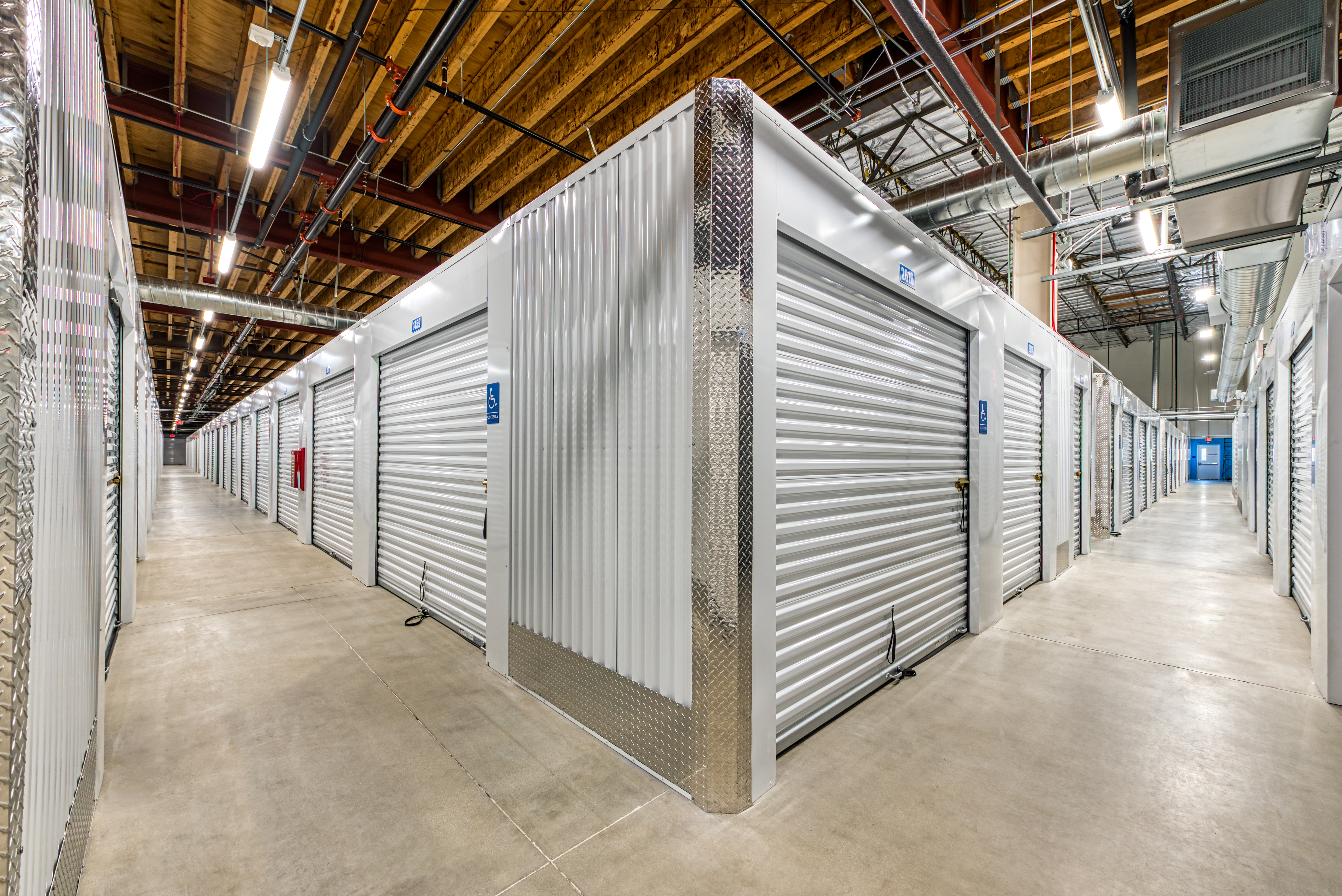
SecureSpace Self Storage Camarillo offers climate-controlled storage, which can help reduce exposure to temperature swings compared with non-climate-controlled spaces. However, climate-controlled storage should not be described as humidity control, year-round consistency, or indoor vehicle climate control unless those details are verified directly.
For vehicles, customers should confirm whether climate-controlled options are appropriate and available for their specific vehicle type. Electric vehicles, classic vehicles, project cars, and specialty vehicles may have manufacturer-specific storage requirements.
Power availability should not be assumed. If you plan to use a trickle charger or battery tender, ask the facility whether electrical outlets are available and whether chargers are permitted in the specific space you rent.
NHTSA vehicle storage guidelines recommend checking and maintaining battery charge every 30 to 60 days for long-term stored vehicles. If power is not available, follow your owner's manual or mechanic's guidance for disconnecting or maintaining the battery.
Security features should be confirmed rather than assumed. SecureSpace Self Storage Camarillo offers an access gate, digital video recording, logged access, and overnight surveillance.
Customers should avoid assuming unverified features such as 24/7 digital security, personalized electronic codes, continuous all-aisle video coverage, motion-activated alerts, professional on-site management, or guaranteed protection unless those details are confirmed directly with the facility.
Rodents can damage vehicle wiring, insulation, and stored belongings. Pest prevention is important, but specific pest-control programs are not confirmed for SecureSpace Self Storage Camarillo in the location source-of-truth.
Ask the facility about current maintenance practices, keep the vehicle clean, remove food, and inspect it periodically. Customers should not assume professional pest-control protocols unless the facility verifies them.
Choosing the right facility is only part of the equation. Proper preparation helps your vehicle return from storage in better condition. The following checklist draws from NHTSA's Long-Term Vehicle Storage Guidelines, common automotive practices, and owner's manual guidance.
Fill the tank and add fuel stabilizer if recommended for your vehicle and storage duration.
Change the oil if your owner's manual or mechanic recommends doing so before longer storage.
Top off appropriate fluids, including brake fluid, coolant, and windshield washer fluid.
Inflate tires according to manufacturer guidance and check pressure periodically.
Maintain the battery according to your owner's manual; use a permitted battery tender only if power is available.
Clean the interior thoroughly and make sure it is completely dry. Trapped moisture can encourage mold growth, according to Westchester Auto Detail's moisture guidance.
Avoid engaging the parking brake for long storage periods if your owner's manual advises against it; wheel chocks may be a better option in some situations.
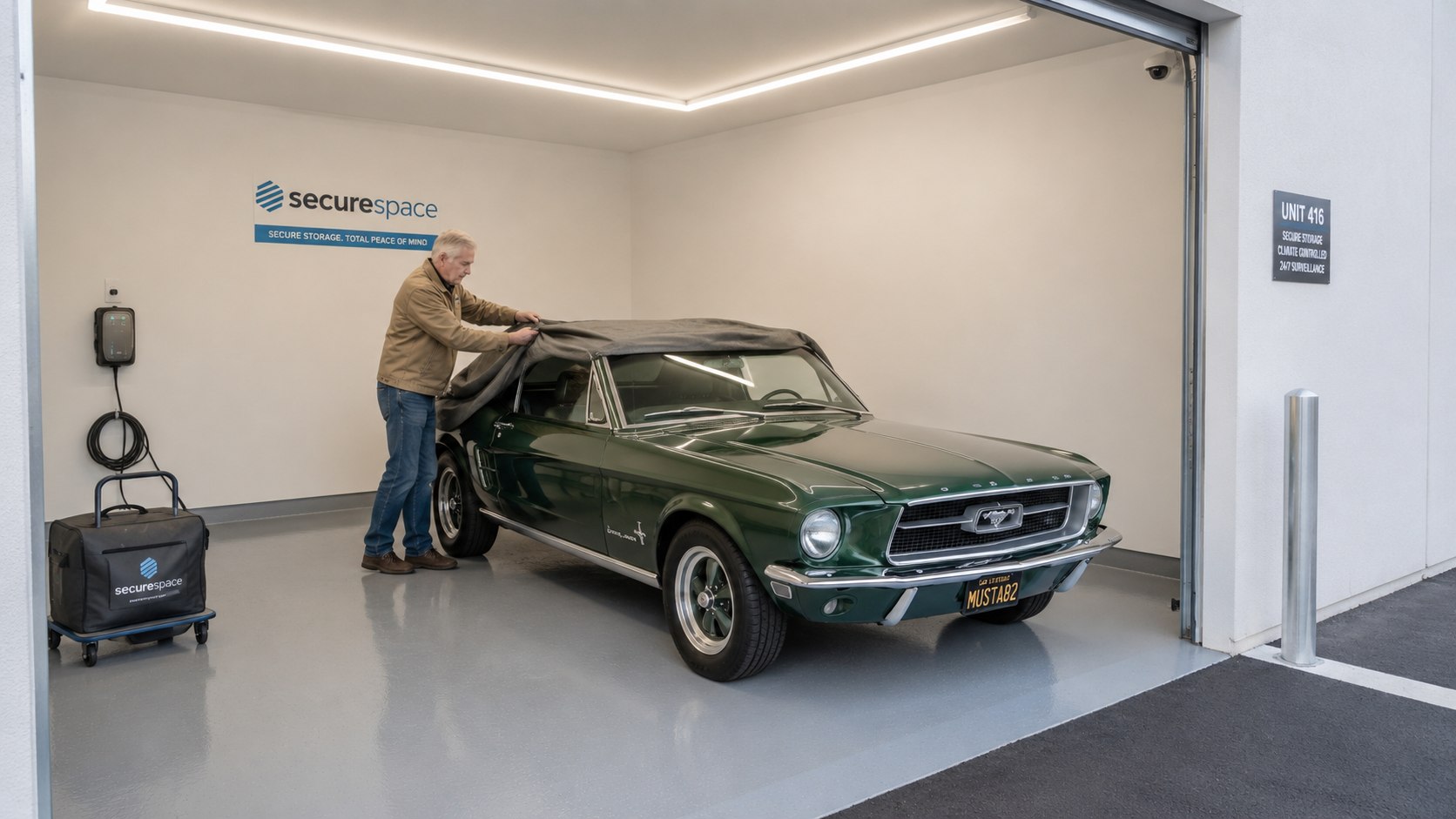
Use a breathable vehicle cover if appropriate for the storage environment.
Check on the vehicle periodically.
Inspect tire pressure, battery condition, leaks, pests, and signs of moisture.
Follow your owner's manual for starting, moving, or maintaining the vehicle during storage.
If you plan to run the engine, move the vehicle, or use a charger, confirm facility rules first.
Before storing a vehicle, talk to your insurer. Some owners may be able to adjust coverage while a vehicle is stored, but requirements vary by insurer, lender, registration status, and vehicle type.
A guide to comprehensive-only policy options explains that some vehicle owners reduce coverage while a car is not being driven. Insurify notes that pricing can vary by provider and situation. Do not cancel or reduce coverage without confirming how it affects theft, fire, weather damage, vandalism, lender requirements, DMV status, and future premiums.
Matching your vehicle to the right space avoids move-in problems. Use the examples below as general planning guidance only. Exact parking types, unit sizes, space dimensions, rules, pricing, and availability can vary.
When in doubt, measure carefully and ask the facility to confirm what space type fits your vehicle. Do not assume enclosed vehicle storage or drive-up unit access unless those options are specifically verified.
Climate-controlled storage may be worth considering for certain sensitive belongings or specialty vehicles, but customers should confirm whether climate-controlled options are appropriate and available for the specific vehicle type. SecureSpace Self Storage Camarillo offers climate-controlled storage, which can help reduce exposure to temperature swings compared with non-climate-controlled spaces. It should not be treated as humidity control or guaranteed protection.
Eligibility for unregistered, inoperable, or project vehicles depends on facility rules, documentation requirements, parking type, and whether the vehicle can be safely moved. Confirm directly with the facility before bringing a vehicle to the property.
It is strongly recommended that you speak with your insurer before storage begins. Depending on your policy, lender, and registration status, you may need to maintain coverage even if the vehicle is not being driven.
Check-ins depend on storage duration and vehicle type. A periodic inspection can help you catch battery, tire, leak, pest, or moisture issues early. Follow your owner's manual, mechanic guidance, insurer requirements, and facility rules.
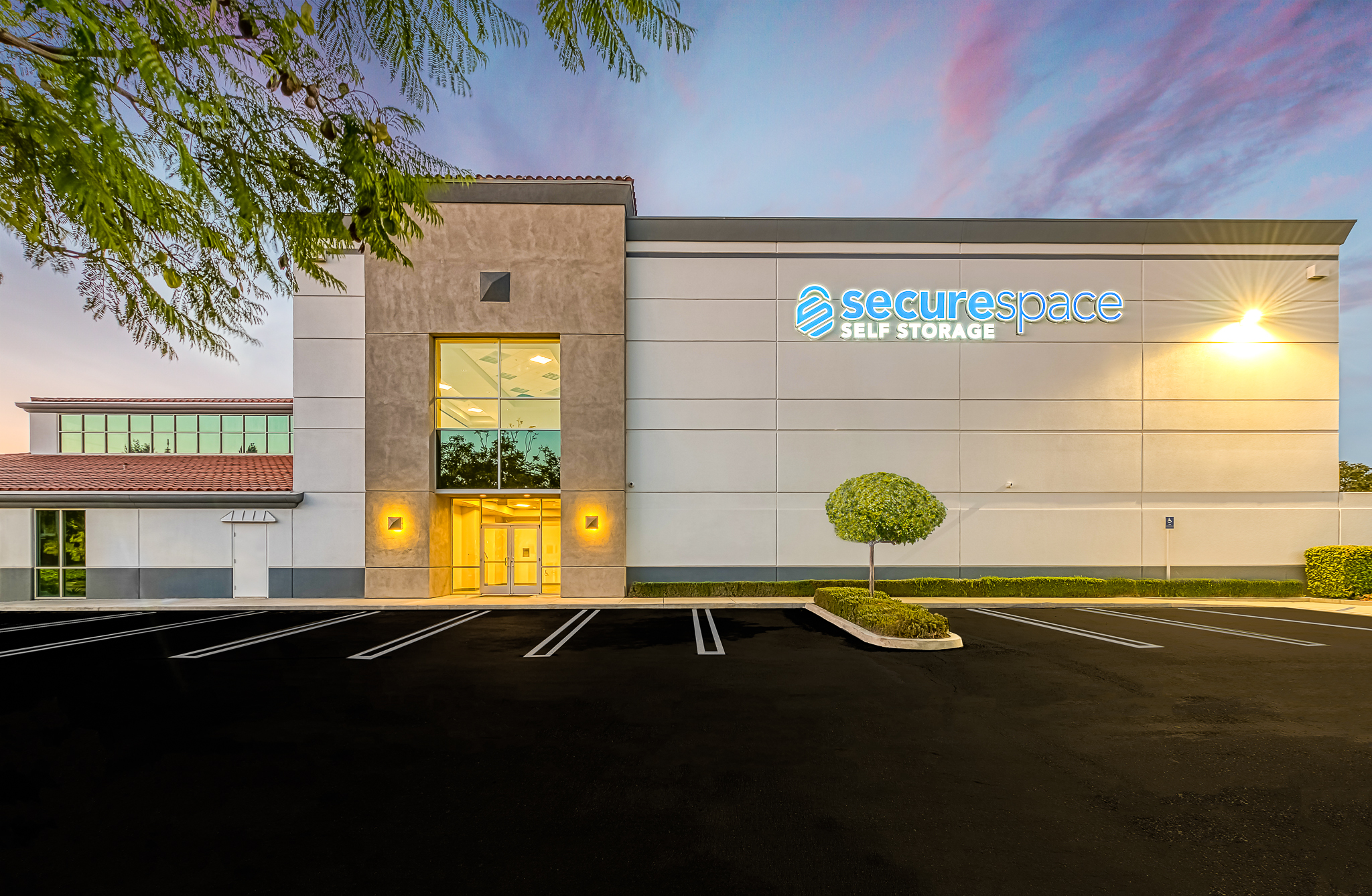
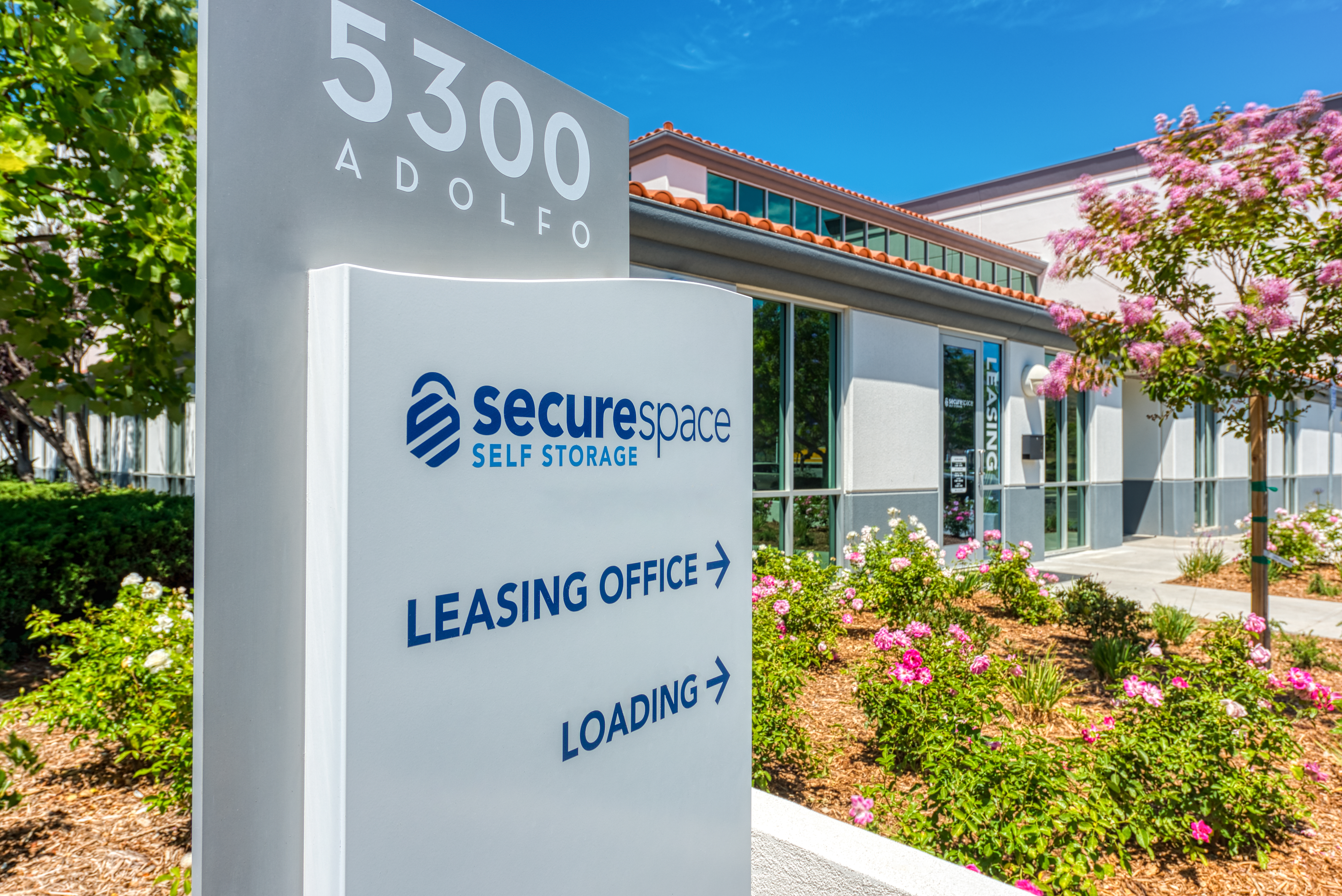
SecureSpace Self Storage at 5300 Adolfo Road, Camarillo offers outdoor parking, parking units, covered parking, online payments, touchless move-in, daily gate access from 6:00 AM to 10:00 PM, semi-truck accessibility, and confirmed security features including an access gate, digital video recording, logged access, and overnight surveillance.
The facility also offers climate-controlled storage for eligible storage needs, but indoor vehicle storage units, drive-up access, electrical outlets, professional on-site management, and 24/7 digital security are not confirmed in the location source-of-truth.
Customers should confirm current vehicle eligibility, parking availability, dimensions, clearance, documentation requirements, insurance requirements, rental terms, pricing, and access procedures before renting.
Everything you need to store your belongings securely, on your schedule.
Visit us online