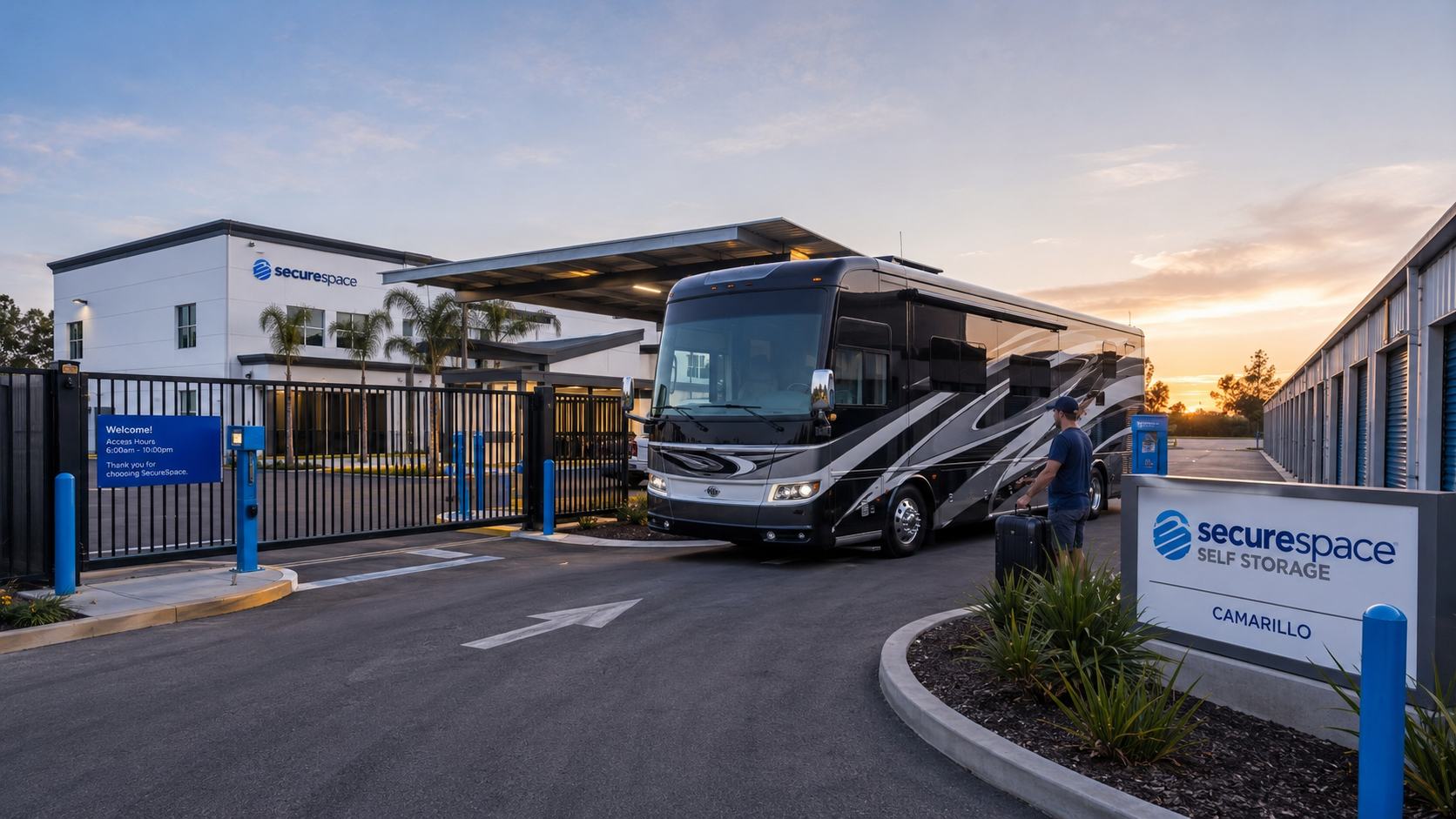
Owning an RV in Camarillo can make weekend travel feel especially accessible. The Pacific Coast Highway, Point Mugu State Park, and the US-101 corridor all give local residents options for coastal drives and regional getaways. But once the trip is over, a practical question appears: where do you keep the RV, trailer, boat, or oversized vehicle when it is not in use?
For many Camarillo residents, the driveway or street may not be a reliable long-term solution. Local parking rules, HOA restrictions, vehicle registration requirements, and coastal-adjacent conditions can all affect how you store a recreational vehicle. This guide explains what to know about RV and vehicle storage in Camarillo, from local parking laws to basic maintenance considerations and what to confirm before renting parking space.
It is a common question for new RV owners: "Can't I just park it in my driveway?" In Camarillo, the answer depends on city rules, HOA requirements, lot configuration, and the size of your vehicle.
In early 2024, the City of Camarillo significantly expanded its restrictions on oversized vehicle parking, amending local rules related to oversized vehicles. The city has also explained that the regulation is intended to address road-safety concerns, including visibility issues for motorists, cyclists, and pedestrians near driveways and intersections.
According to the city's announcement, enforcement began with a 30-day educational warning period. Because municipal rules can change and may depend on location, vehicle size, time of day, and permit status, RV owners should review current City of Camarillo oversized vehicle parking rules before relying on street parking.
Off-site parking may help address some local parking concerns, but it does not guarantee compliance with every city, HOA, DMV, insurance, or vehicle-specific requirement.
Even if your driveway can physically fit an RV, trailer, or boat, your HOA may have separate rules. Many planned communities regulate visible parking of recreational vehicles, trailers, boats, and oversized vehicles.
Modern RVs can be large, and some modern RVs routinely exceed 10 feet in height and 30 to 40 feet in length. Depending on your lot, fencing, driveway layout, and HOA documents, storing one out of sight may be difficult.
Under the California Davis-Stirling Act, HOAs may have authority to enforce community parking rules. However, HOA rules vary widely by community. Review your CC&Rs, ask your HOA directly, and confirm any fine schedule or approval process before storing an RV, trailer, or boat at home.
If your RV or vehicle is going into long-term storage, it may be worth reviewing California DMV rules before you park it indefinitely.
California offers a Planned Nonoperation (PNO) filing for vehicles that will not be driven, towed, or parked on public roads for an entire registration year. A PNO filing may reduce registration costs, but the vehicle must meet DMV requirements and remain off public roads for the applicable period.
If you are considering PNO status, review the DMV's current requirements, deadlines, penalties, and eligibility rules. Storage facilities can provide information about their parking options, but DMV compliance is the vehicle owner's responsibility.
Camarillo sits on the Oxnard Plain, just inland from the Pacific. Coastal-adjacent conditions, marine layer moisture, and sun exposure can all affect how you maintain an RV, trailer, or boat over time.
Salt air can contribute to corrosion. A general coastal-maintenance resource notes that salt air is highly corrosive, and RV owners in coastal areas often take extra steps to reduce exposure, wash surfaces, and inspect metal components.
For an RV or trailer stored outdoors, moisture and salt exposure may affect metal hardware, rooftop components, slide-out mechanisms, seals, LP gas lines, and other exposed parts over time. The risk depends on distance from the coast, exposure, maintenance habits, vehicle materials, and storage type.
Covered parking may help reduce some direct exposure compared with uncovered outdoor parking, but it should not be treated as enclosed storage or a guarantee against corrosion, moisture, UV damage, or deterioration.
When marine layer conditions clear, sun exposure can also affect recreational vehicles. UV exposure may contribute to fading, tire aging, seal deterioration, and exterior wear over time. General vehicle-storage guidance notes that long outdoor exposure can contribute to issues such as dry-rotted tires, though actual wear depends on vehicle type, sun exposure, tire condition, maintenance, and storage duration.
Use manufacturer guidance for covers, tire care, seal inspections, roof inspections, and battery maintenance. If you are storing a vehicle for a longer period, build periodic check-ins into your plan.
Tires deserve special attention during long-term vehicle storage. Tire maintenance guidance recommends reducing prolonged stress on tires where possible and keeping them properly inflated. RV and vehicle owners should also consult their vehicle manual and tire manufacturer guidance for storage-specific recommendations.
Before parking long term, check tire pressure, inspect for cracks or uneven wear, and consider tire covers if the vehicle will be exposed to sun. If the vehicle can be moved safely and legally, occasional movement may help reduce flat-spotting and keep systems functioning.
Not all storage facilities are set up for the same types of vehicles. When evaluating parking or vehicle storage options, confirm the details that matter for your specific RV, boat, trailer, or vehicle.
Before renting, measure your vehicle's total length, width, and height, including tow bars, hitches, spare tires, bike racks, ladders, roof accessories, antennas, AC units, and any trailer tongue. Confirm whether the facility can accommodate your exact dimensions.
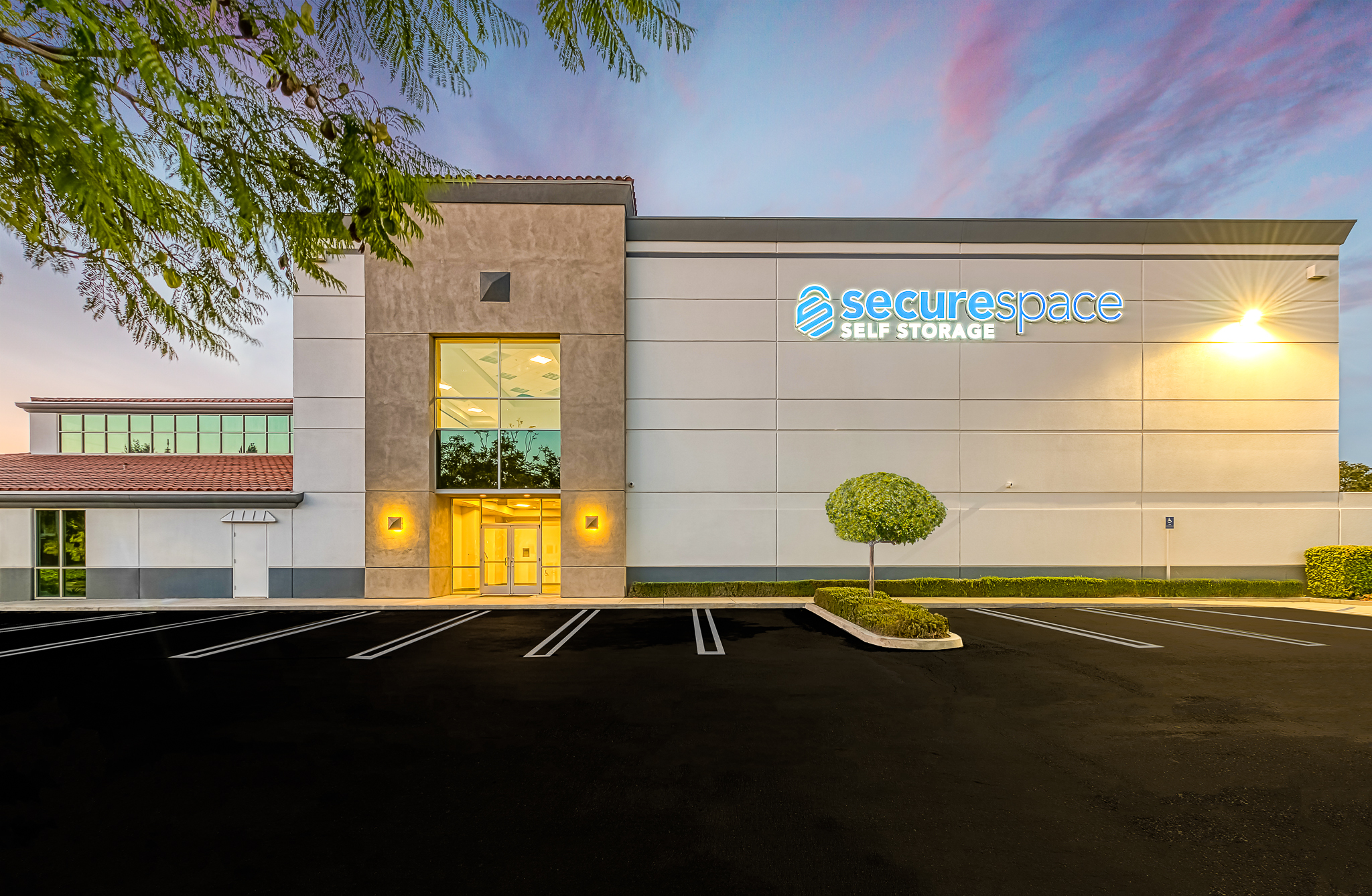
SecureSpace Self Storage Camarillo offers outdoor parking, parking units, and covered parking. Availability, eligible vehicle types, documentation requirements, insurance requirements, and space dimensions can vary, so customers should confirm details directly before renting.
A Class A motorhome, travel trailer, or fifth-wheel trailer may need significant turning space. SecureSpace Self Storage Camarillo confirms semi-truck accessibility, but wide drive aisles, extra-wide turning radiuses, and pull-through RV access are not separately confirmed.
Before arriving with a large vehicle, ask the facility about vehicle maneuvering, access route, gate clearance, turning space, and whether your vehicle type is permitted.
You may be leaving a high-value vehicle unattended for days, weeks, or months, so confirmed security features matter.
SecureSpace Self Storage Camarillo offers an access gate, digital video recording, logged access, and overnight surveillance.
Customers should avoid assuming unconfirmed features such as 24/7 HD video surveillance, computer-coded or electronic gate access, perimeter lighting, on-site management, individual alarms, or guaranteed protection unless those details are verified directly with the facility.
Given Camarillo's coastal-adjacent environment, covered parking may be worth considering for eligible vehicles. SecureSpace Self Storage Camarillo offers covered parking, but customers should confirm current availability, dimensions, exposure, clearance, and whether the space is appropriate for their specific RV, boat, trailer, or vehicle.
Covered parking should not be described as enclosed storage or guaranteed weather protection unless those features are confirmed.
RV travel rarely follows a perfect schedule. SecureSpace Self Storage Camarillo offers daily gate access from 6:00 AM to 10:00 PM. Customers should confirm current access procedures, account permissions, and any vehicle-specific policies before planning a trip.
Before committing, review current pricing, administrative fees, insurance or protection requirements, rate-change policies, billing terms, move-out notice requirements, and vehicle documentation needs. Do not assume a specific rate, cancellation policy, or price guarantee unless it appears in the current rental agreement.
For eligible active-duty military personnel and veterans living near Camarillo, the Point Mugu RV Park at NAVBASE Ventura County may be a relevant resource. Eligibility, availability, access, and rules should be confirmed directly with the base or program office.
On-base storage for long-term vehicle parking may also be available, but availability can vary. When on-base options are not available or do not fit a service member's needs, civilian commercial storage may be worth reviewing. Customers should compare eligibility, location, access, documentation, rental terms, and vehicle size requirements.
Camarillo regulates oversized vehicle parking, and the rules may depend on vehicle dimensions, location, permit status, and time of day. Review current city rules before relying on street parking. Off-site parking may help reduce parking concerns, but owners should still confirm city, HOA, DMV, insurance, and facility requirements.
If the vehicle will not be driven or parked on public roads for an entire registration year, you may be able to file for Planned Nonoperation (PNO) status with the California DMV. Review current DMV rules before deciding, because penalties and registration requirements can apply if the vehicle is operated or parked on public roads.
A monthly check-in can be a useful habit. Inspect tires, seals, battery condition, pests, moisture, and exterior wear. Follow your owner's manual and manufacturer guidance for running the engine, cycling systems, charging batteries, and maintaining tires during storage.
Measure the total vehicle length, width, and height, including tow bars, hitches, ladders, bike racks, spare tires, roof accessories, and trailer tongues. Larger Class A motorhomes and fifth-wheel trailers may require longer spaces, but the right fit depends on the specific vehicle and facility layout. Confirm space dimensions and eligibility before renting.
Between local parking rules, HOA restrictions, DMV requirements, and coastal-adjacent conditions, Camarillo RV and vehicle owners have several factors to consider. The right parking or storage option depends on your vehicle size, how often you use it, whether covered parking is available, and what facility requirements apply.
SecureSpace Self Storage Camarillo offers outdoor parking, parking units, covered parking, daily gate access from 6:00 AM to 10:00 PM, semi-truck accessibility, online payments, touchless move-in, and confirmed security features including an access gate, digital video recording, logged access, and overnight surveillance.
Customers should confirm RV, boat, trailer, and oversized-vehicle eligibility, space dimensions, documentation requirements, pricing, rental terms, and current availability before renting.
View vehicle storage options and reserve your space at SecureSpace Camarillo →
Everything you need to store your belongings securely, on your schedule.
Visit us online