Last updated Jul 24, 2026
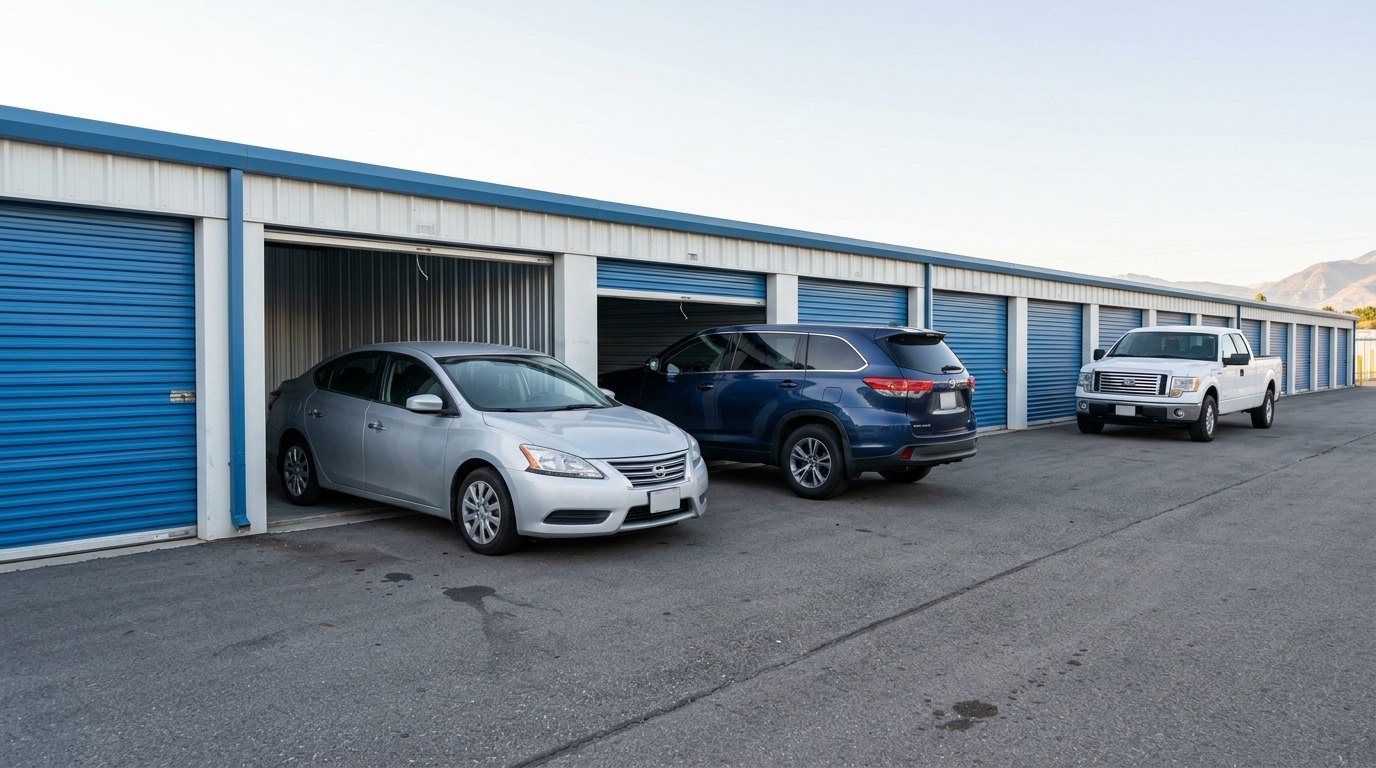
Some vehicles may fit in eligible drive-up storage units in Murray, UT, depending on the vehicle's size and the available unit. At SecureSpace Self Storage Murray, drive-up units are available, vehicles can be stored in drive-up units, and larger enclosed sizes include 10x20 and 10x25.
Murray winters can make vehicle parking more complicated. With about 75 inches of snow falling each year according to Livability, leaving a car parked outside can create seasonal hassles, especially if street parking, apartment parking, or HOA rules limit where a vehicle can sit.
This guide covers what to know about car storage in Murray, which unit sizes may work, how local parking rules can affect your plans, how to prepare your vehicle, and what to ask before move-in.
Car storage comes down to fit and access. A vehicle needs more than floor space; it also needs enough door clearance, mirror clearance, and turning room near the unit entrance. A compact car, small SUV, pickup truck, motorcycle, and RV all require different setups.
Start by measuring the vehicle's full length, width including mirrors, and height including racks or accessories. Then ask whether the available drive-up unit can accommodate those measurements. If enclosed storage is too tight, outdoor parking may be the more practical option.
SecureSpace Self Storage Murray also offers outdoor parking for vehicles, RVs, boats, or cars. That gives drivers another path when a vehicle is too large for an enclosed unit or when a parking-style space makes more sense.
Picking the right size saves money and frustration. You do not want to pay for more space than you need, but a tight fit can make parking difficult and limit access once the car is inside.
A 10x15 unit may work for motorcycles, ATVs, smaller equipment, or some compact vehicles. It is not the safest default for most cars, so measure carefully before planning around this size.
A 10x20 drive-up unit is often the better starting point for many cars, small SUVs, and similar vehicles. It gives more length than a 10x15 and is usually the first size to compare when looking at enclosed car storage.
A 10x25 unit may be useful for larger vehicles, trucks, or drivers who want more room around the vehicle. If the vehicle has a long bed, oversized mirrors, racks, or accessories, this size may be worth checking first.
Door clearance matters as much as floor space. Before move-in, compare the vehicle's measurements against the exact unit available.
Car storage can help when a driveway, garage, apartment lot, or street space is no longer enough. In Murray, that often comes down to winter parking, insurance questions, HOA rules, or simply needing more room at home.
Snow can make street parking difficult. Murray has snow-removal parking rules, and local restrictions may apply during winter weather. If a vehicle will sit outside for an extended period, check current city rules so you understand when street parking may be restricted.
Storage can be useful for a seasonal vehicle, second car, or rarely used vehicle during winter months.
Insurance rules can be complicated, especially if a vehicle is registered, plated, parked off public roads, or not being driven. Before changing coverage or plate status, check Utah DMV requirements and talk with your insurer.
PCRG Insurance discusses comp-only considerations for stored vehicles, but your situation may depend on registration status, lender requirements, insurer rules, and whether the vehicle will be driven.
Some HOA, apartment, or neighborhood parking rules may limit how long vehicles can sit in driveways, garages, shared spaces, or guest parking. Rules vary widely, and even homeowner discussions like this Reddit r/HOA discussion show how fact-specific these issues can be.
If parking rules are creating friction at home, storage may give you another option for a second vehicle, seasonal car, or recreational vehicle.
A little preparation can make vehicle storage easier, especially if the car will sit for weeks or months. For long-term storage, follow your owner's manual or mechanic's guidance.
Wash the exterior and clean out the interior before storing. Remove food, trash, and anything that could create odors or attract pests.
Top off necessary fluids and ask a mechanic whether fuel stabilizer is appropriate for your vehicle and storage timeline.
If the vehicle will sit for a while, ask whether you should disconnect the battery or use a battery maintainer. Do not assume the storage unit has power available.
Check tire pressure before storing and follow manufacturer guidance for longer storage periods.
For long-term storage, ask a mechanic whether to use the parking brake or wheel chocks based on your vehicle and storage conditions.
If storing indoors, use a breathable car cover. If using outdoor parking, choose a cover designed for outdoor conditions and make sure it is allowed by the facility.
Vehicle storage may require more documentation than storing boxes or furniture. Requirements can vary by facility, vehicle type, and rental terms.
Before move-in, ask whether you need a government-issued ID, proof of ownership, current registration, insurance information, vehicle details, or confirmation that the vehicle is operable.
Having these details ready can make the rental process smoother, but confirm current requirements before arriving with the vehicle.
The right choice depends on whether the vehicle fits indoors, how often you need access, and whether a parking space would be easier.
Indoor vehicle storage may work for cars that fit inside an eligible drive-up unit. This option can be useful for a seasonal car, second vehicle, or smaller vehicle that does not need daily access.
Climate-controlled storage can help reduce exposure to temperature swings compared with non-climate-controlled spaces, but it is not a guarantee against damage, corrosion, or wear.
Outdoor parking is usually the better fit for larger vehicles, RVs, boats, cars that need easier access, or vehicles that do not fit comfortably in a 10x20 or 10x25 drive-up unit.
For many Murray drivers, the decision is simple: if the vehicle fits comfortably indoors, a drive-up unit may work; if not, outdoor parking is likely the cleaner option.
A 10x20 drive-up unit is often the safer starting point for many cars, while a 10x25 may be better for larger vehicles or extra space around the car. Measure length, width, height, mirrors, and door-opening space before choosing.
Insurance and registration requirements depend on your situation. Before changing coverage, removing plates, or switching to a different type of policy, check Utah DMV rules and talk with your insurer.
It may help if street parking, snow-removal rules, apartment parking, or HOA restrictions are creating problems. Check current city rules and any HOA or lease requirements before deciding where to keep a vehicle.
SecureSpace Self Storage Murray offers month-to-month leases, so storage can work for shorter or longer timelines. Ask about any vehicle-specific requirements before move-in.
Yes. Clean the vehicle, check fluids, review battery care, inflate the tires, and follow manufacturer or mechanic guidance for longer storage periods.
Storing a vehicle in Murray can be practical when your garage is full, parking rules are tight, or you need seasonal space. Enclosed drive-up storage may work for vehicles that fit, while outdoor parking may be better for larger vehicles, RVs, boats, or cars.
Before renting, measure the vehicle, compare available unit or parking options, and ask what documentation is required.
Ready to compare options? Reserve your car storage unit today.
Everything you need to store your belongings securely, on your schedule.
Visit us online