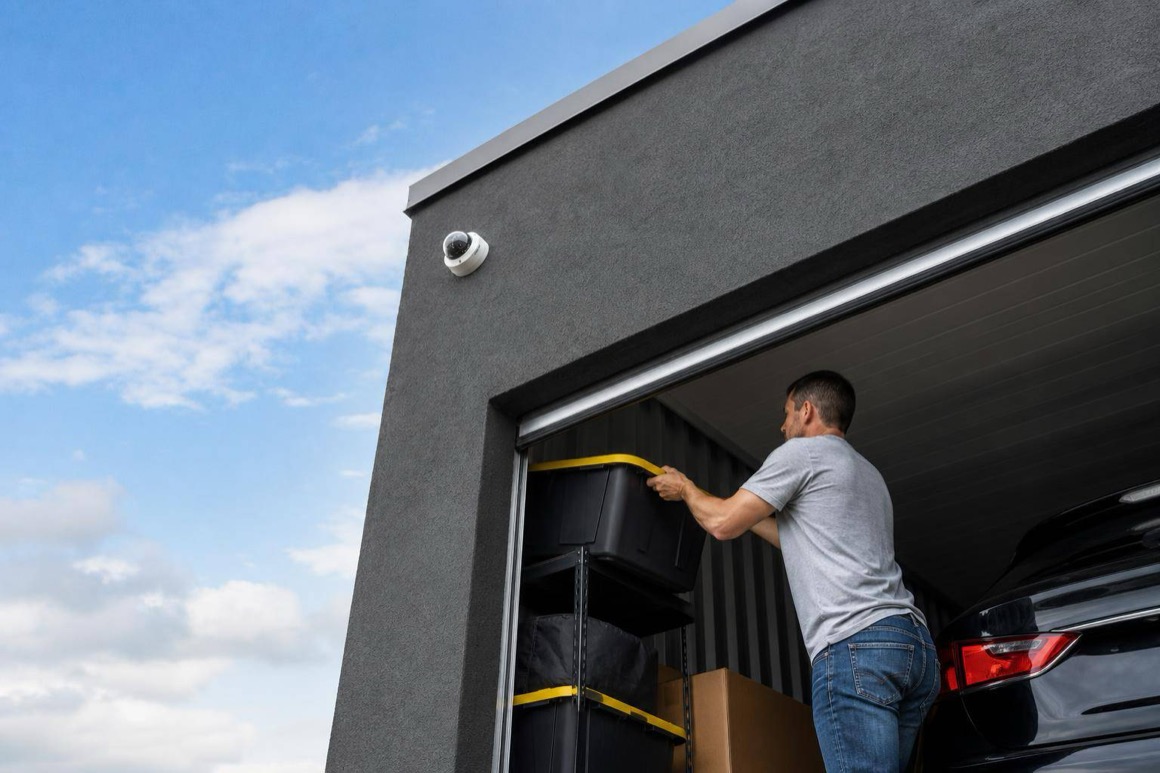
Storing a vehicle in Clearwater requires more than just finding an empty parking spot. Between neighborhood parking rules, limited residential space, and the Florida Gulf Coast climate, many residents and seasonal visitors look for off-site storage options for extra vehicles, seasonal cars, and recreational equipment.
Florida's Gulf Coast offers a beautiful lifestyle, but it presents unique challenges for vehicle owners. Sunshine, humidity, rain, and salt air can contribute to wear over time, especially when a vehicle sits unused for long periods. At the same time, local homeowners' associations, lease terms, and city or county parking rules may limit where extra cars, boats, trailers, or RVs can be parked at home.
Finding the right storage option can help you plan around these challenges. This guide covers what to know about vehicle storage in Pinellas County, how to prepare your vehicle for Florida's climate, and how to choose a storage option that fits your vehicle's size and storage needs.
If you need a place for a seasonal car, extra household vehicle, or eligible recreational equipment, start by checking size, fit, access, and facility requirements before reserving.
The Tampa Bay area features seasonal residents, coastal homeowners, commuters, and vehicle owners with limited parking space at home. Understanding local rules and the seasonal rhythm of the area can help you make a better storage decision.
Florida homeowners often deal with HOA, condo, lease, or deed restrictions that affect where vehicles can be parked. Some communities limit long-term parking, commercial vehicles, trailers, or oversized vehicles. Exact rules vary by community, property type, and vehicle dimensions.
Local codes may also affect where certain vehicles can be parked. Before leaving a vehicle at home for an extended period, review applicable city, county, HOA, and lease requirements. Off-site vehicle storage may help residents plan around those restrictions, but it does not guarantee compliance for every situation.
Clearwater sees many seasonal residents each year. When it comes time to travel back north, some residents need a plan for a vehicle they are not taking with them.
Leaving a car dormant in a driveway or apartment lot for several months may not be practical. Parking rules, lease terms, weather exposure, and security concerns can all play a role. A dedicated vehicle storage option can help keep eligible vehicles organized while you are away, subject to facility fit, availability, and requirements.
The physical environment in Clearwater can be tough on vehicles over time. When you park a car near the Gulf Coast, sun, humidity, salt air, and rain may all affect exterior and interior materials.
Clearwater's coastal air can carry salt particles, and Florida humidity can keep moisture on surfaces for extended periods. Over time, those conditions may contribute to corrosion on exposed metal parts, oxidation on exterior finishes, and wear on undercarriage components.
Humidity and heat can also affect the inside of your car. If a vehicle sits closed for long periods, interior fabrics, leather, plastics, and electronics may be more vulnerable to odors, fading, moisture issues, or deterioration. Cleaning, drying, ventilation planning, and manufacturer-recommended maintenance can help reduce these risks.
Pinellas County's coastal location means storm preparation matters. A storage unit or parking space should not be treated as a guarantee against hurricane, flood, wind, or storm-surge damage. However, planning ahead can help you avoid last-minute decisions when severe weather approaches.
If you are leaving a vehicle in storage during hurricane season, review local emergency guidance, understand facility access rules, and follow manufacturer recommendations for long-term storage.
A standard outdoor parking space may work for some short-term or durable vehicle-storage needs. However, if you are storing items inside the vehicle or considering an enclosed unit for a vehicle that fits, climate-controlled storage may be worth considering.
Climate-controlled storage can help reduce exposure to temperature swings compared with non-climate-controlled spaces. This can be useful for sensitive belongings stored alongside a vehicle, or for household items, documents, electronics, and textiles that may be affected by Florida's heat and humidity.
Climate-controlled storage should not be treated as a guarantee against rust, mold, mildew, battery issues, or vehicle wear. Vehicle owners should still follow manufacturer guidance for long-term storage, cleaning, battery maintenance, tire care, and fuel-system preparation.
Finding the right fit for your vehicle is critical. You need enough room for the vehicle and any safe clearance needed around it, without paying for space you do not need. Fit depends on the vehicle's full length, width, height, mirrors, racks, hitches, door clearance, unit type, and facility rules.
A 10x15 storage unit may work for certain compact vehicles or smaller stored items, depending on dimensions and unit type. Before reserving for any vehicle, measure carefully and confirm fit with the facility.
A 10x20 storage unit is comparable to a standard one-car garage. It may work for some cars or eligible vehicle-storage needs, depending on total dimensions, clearance, and facility requirements.
A 10x30 storage unit provides additional depth and may work for some larger eligible vehicles, trailers, or recreational equipment, depending on fit, door clearance, and facility rules. Customers should confirm all vehicle-storage requirements directly with the facility before reserving.
Outdoor parking can be a practical option for certain eligible vehicles or recreational equipment. SecureSpace Self Storage Clearwater offers outdoor parking and parking units. Covered parking is not offered at this location, so customers should plan accordingly.
Before storing a vehicle, take time to prepare it mechanically and cosmetically. Taking the time to prep your vehicle can help reduce avoidable issues while it sits unused. Always follow your vehicle manufacturer's guidance, especially for batteries, tires, fuel, fluids, and electronics.
Wash the car thoroughly to remove coastal salt, bird droppings, pollen, sand, and road grime. If appropriate for your vehicle, apply a protective wax or finish product. Make sure the vehicle is dry before placing it into enclosed storage.
For longer storage periods, follow your owner's manual for fuel level, oil, coolant, and brake-fluid guidance. Fuel stabilizers prevent the gasoline from breaking down over time and may be useful for certain long-term storage situations. Use products according to manufacturer instructions.
Vehicle batteries can lose charge while sitting, especially in hot weather. Follow your owner's manual for battery storage guidance. Depending on the vehicle and storage duration, this may involve driving the vehicle periodically, disconnecting the battery, or using a maintainer where allowed and appropriate. Electrical outlet availability should not be assumed.
When a car sits in one position for a long time, tire flat spotting can become a concern. Some vehicle owners use manufacturer-recommended inflation guidance, periodic movement, or storage supports to help prevent tire flat spotting during storage. Follow your tire and vehicle manufacturer's recommendations.
Clean the cabin before storage. Remove food wrappers, trash, and anything that could attract pests. Make sure the interior is dry, and avoid leaving damp towels, clothing, or gear inside the vehicle. For moisture-control products, follow manufacturer directions and avoid anything that could spill or damage carpets and upholstery.
When storing a vehicle, look for clear security and access features rather than broad promises. A good facility should explain how access is managed and what monitoring features are available.
SecureSpace Self Storage Clearwater offers digital video recording, an access gate, logged access, overnight surveillance, and touchless computer-controlled access. These features can support a more secure storage experience while helping manage access to the property.
Customers should also review stored-property coverage options, rental terms, and facility rules before move-in.
Climate-controlled storage is not strictly necessary for every vehicle-storage situation. However, climate-controlled storage can help reduce exposure to temperature swings compared with non-climate-controlled spaces. It may be worth considering for sensitive belongings stored with the vehicle or for storage situations where heat and humidity exposure are a concern.
Some facilities may offer parking or storage options for larger vehicles, trailers, or recreational equipment, but fit and availability vary. SecureSpace Self Storage Clearwater offers outdoor parking, parking units, drive-up units, and semi-truck accessibility. Customers should measure their vehicle or trailer and confirm current options, dimensions, and facility requirements before reserving.
Do not assume that electrical outlets are available in storage units or parking spaces. If battery maintenance is important, contact the facility directly before making plans and follow your vehicle manufacturer's guidance for long-term battery care.
Vehicle storage does not have to be complicated. For residents managing neighborhood parking restrictions, seasonal travel, home transitions, or extra vehicles, off-site storage can provide a practical option.
SecureSpace Self Storage Clearwater offers outdoor parking, parking units, drive-up units, vehicle storage options in drive-up units, climate-controlled storage, digital video recording, gated access, logged access, overnight surveillance, touchless computer-controlled access, online payments, ACH and credit card payment plans, and daily gate access from 6:00 AM to 10:00 PM.
Ready to explore current options? Visit SecureSpace Self Storage Clearwater to view rates and availability.
Everything you need to store your belongings securely, on your schedule.
Visit us online