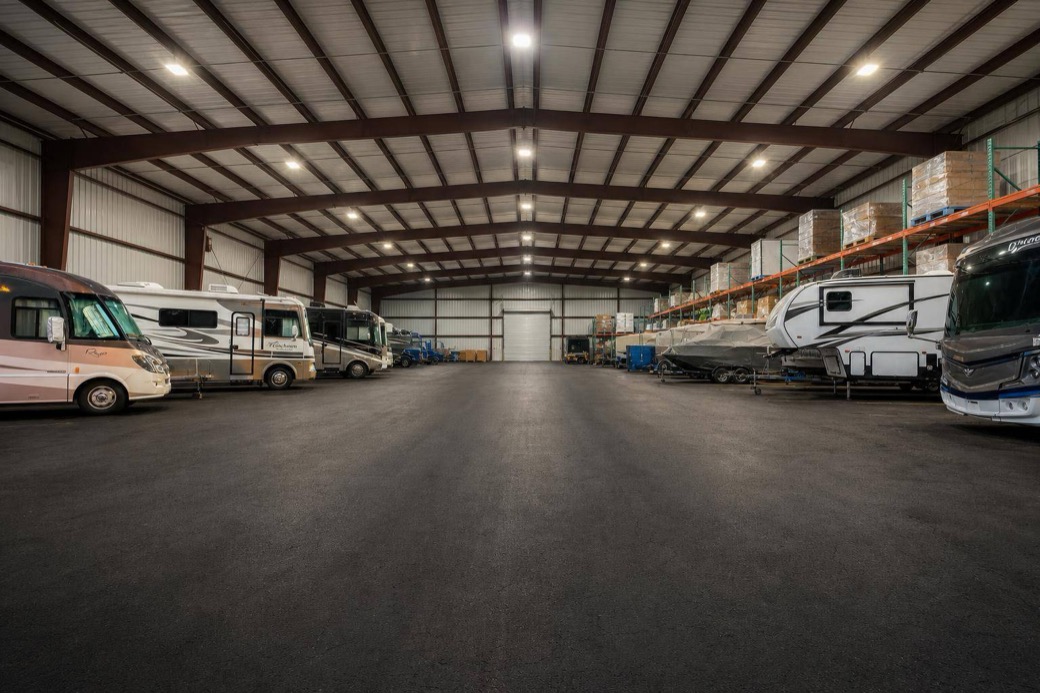
Finding the right place to park an extra vehicle can quickly become a headache. You might be downsizing your home, leaving Florida for a few months, or trying to find space for an extra household vehicle. Leaving a vehicle parked in a standard driveway may expose it to sun, rain, humidity, salt air, and neighborhood parking concerns.
Indoor vehicle storage can be a practical option for eligible cars, trucks, motorcycles, or recreational equipment that fit available rented spaces. By moving a vehicle into an enclosed unit when permitted, you can free up space in your home garage and reduce exposure compared with outdoor parking.
This guide covers what to know about indoor vehicle storage, how to prepare a vehicle for longer parking, and what features to review before choosing a facility. Before reserving, always confirm vehicle dimensions, unit type, door clearance, and facility requirements.
Parking a vehicle in an enclosed unit can offer advantages over leaving it outdoors, depending on the vehicle, storage duration, and available unit type. Here are a few reasons vehicle owners may consider indoor storage.
Florida's Gulf Coast climate can be tough on vehicles over time. If you live near the coast, salt air may contribute to oxidation and rust, while sun, rain, wind, and heat can affect exterior finishes, tires, rubber seals, and interiors. Chesapeake Automotive Storage and Detailing notes that indoor spaces can help reduce exposure to weather compared with outdoor parking.
Climate-controlled storage can also help reduce exposure to temperature swings compared with non-climate-controlled spaces. However, climate control should not be treated as a guarantee against rust, mold, battery issues, or vehicle wear. Vehicle owners should still follow manufacturer guidance for long-term storage, cleaning, tire care, battery maintenance, and fuel-system preparation.
Many residential neighborhoods, condos, and apartment communities have rules about what can be parked in driveways, parking lots, or common areas. Some communities may restrict trailers, recreational vehicles, project vehicles, commercial vehicles, or long-term parking.
Renting storage may help you plan around HOA, lease, or neighborhood parking rules, but it does not guarantee compliance for every situation. Always review your city, county, HOA, condo, and lease requirements before deciding where to park a vehicle.
When a vehicle sits unused for weeks or months, access and security features matter. Look for facilities that describe their access-control and monitoring features clearly.
SecureSpace Self Storage Clearwater offers digital video recording, an access gate, logged access, overnight surveillance, and touchless computer-controlled access. These features can support a more secure storage experience while helping manage access to the property.
Preparation can help reduce avoidable issues while a vehicle sits unused. Husky Liners recommends taking several steps before placing a car into storage. Always follow your vehicle manufacturer's guidance, especially for fuel, fluids, tires, electronics, batteries, and long-term storage.
Give your car a thorough wash before storing it. This helps remove salt, bird droppings, pollen, road grime, and other contaminants that may affect the finish over time. Vacuum the interior and remove food wrappers, trash, or scented items that could attract pests.
Make sure the vehicle is dry before placing it into an enclosed unit.
For longer storage periods, your owner's manual may recommend filling the fuel tank and using a fuel stabilizer. Modern gasoline can degrade over time, and stabilizer may help slow that process when used correctly. Follow product instructions and vehicle manufacturer guidance before adding anything to the fuel system.
If service is due soon, consider completing it before storage. Used motor oil can contain contaminants, and low fluid levels can create problems when a vehicle sits for an extended period.
Check engine oil, coolant, brake fluid, windshield washer fluid, and other fluids according to your vehicle's manual.
A car battery naturally loses charge while it sits. Electrical access in storage units should not be assumed. If battery maintenance is important, confirm options with the facility before making plans.
Depending on your vehicle and storage duration, your manufacturer may recommend disconnecting the battery, driving the vehicle periodically, or using a battery maintainer in an approved location.
Remove anything that could attract pests, including food, wrappers, and scented items. Some vehicle owners use breathable covers or moisture-control products during storage, but products should always be used according to manufacturer instructions.
Avoid placing anything inside the vehicle that could spill, trap moisture, or damage the interior.
For some vehicles, leaving the parking brake engaged for an extended period may create issues. Follow your vehicle manufacturer's guidance. Wheel chocks or other storage methods may be appropriate in some situations, depending on the vehicle and storage location.
The length of time your car sits in storage changes what kind of preparation may be useful. The experts at Fort Worth Car Storage recommend adjusting your approach based on your storage timeline.
If you are traveling for a month or handling a short-term relocation, basic preparation may be enough.
Wash and dry the exterior.
Vacuum the interior.
Remove food, trash, and scented items.
Top off the fuel tank if recommended by your owner's manual.
Check tire pressure.
Turn off accessories and unplug chargers.
Confirm your storage unit or parking space is appropriate for the vehicle.
Three months may require more preparation.
Complete the 30-day checklist.
Consider fuel stabilizer if recommended by your owner's manual.
Review battery-storage guidance for your vehicle.
Check tire pressure and flat-spot prevention recommendations.
Use moisture-control products only as directed.
Confirm facility access rules before you leave town.
Longer storage calls for more careful planning.
Complete the 30-day and 90-day checklist steps.
Complete any scheduled maintenance before storage.
Follow manufacturer guidance for tires, battery, fuel, and fluids.
Use a breathable car cover if appropriate.
Keep a record of what was done before storage.
Review insurance or stored-property coverage options.
No storage option should be treated as a guarantee against severe storms, flooding, wind, or storm surge. Indoor storage can reduce exposure compared with outdoor parking, but customers should follow local emergency guidance and understand facility rules during hurricane season.
Climate-controlled storage is not necessary for every vehicle-storage situation. It can help reduce exposure to temperature swings compared with non-climate-controlled spaces, which may be useful if you are storing sensitive belongings with the vehicle or if heat and humidity are major concerns.
Vehicle owners should still follow manufacturer guidance for long-term storage.
Prices vary based on location, unit size, unit type, climate-controlled options, access features, availability, and current promotions. Check current rates directly before reserving.
Talk with your insurance provider before changing coverage. Some owners maintain comprehensive coverage while a vehicle is stored because it may help address certain non-driving risks. Your insurer can explain what coverage applies to stored vehicles.
SecureSpace Self Storage Clearwater offers drive-up units, parking units, outdoor parking, and vehicle storage options in drive-up units. Vehicle storage depends on fit, unit type, availability, door clearance, and facility requirements. Measure your vehicle carefully and contact the facility before reserving.
Renting an indoor vehicle storage unit can be a practical way to manage an extra vehicle, seasonal vehicle, motorcycle, or eligible recreational equipment. By moving a vehicle out of your driveway or home garage, you can create more usable space while reducing exposure compared with some outdoor parking situations.
SecureSpace Self Storage Clearwater offers drive-up units, parking units, outdoor parking, vehicle storage options in drive-up units, climate-controlled storage, digital video recording, gated access, logged access, overnight surveillance, touchless computer-controlled access, online payments, ACH and credit card payment plans, month-to-month leases, carts and dollies, and daily gate access from 6:00 AM to 10:00 PM.
Ready to explore vehicle storage options? View current availability and rates online at SecureSpace Self Storage Clearwater.
Everything you need to store your belongings securely, on your schedule.
Visit us online