Last updated Jul 31, 2026
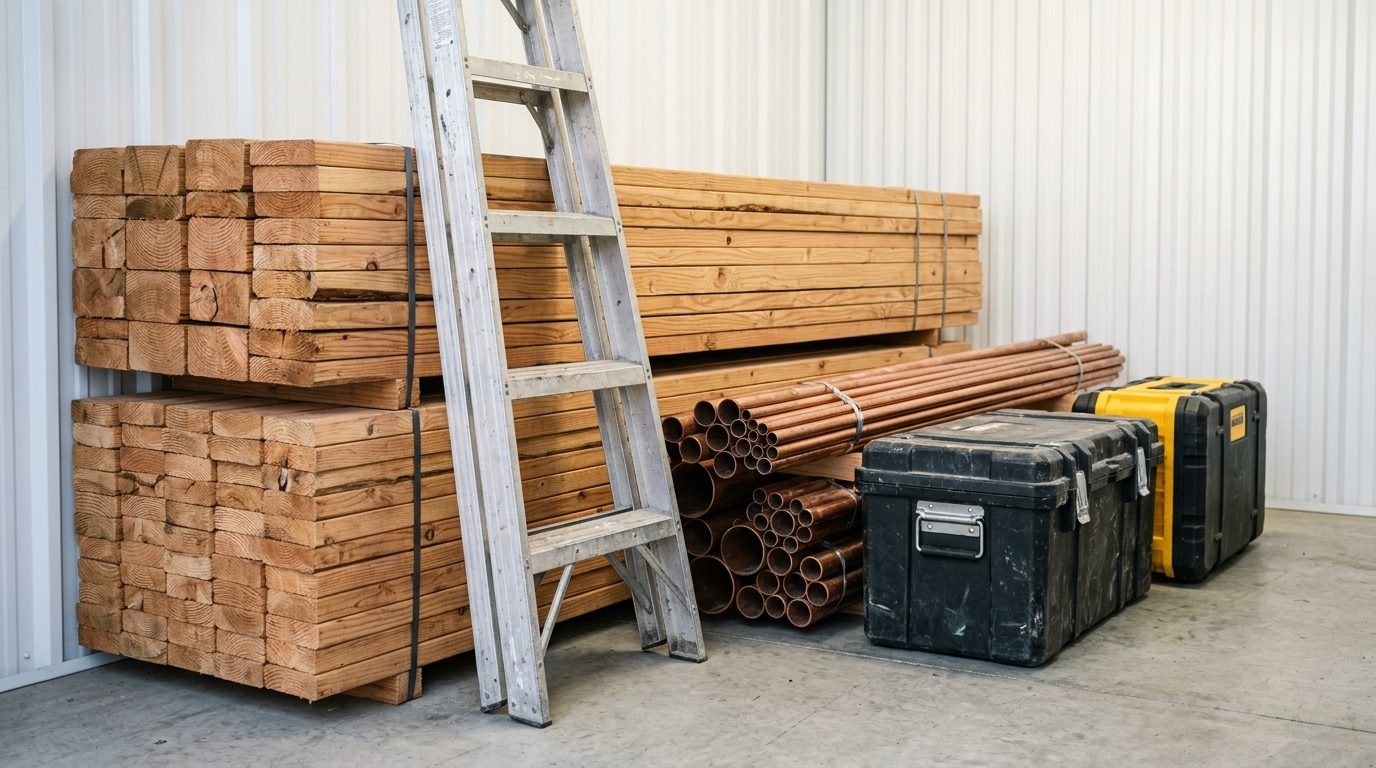
Everett has a substantial industrial base, including Boeing's largest manufacturing facility, the Port of Everett, and ongoing public infrastructure work. For contractors supporting these industries-whether you're running a civil crew, servicing maritime equipment, or installing systems in a healthcare facility-one question frequently arises: where should you store your tools, supplies, and equipment between projects?
Commercial warehouse space in Snohomish County can be expensive and may require more square footage or a longer commitment than a small trade business needs. Job sites may also be unsuitable for storing valuable tools and materials over extended periods.
Self-storage can provide a more flexible alternative for contractors who primarily need space for permitted tools, materials, and inventory. This guide explains what Everett contractors should consider when choosing storage, from unit access and temperature-sensitive materials to rental terms and location.
Before looking at storage options, it helps to understand why leasing a traditional warehouse may be impractical for smaller contractors operating in Snohomish County.
Current commercial real estate listings in Everett show that rates, available square footage, and lease terms vary widely. Many properties provide substantially more space than an independent electrical contractor, landscaping crew, or small fabrication business needs.
Taking on excess space can strain cash flow and leave a business paying for capacity it may only use during its busiest season.
Self-storage can support an approach sometimes called micro-warehousing: using rented storage space for tools, materials, and inventory without committing to a traditional warehouse. Month-to-month rentals also give contractors more flexibility as project schedules and storage needs change.
Not every storage setup is suitable for commercial materials and equipment. Contractors should consider how often they need access, what they plan to store, and how items will be moved into the unit.
Contractors moving boxed supplies, hand tools, or permitted equipment may benefit from drive-up units that reduce the distance between a vehicle and the storage space.
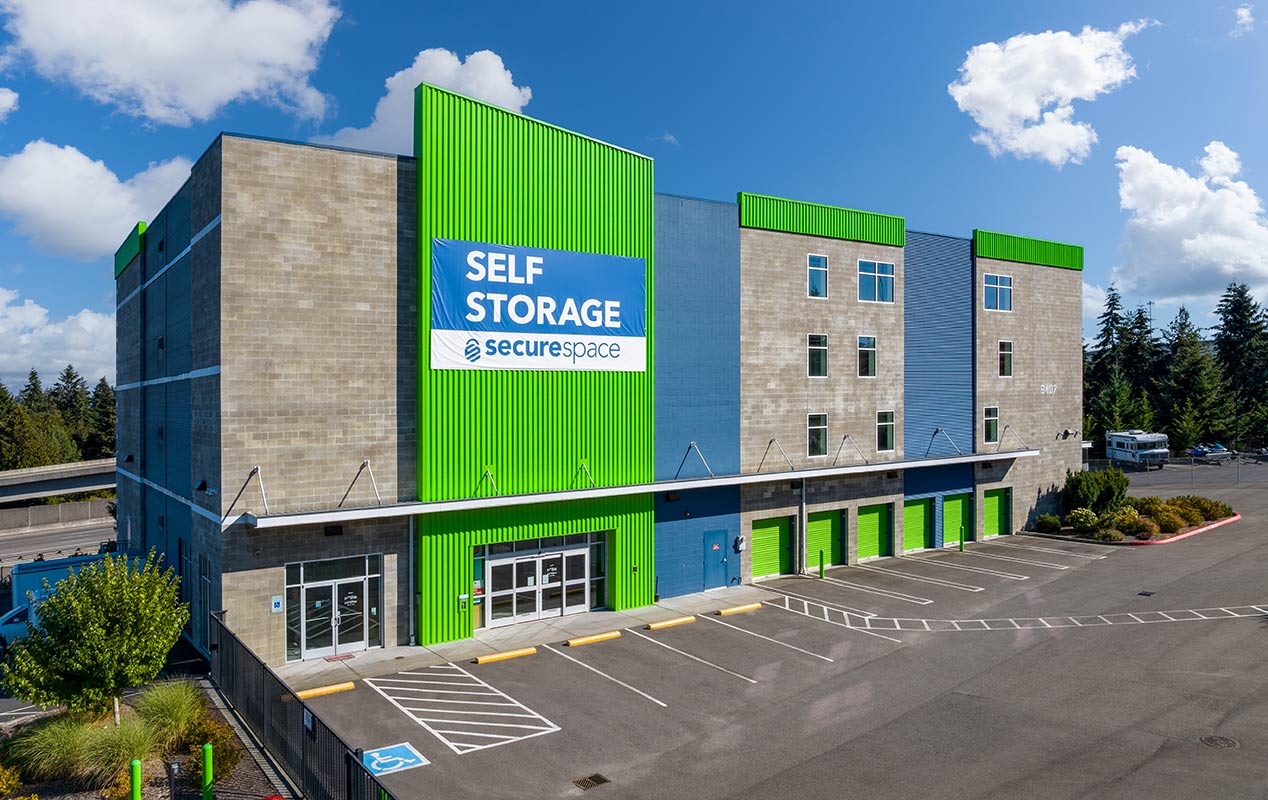
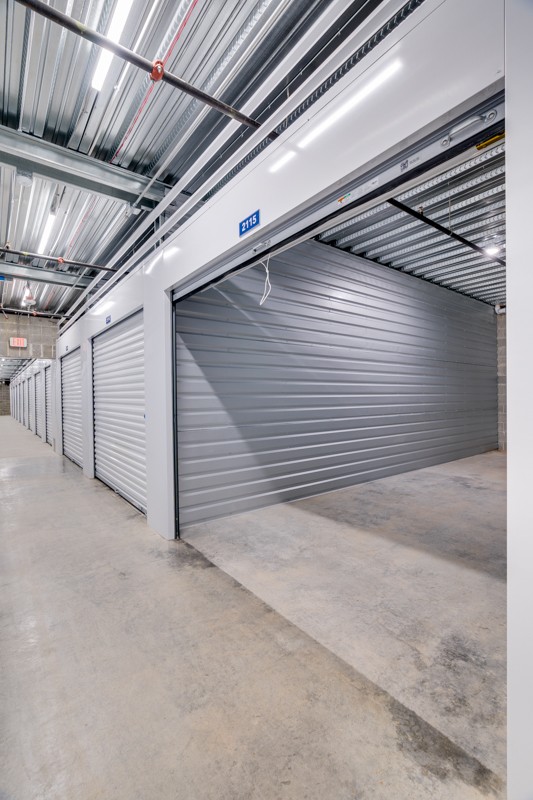
For indoor units, the Everett facility provides elevator access along with carts and dollies to help move items to upper-floor units. Contractors bringing larger vehicles or unusually bulky items should confirm maneuvering space and access procedures before arriving.
Everett's seasonal temperature changes can affect some stored tools, electronics, records, and compatible materials. Climate-controlled and heated storage can help reduce exposure to temperature swings and cold conditions compared with standard storage spaces.
Before storing specialized equipment or materials, review the manufacturer's storage instructions and make sure the items are permitted under the rental agreement. Items should also be clean and dry before they enter the unit.
Outdoor parking is available for eligible motor vehicles, cars, boats, and RVs. Space dimensions, vehicle eligibility, documentation requirements, and availability can vary.
Contractors planning to park a work vehicle should confirm that it qualifies and fits the currently available space. Indoor vehicle storage is not available at this facility.
Construction tools and equipment can be expensive to replace, so contractors should review the specific security features available at a storage property rather than relying on broad safety promises.
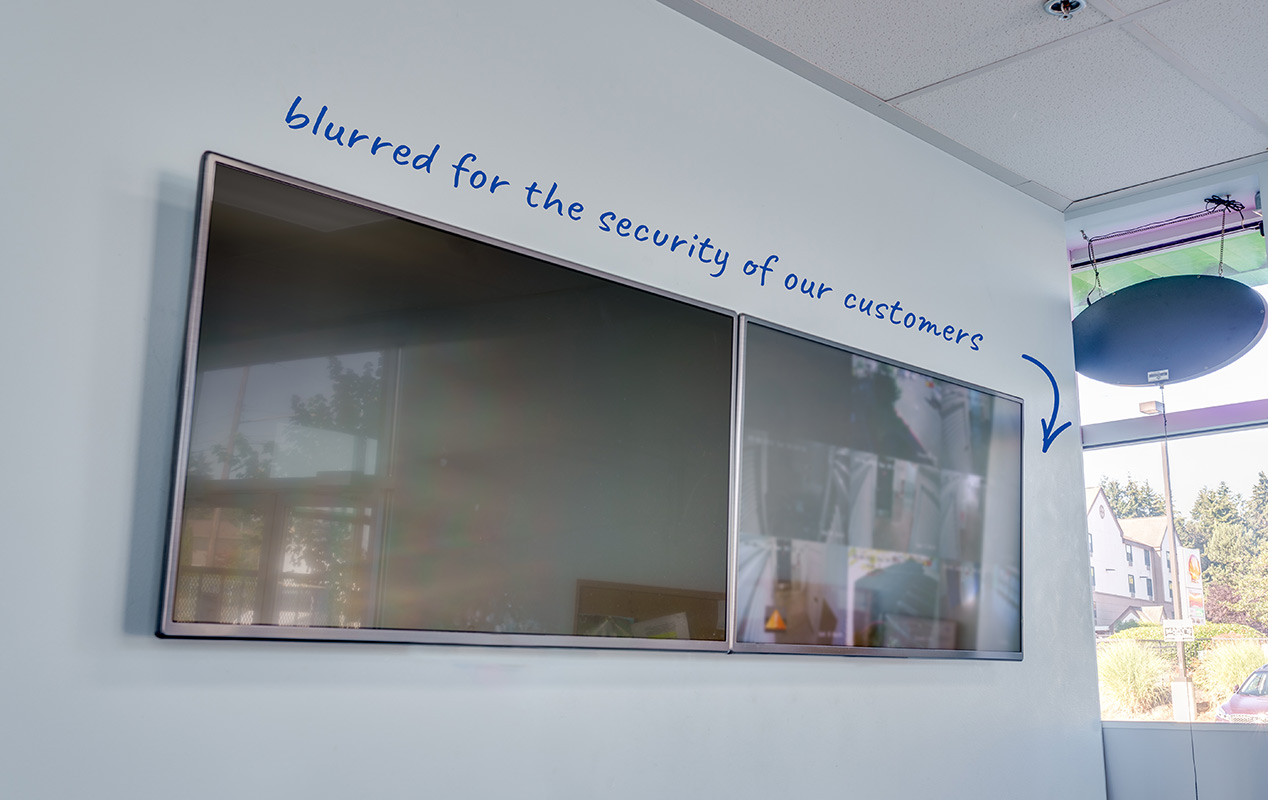
The Everett location includes an access gate, digital video recording, logged access, overnight surveillance, and AI-enabled video monitoring. These features support the facility's access and monitoring procedures without guaranteeing protection against every incident.
Some storage providers may also offer separate unit-level alert products, such as StorageDefender Motion Guard technology. These products are distinct from standard site-wide surveillance and should not be assumed to be available at every facility.
Customers can further support their storage plan by using a quality lock, keeping an inventory of stored property, reviewing applicable coverage requirements, and following facility access procedures.
A contractor's storage needs may change with project schedules. A busy season can require additional room for materials, while a slower period may call for less space.
Month-to-month leases provide flexibility without requiring a long-term warehouse commitment. Contractors should review their rental agreement for billing dates, move-out procedures, and notice requirements.
Everett's aerospace, maritime, healthcare, and public-works activity creates ongoing demand for contractors and specialized service providers.
The Port of Everett has invested in terminal infrastructure that supports aerospace cargo and regional shipping activity. Industrial operations of this scale rely on contractors, fabricators, equipment operators, and service businesses throughout Snohomish County.
Road, drainage, utility, and corridor projects across the county also require contractors to move between changing work sites. For these businesses, a centrally located storage unit can provide a consistent place to organize permitted tools, materials, and replacement parts.
Healthcare and technology projects present different storage considerations. Installers handling diagnostic equipment, network components, or electrical supplies may prioritize controlled access, documented entry, and storage conditions appropriate for the equipment involved.
Selecting a unit starts with estimating the volume of tools, shelving, materials, and inventory you plan to store. Measure bulky equipment and allow enough aisle space to reach frequently used items.
5x10 Units: May suit hand tools, boxed supplies, small generators, and compact shelving.
10x10 Units: Can provide room for a larger tool inventory, materials, and equipment used across several active projects.
10x20 Units: May work for contractors storing larger quantities of permitted supplies, equipment, or business inventory.
10x25 Units: Provide additional room for organized shelving, bulky equipment, and rotating stock.
Estimate your box count, measure the largest equipment, and leave commonly used items near the entrance when planning the layout.
Storage units should be used for storage and staging rather than as active workshops. Review the rental agreement and facility rules before planning any commercial use.
A storage unit is more useful when it doesn't add unnecessary travel time between jobs.
SecureSpace Self Storage Everett at 8407 Broadway is near Interstate 5, State Route 526, and Highway 99. This location can support contractors traveling between Everett, Lynnwood, Arlington, the waterfront, and surrounding Snohomish County communities.
Before renting, consider where most of your work occurs, how often you'll visit the unit, and whether the daily access window fits your project schedule.
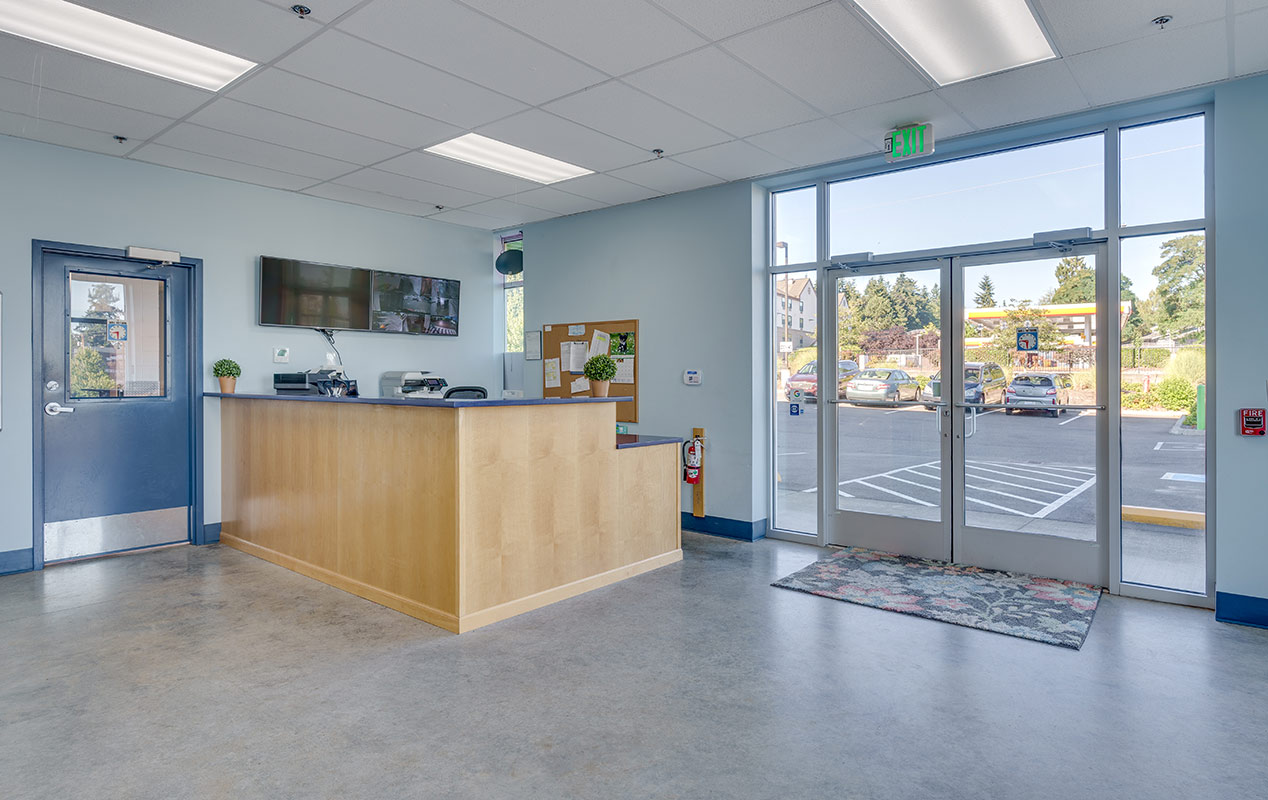
Online rental and touchless move-in options can help reduce the time spent completing paperwork at the leasing office. Follow the instructions provided during the rental process and confirm any identification or documentation requirements before arriving.
Customers can make online payments and use ACH or credit-card payment plans. Contractors should review current rental details, parking requirements, and unit availability directly with the facility before move-in.
The facility offers access daily from 6:00 AM to 10:00 PM. Contractors can plan morning pickups and evening returns within that access window.
Outdoor parking is available for eligible motor vehicles, cars, boats, and RVs. Confirm vehicle dimensions, current space availability, documentation requirements, and facility rules before renting.
Plan to use the unit for storage and staging rather than active work. Review the rental agreement and speak with the facility before planning any business activity inside the unit.
Climate-controlled and heated units can help reduce exposure to temperature swings and cold conditions compared with standard storage. Follow manufacturer guidance for specialized equipment and store only permitted items.
No. Month-to-month rentals are available. Review the rental agreement for billing, notice, and move-out requirements.
It may be a lower-cost option for contractors who need storage but do not require warehouse-scale square footage, utilities, or active workspace. Actual costs depend on the unit size, current rates, fees, and the amount of space your business needs.
Contractors in Everett need storage that supports their schedules without creating unnecessary overhead. The right setup may provide room for permitted tools and materials, convenient access to frequently used supplies, or outdoor parking for an eligible vehicle.
The Everett facility offers drive-up and indoor storage options, climate-controlled and heated units, outdoor parking, month-to-month rentals, and daily access from 6:00 AM to 10:00 PM. Before renting, review current availability and choose a unit based on your equipment dimensions, access needs, and project workload.
Everything you need to store your belongings securely, on your schedule.
Visit us online