Last updated Aug 7, 2026
Federal Way businesses generate a steady flow of tax records, HR files, contracts, financial statements, and other paperwork. As filing cabinets fill up, the question shifts from whether records need to be stored to how they can be organized without consuming valuable workspace.
Retention requirements vary by document type and industry. Businesses also need to consider confidentiality, retrieval needs, insurance requirements, and whether ordinary self storage is appropriate for the records involved.
This guide explains how long certain business records may need to be retained, how to prepare files for storage, and what to consider before using a self-storage unit in Federal Way.
Federal Way has an active business community that includes healthcare providers, legal offices, retailers, contractors, and small professional firms. Many smaller businesses operate without a dedicated records room or full-time records manager, which can make archived paperwork difficult to organize.
A document-storage plan can help a business:
Free up office space: Move inactive records out of work areas while keeping frequently used files nearby.
Follow retention schedules: Organize records by document type and destruction date.
Improve retrieval: Use consistent labels and an inventory system so archived files can be located when needed.
Reduce unnecessary storage: Periodically destroy records that have passed their required retention period, when legally permitted.
Plan for confidentiality: Determine whether sensitive records require specialized safeguards beyond those available in an ordinary self-storage unit.
Businesses handling medical, legal, employee, financial, or other confidential information should confirm their legal, privacy, insurance, and records-management obligations before placing files in off-site storage.
The appropriate retention period depends on the document, applicable laws, contractual requirements, and the business's industry.
According to the IRS, most business tax records should be retained for at least three years, while employment tax records must be kept for a minimum of four years. Retention periods extend to six or seven years for certain circumstances, and indefinitely if no return was filed or a fraudulent return was filed.
Common federal retention periods include:
Three years: Most records supporting income, deductions, and credits reported on a tax return.
Four years: Employment tax records after the tax becomes due or is paid.
Six years: Certain situations involving substantial unreported income.
Seven years: Records involving claims for worthless securities or bad-debt deductions.
Indefinitely: Records connected with an unfiled or fraudulent return.
Records related to property may need to be kept until the limitation period expires for the year the property is sold or otherwise disposed of.
As of July 27, 2025, Washington State law (RCW 70.41.190) requires hospitals to retain medical records for a minimum of 26 years from the date the record was created, regardless of the patient's age.
This requirement applies specifically to hospitals. Clinics, private practices, dental offices, and other healthcare providers should confirm the retention and privacy rules that apply to their organizations.
Long retention periods do not automatically mean physical self storage is the right solution. Healthcare organizations may use electronic systems, professional records-management providers, or other arrangements designed for regulated information.
Law firms and other professional organizations may be subject to industry rules governing trust-account records, client property, engagement files, and confidential information.
Before moving these records off-site, businesses should confirm:
The applicable retention period
Whether original documents must be preserved
Who may access the records
What confidentiality safeguards are required
Whether the proposed storage arrangement satisfies insurance and professional obligations
Keeping inactive records in filing cabinets can reduce the amount of office space available for employees, customers, equipment, and daily operations.
According to CommercialCafe, average asking rent for general office space in Federal Way reached $27.43 per square foot in 2024. That figure helps explain why some businesses consider moving inactive files out of their primary workspace.
Actual costs vary considerably. A self-storage unit, a professional records-management service, and additional office space provide different levels of access, environmental control, retrieval assistance, and confidentiality safeguards. Businesses should evaluate the service they need rather than relying on a simple per-square-foot comparison.
SecureSpace Self Storage Federal Way does not offer heated or climate-controlled storage. Businesses considering this facility should determine whether their records can be stored appropriately in a standard unit.
Ordinary self storage may be more suitable for permitted general business records that:
Do not require specialized temperature or environmental controls
Are not irreplaceable originals
Can be stored in sealed, clearly labeled containers
Do not require frequent professional retrieval services
Can be managed in accordance with the business's legal and privacy obligations
Highly sensitive, regulated, or environmentally vulnerable records may require a professional records-storage provider or another specialized solution.
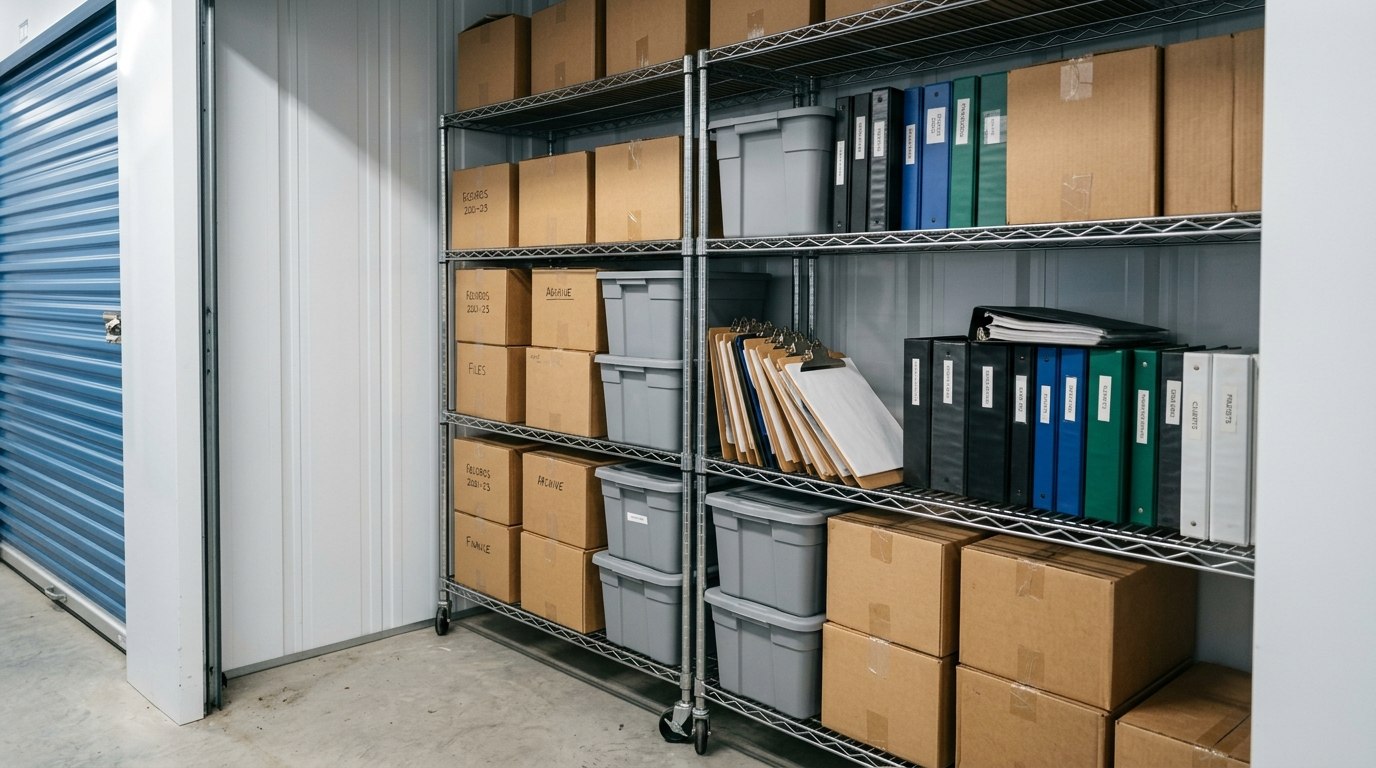
Place documents in sturdy archive boxes or lidded plastic containers. Make sure paper is clean and dry before closing the container, and do not overfill boxes to the point that handles or lids fail.
Avoid leaving records in open cardboard boxes if they will be stored for an extended period.
Use freestanding shelving or stable pallets to elevate files. Keeping boxes off the floor can make retrieval easier and reduce the chance of damage from spills or routine floor cleaning.
Shelving must be freestanding and should not be attached to the unit walls.
Rain can create avoidable problems during loading and unloading. Check the forecast, keep containers closed while moving them, and bring protective coverings if wet weather is expected.
The Federal Way facility does not offer a covered loading area, loading dock, elevator, carts, or dollies. Customers should bring the moving equipment and assistance needed for their boxes.
A useful document-storage setup depends on more than the amount of floor space available.
Estimate the number of boxes being stored and the amount of aisle space needed for retrieval. Avoid packing containers wall to wall if employees will need regular access to individual files.
Primary sizes available at SecureSpace Self Storage Federal Way include:
5x5: Suitable for a limited archive or several shelving units.
5x15: Offers additional depth for larger collections of boxes.
10x10: Provides more room for shelving, office equipment, and retrieval aisles.
10x15 and larger: May suit businesses combining records with permitted office furniture, inventory, or supplies.
Exact capacity depends on box dimensions, shelving, stacking method, and the amount of access space retained inside the unit.
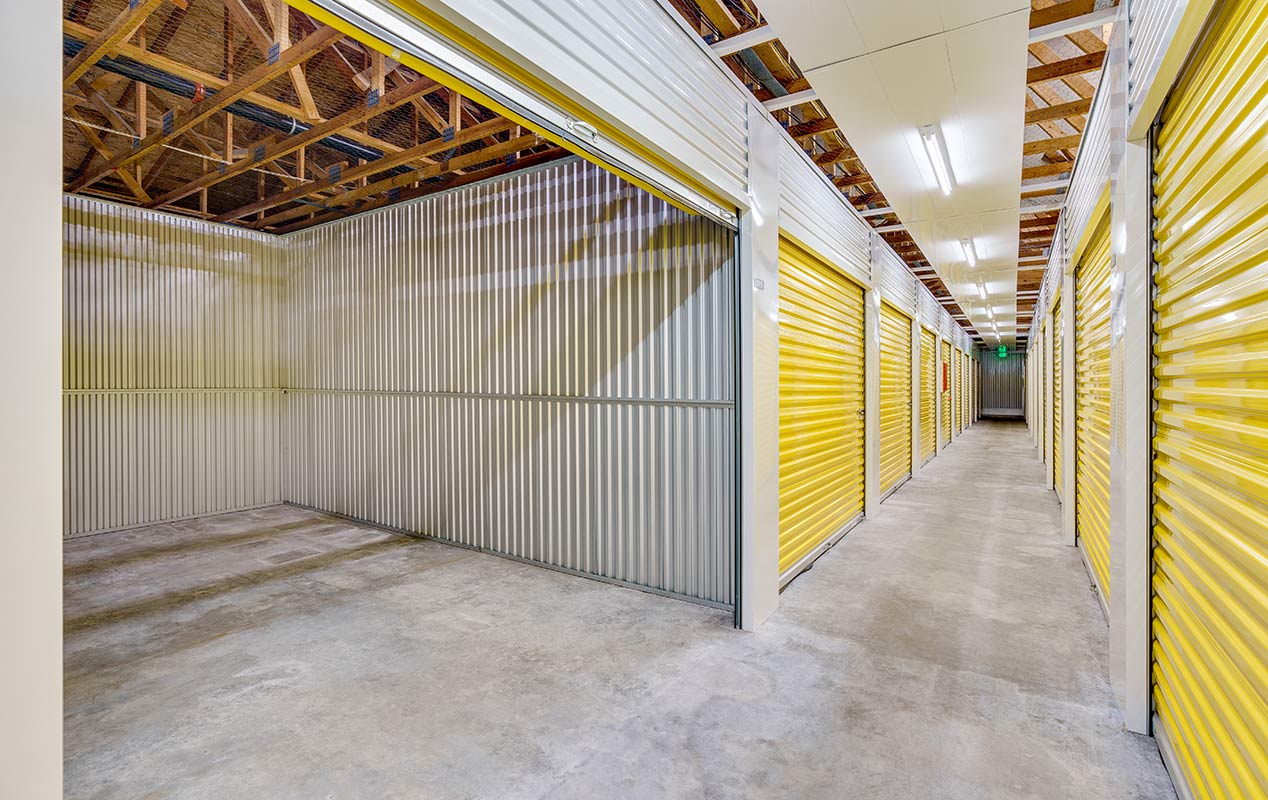
Drive-up units may reduce the distance boxes need to be carried from a vehicle. However, customers should confirm current unit availability and choose a layout that leaves room to reach stored files.
Gate access is available daily from 6:00 a.m. to 9:00 p.m., so loading and retrieval should be planned within that window.
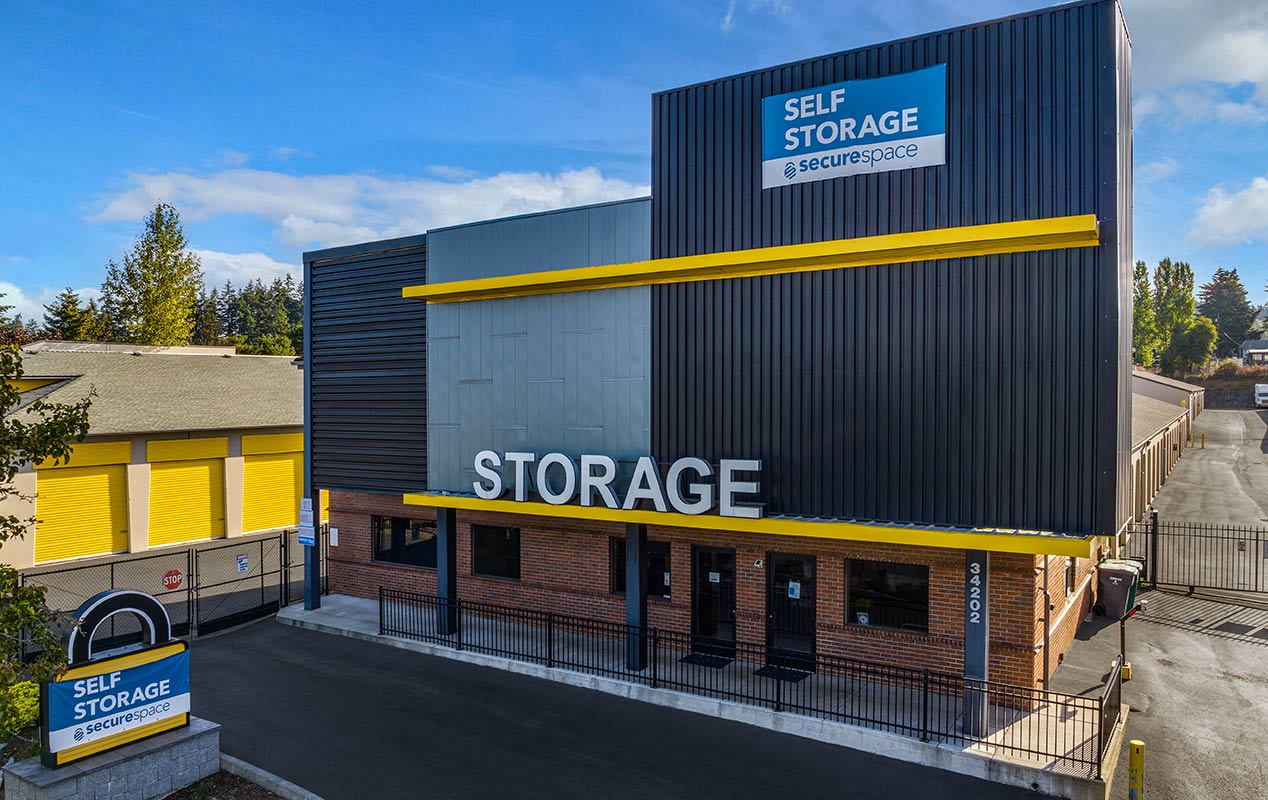
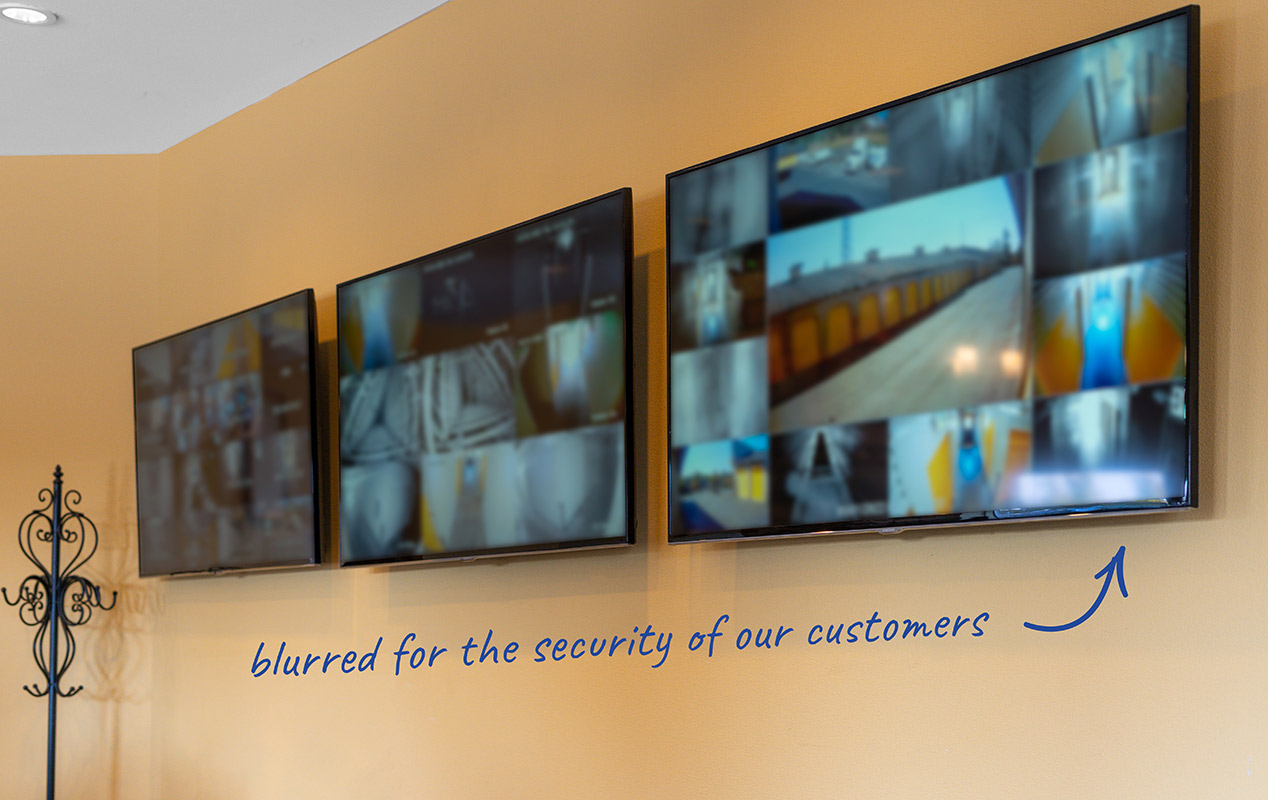
The Federal Way facility has an access gate, digital video recording, and overnight surveillance. These features do not guarantee protection or make the facility automatically suitable for confidential records.
Businesses should also:
Use a suitable lock
Limit who has access to the unit
Maintain a record of authorized employees
Keep an inventory of stored boxes
Review applicable insurance or coverage requirements
Avoid placing highly sensitive files in ordinary storage without confirming compliance obligations
Online payments and ACH or credit card payment plans can make it easier to manage recurring storage expenses. Month-to-month leases also allow businesses to rent without committing to a long-term commercial lease.
Moving files into storage is only useful if they can be found again. A clear records system should be established before the first box leaves the office.
For businesses with inactive files occupying desks, closets, or work areas, a self-storage unit may provide a flexible alternative to leasing additional office space.
Self storage may make sense when:
Records are accessed infrequently
The business maintains its own inventory system
The documents do not require specialized environmental controls
The storage arrangement meets applicable privacy and legal requirements
Employees can retrieve files during the facility's access hours
A professional records-management provider may be more appropriate when a business needs scheduled retrieval, certified destruction, detailed chain-of-custody documentation, specialized environmental conditions, or safeguards designed for regulated information.
The right choice depends on the records being stored rather than cost alone.
The IRS generally recommends retaining most records supporting a tax return for at least three years. Employment tax records should usually be kept for at least four years. Longer periods may apply in certain circumstances, so businesses should consult their accountant or tax professional.
Washington hospitals must retain medical records for at least 26 years from the date each record was created. Other healthcare providers may be governed by different requirements and should confirm the rules that apply to their organizations.
No. This facility does not offer heated or climate-controlled storage. Businesses should consider whether their documents can be stored appropriately in a standard unit before renting.
That depends on the records and the organization's legal, privacy, insurance, and professional obligations. An ordinary storage unit does not automatically satisfy requirements for medical, legal, employee, financial, or other confidential information.
Consult the appropriate legal, compliance, privacy, or records-management professional before storing regulated files off-site.
A 5x5 may work for a limited archive, while a 5x15 or 10x10 can provide more room for shelving and retrieval aisles. Larger units may be useful when records are stored with permitted office equipment or business supplies.
Estimate the number of containers, shelving dimensions, and aisle space rather than relying on a fixed box count.
Sort records by retention period, remove files eligible for destruction, place remaining documents in sturdy labeled containers, create a master inventory, and keep boxes elevated on stable shelving or pallets.
Not necessarily. Costs depend on current office rent, unit pricing, the amount of space required, and whether the business needs specialized records-management services. Businesses should evaluate both cost and operational requirements.
Document storage should begin with a retention schedule and a clear understanding of the records involved. Tax files, contracts, general administrative records, and archived business paperwork may have very different requirements from medical, legal, personnel, or other confidential documents.
SecureSpace Self Storage Federal Way offers standard self-storage units, drive-up access for selected units, month-to-month leases, online payment options, and daily gate access from 6:00 a.m. to 9:00 p.m. Businesses considering the facility should select a unit based on their box volume, retrieval needs, and responsibility for meeting all applicable records-management requirements.
Everything you need to store your belongings securely, on your schedule.
Visit us online