Last updated Jul 24, 2026
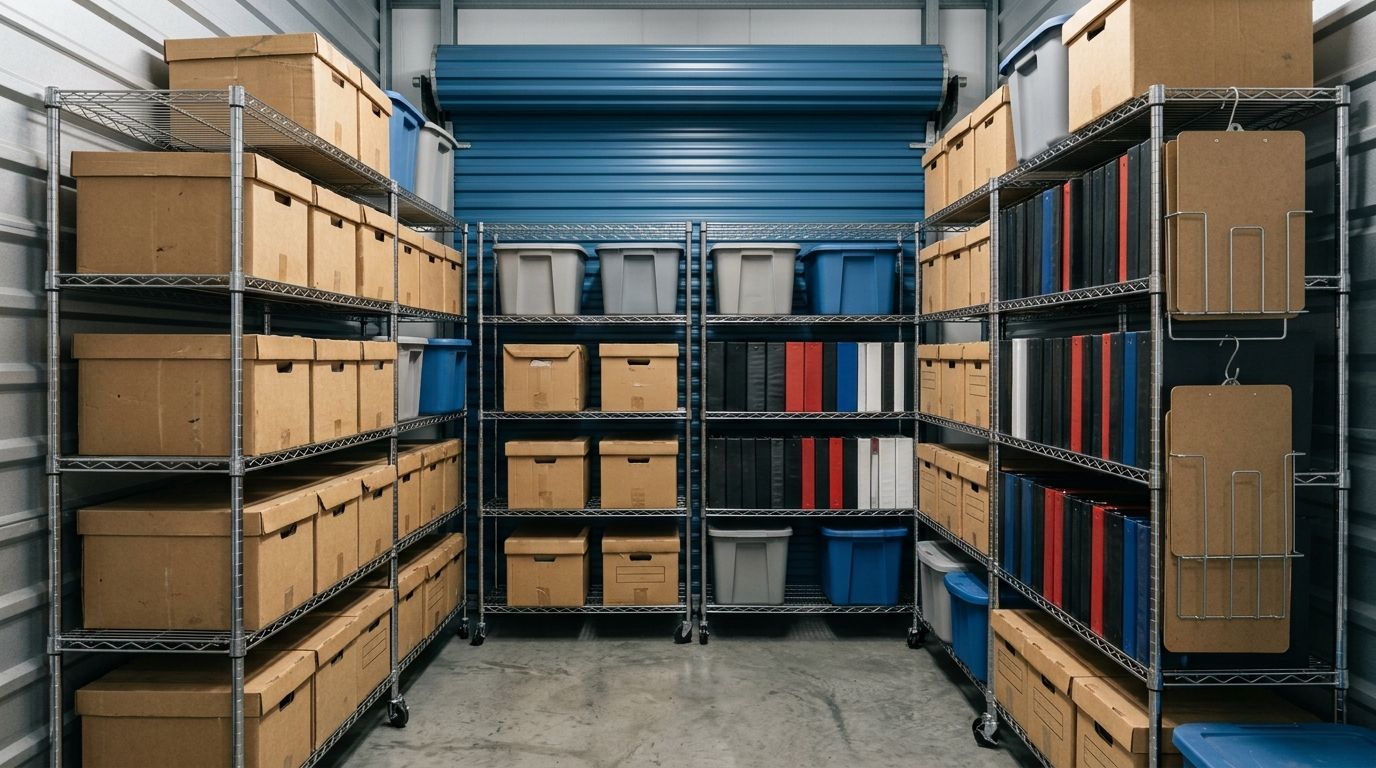
If filing cabinets are taking over valuable office space, you're not alone. Across Seattle, businesses often need room for records they are not ready to shred but do not need at arm's reach every day. Tax files, old project folders, personnel records, vendor paperwork, invoices, and boxed archives can pile up quickly.
This guide breaks down how business document storage can help, what to consider before storing paper records, and when a standard self storage unit may or may not be the right fit. The goal is simple: free up workspace while keeping records organized, accessible, and stored with care.
Three pressures push Seattle businesses to look beyond on-site filing cabinets: office space, wet weather, and recordkeeping responsibilities.
Office space can be expensive, especially when file rooms take up square footage that could be used for desks, equipment, client meetings, or day-to-day operations. At the same time, many businesses need to retain documents for tax, legal, HR, finance, or operational reasons.
Document storage can help businesses move inactive files out of crowded offices while keeping them organized for future reference. For lower-risk business overflow, a self storage unit may be a practical option. For highly regulated or confidential records, businesses should review legal, privacy, and compliance requirements before choosing a storage setup.
Filing cabinets, archive boxes, and old paper records can take over more room than expected. Even a few rows of boxes can crowd a back office, supply room, or conference area.
Moving inactive documents off site can help businesses:
Reclaim office space
Reduce clutter
Keep older records organized by year or category
Separate active files from archived paperwork
Make seasonal or audit-related files easier to locate
Avoid using basements, closets, or shared office corners for long-term storage
The key is organization. A storage unit works best when boxes are clearly labeled, grouped by record type, and arranged so the most likely retrievals stay near the front.
Seattle's wet climate makes document preparation important. Paper can be affected by moisture, especially if boxes are stored damp, placed directly on floors, or packed in weak cardboard.
Before storing business documents:
Use sturdy boxes or file cartons.
Make sure papers and boxes are dry before storage.
Avoid storing documents in damp cardboard.
Label boxes on more than one side.
Keep boxes off the floor when possible.
Avoid overpacking boxes so they collapse or tear.
Store frequently needed records near the front.
Keep a separate inventory outside the unit.
Heated indoor storage may be useful for business documents, especially during colder months. It keeps records inside a building and may reduce exposure to colder conditions compared with non-heated spaces. Before renting, review the current unit features and choose the setup that fits your storage needs.
Record retention depends on the business, industry, document type, and applicable law. Medical offices, law firms, financial companies, employers, nonprofits, and small businesses may all have different obligations.
For example, the Washington Medical Commission advises physicians and outpatient practices to keep medical records for at least 10 years from the last patient contact, or 21 years for a minor. The Washington Department of Revenue also explains that businesses should keep complete records for at least five years.
Before moving records into storage, decide:
Which documents must be kept
How long each record type should be retained
Who is allowed to access the records
Whether records contain personal, financial, medical, legal, or confidential information
Whether digital copies are acceptable
When records can be destroyed
How destruction should be documented
Self storage can help with physical space, but it does not replace a records-retention policy. If records are regulated, confidential, or legally sensitive, consult the appropriate legal, tax, HR, privacy, or compliance professional before storing them.
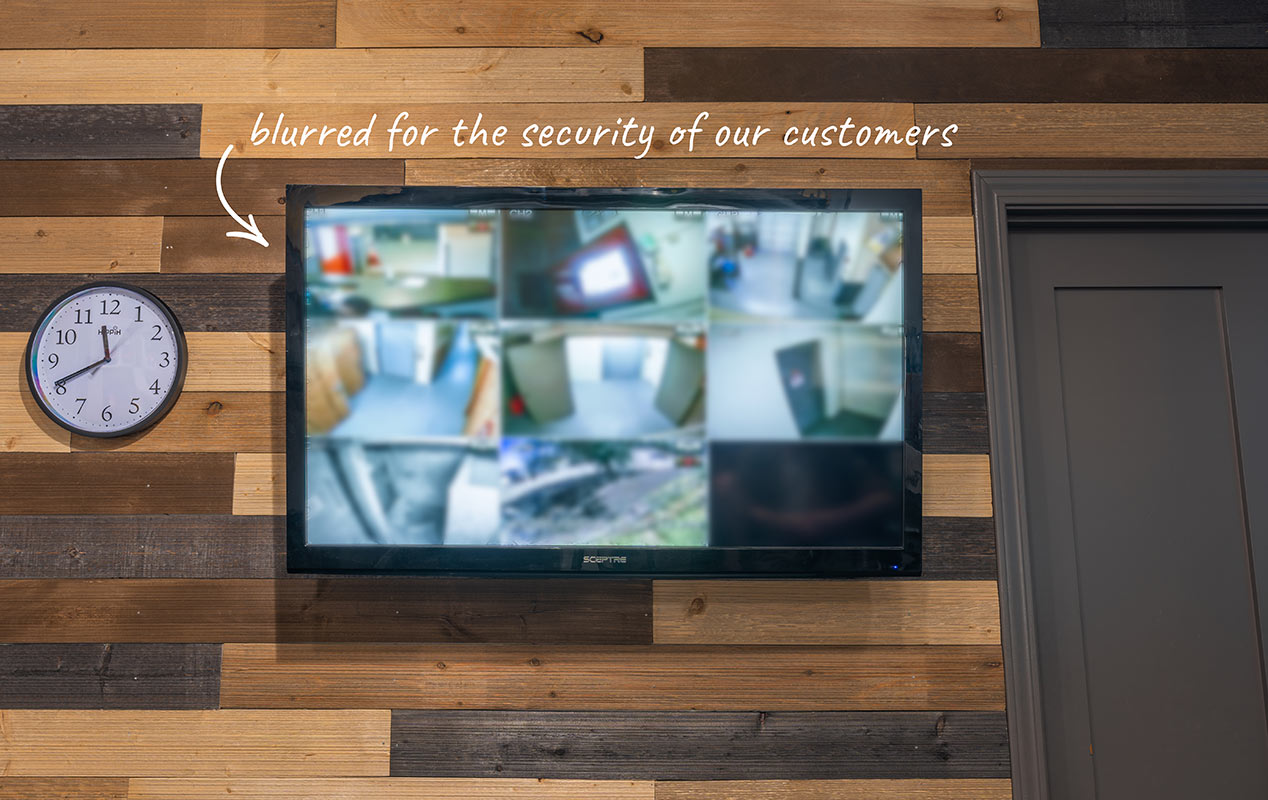
When storing business documents, review the security features listed for the specific facility you are considering. Available features can vary by location, so avoid assuming every facility has the same setup.
Depending on the location, useful details to review may include:
Digital video recording
Logged access
Posted access procedures
Staff availability
Building or unit access process
Move-in instructions
Payment and account-management options
You can also take your own precautions:
Use a quality lock where applicable.
Keep a box-level inventory.
Avoid writing sensitive details on the outside of boxes.
Limit who knows where records are stored.
Keep a separate list of what is inside each box.
Review insurance or coverage options.
Do not store originals you cannot afford to lose without a backup plan.
For records that require chain-of-custody tracking, scanning, certified destruction, courier retrieval, or compliance documentation, a specialized records-management provider may be a better fit than standard self storage.
With standard self storage, retrieval is usually self-service. That means your access depends on the facility's access hours, your unit organization, and how clearly your boxes are labeled.
To make retrieval easier:
Number each box.
Keep a digital inventory of box contents.
Group records by department, year, client, project, or document type.
Put frequently needed files near the front.
Leave a small aisle if space allows.
Keep a simple map of the unit layout.
Update your inventory whenever a box is added or removed.
If your team needs scanned records on demand, file delivery, box pickup, or certified destruction, verify those services with a dedicated records-storage provider. Do not assume those services are included with a self storage unit.
Not all document storage needs are the same. A small business storing old invoices may need a different setup than a medical office, law firm, or financial services company.
When comparing options, consider:
If the documents include confidential, regulated, medical, financial, legal, or employee information, review access controls, privacy requirements, and retention rules before storing them.
Look at whether the unit is indoors, heated, elevator-accessible, and appropriately sized for boxed records. Confirm the exact features of the location before renting.
Think about how often your team will need records. If retrieval is frequent, choose a location and unit layout that make access practical.
Document storage only works if the filing system is clear. Label boxes consistently and keep an external inventory so you are not opening every box to find one file.
Month-to-month leases can be helpful when storage needs change. Review billing, payment options, move-out notice, and any promotion terms before signing.
A storage unit can be useful for boxed documents, records, office supplies, or business overflow if allowed by facility rules. It should not be used as an office, workspace, customer pickup point, or active business operation unless the facility explicitly permits that use.
Document storage in Seattle is not just about clearing clutter. It is about creating a system that helps your business use office space better, keep inactive records organized, and retrieve files when needed.
Start by sorting records into categories: keep on site, store off site, digitize, review, or destroy when eligible. Then choose a storage option that fits the sensitivity of the records, your access needs, and your budget.
For boxed records, office overflow, and business files, review current options for document storage in Seattle, WA at SecureSpace.
Not every storage unit is climate-controlled, and available features vary by location. For Seattle business records, heated indoor storage may be useful during colder months. Store documents clean, dry, boxed, labeled, and organized, and review current unit features before renting.
Record retention depends on the document type, industry, and applicable law. Medical, tax, HR, financial, legal, and operational records may all follow different rules. Businesses should consult legal, tax, HR, or compliance professionals before deciding what to store or destroy.
With standard self storage, retrieval is usually self-service during the facility's access hours. Keep a box inventory and organize the unit so important records are easy to find. If you need courier delivery, scan-on-demand, or file-pull services, look for a specialized records-management provider.
It can be, depending on office rent, document volume, retrieval needs, and the type of storage required. If inactive records are taking up valuable workspace, moving boxed files off site may free up room for daily operations.
Many businesses use storage for older files, tax records, invoices, project documents, office supplies, and boxed records. Businesses with regulated or highly confidential records should review privacy and retention requirements before choosing a storage option.
Everything you need to store your belongings securely, on your schedule.
Visit us online