Last updated Jul 24, 2026
Final exams are wrapping up, your residence hall checkout deadline is getting closer, and you're staring at a mini-fridge, a mattress topper, and a stack of boxes wondering where it is all supposed to go. If you're flying home for the summer or heading out for an internship, hauling everything with you may not be realistic.
That's where short-term self storage can help. Seattle has a large student population, and move-out season can create a rush for small, flexible storage options. A compact unit can give you a place for dorm essentials, seasonal clothing, small furniture, and boxes while you're away from campus.
This guide walks through what size unit to rent, how to think about cost, why Seattle weather affects packing decisions, and how to choose a location that fits your campus route.
Seattle is home to several major colleges and universities. The University of Washington alone enrolls roughly 40,684 undergraduates, according to Niche. Add Seattle University and Seattle Pacific University, and many students are changing housing plans around the same time each year.
A lot of students also live far from home. For anyone flying out of state or internationally, shipping a dorm room's worth of belongings back and forth for a short break can be expensive and inconvenient.
Then there's the cost of space. According to RentCafe, studio apartments in the University District can be compact and expensive, which makes extra room valuable. If your apartment or dorm does not have space for seasonal items, small furniture, or sports gear, a storage unit can act like an off-site closet for things you do not need every day.
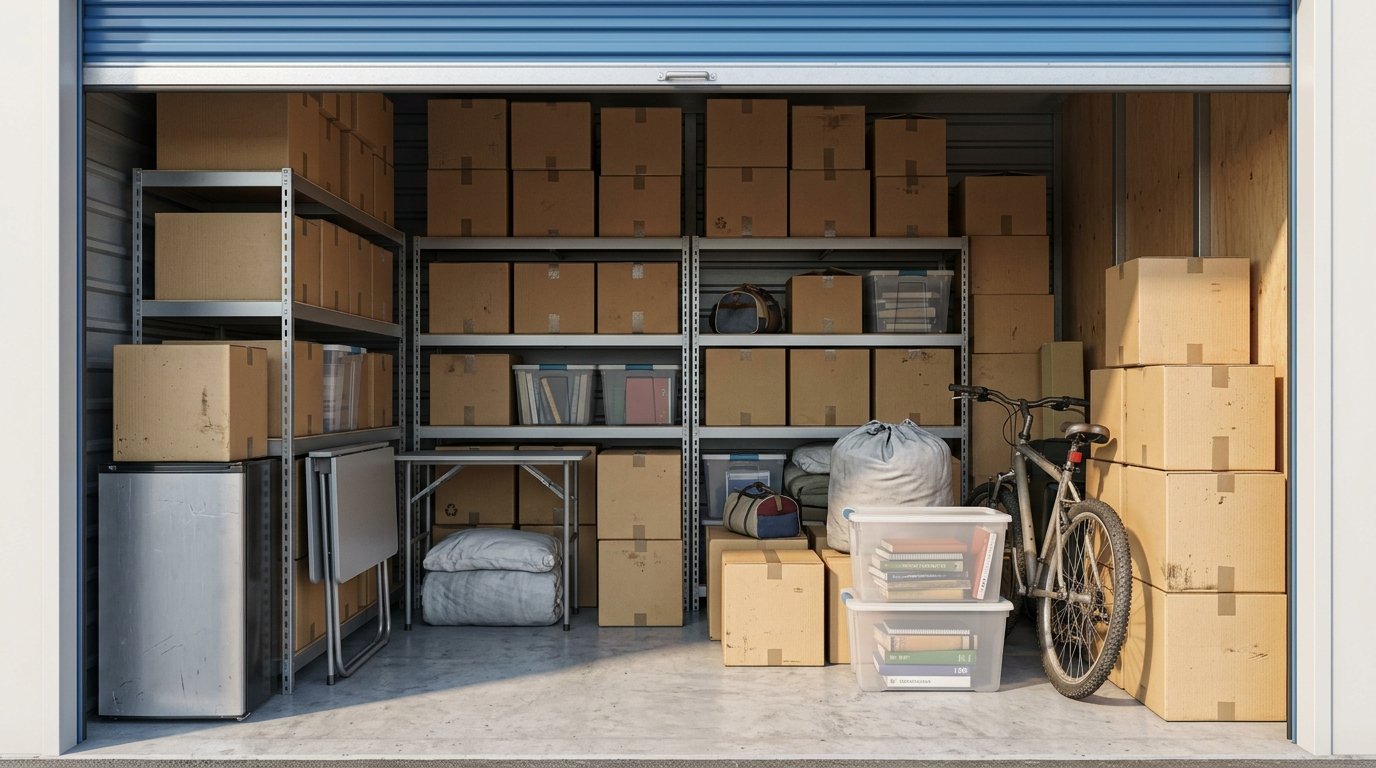
For many college students, a 5x5 unit is a practical starting point. It offers 25 square feet of floor space, roughly like a large closet. If ceiling height allows, sturdy boxes can be stacked to make better use of the space.
A 5x5 may fit:
A mini-fridge
A microwave
A mattress topper
Seasonal clothing
Textbooks and school supplies
Small sports gear
Several medium moving boxes
Sharing the cost with a roommate? A 5x10 unit gives you 50 square feet and may work better for two students splitting summer storage. It can offer room for a mattress set, a bicycle, small furniture, and more boxes, depending on item dimensions and how everything is packed.
Before renting, measure bulky items like mini-fridges, bikes, rugs, shelving, and mattress toppers. Dorm items vary more than people expect, and a few large pieces can change the size you need.
Dorm storage pricing varies by unit size, location, features, current availability, and promotions. Small units usually cost less than larger units, but the advertised rate is not always the full cost.
Before reserving, check:
Base monthly rent
Move-in promotions
Administrative fees
Insurance or proof-of-coverage requirements
Lock requirements
Taxes or other charges
Month-to-month terms
Move-out notice requirements
The monthly rate after any promotion ends
If you only need storage for summer break, month-to-month terms can be useful. Review the rental agreement carefully so you know how billing and move-out timing work.
Seattle's wet climate makes packing preparation important, especially if your items will sit for a few months while you're away. Heated indoor storage may be useful during colder months or for items you prefer to keep inside a building.
That said, no storage unit replaces careful packing. Before move-in:
Make sure clothing, bedding, rugs, and shoes are clean and fully dry.
Let mini-fridges defrost and dry completely before storing.
Avoid packing damp cardboard or soft goods.
Use sturdy bins for items that may be stacked.
Keep school documents and electronics in sealed containers where appropriate.
Do not store food, liquids, candles, prohibited items, or anything that could leak.
If you're storing electronics, cameras, bedding, clothing, or school supplies, review current unit features and choose the option that fits your items.
The best storage location is not always the closest one by mileage. Choose a facility that fits your route, move-out schedule, transportation plan, and access needs.
When comparing Seattle storage options, consider:
Distance from campus or your apartment
Whether you have access to a car
Access hours
Elevator availability
Whether carts or dollies are available
Online rental or reservation options
Move-in instructions
Current unit availability
If you are moving out during finals week, try to plan early. Availability can tighten near campus move-out dates, especially for smaller units.
Dorm checkout dates and policies vary by school, residence hall, and academic year. Check your university housing portal for the official deadline, checkout process, fees, and move-out instructions.
Before finals week, make a simple move-out plan:
Planning a little early can help you avoid rushing between exams, packing, and travel.
Many storage facilities let you review available units, compare pricing, and begin the rental process online. Before booking, confirm the current move-in instructions, payment terms, access hours, and what you need to bring on move-in day.
For a smoother student move-out:
Label boxes by category: school, kitchen, bedding, clothing, decor.
Keep essentials and frequently needed items near the front.
Take photos of stored items before closing the unit.
Use a quality lock where applicable.
Review insurance or coverage options.
Share the unit only with someone you trust and agree on payment and move-out timing in writing.
A small storage unit works best when it is organized from the start. Otherwise, a few dorm boxes can quickly turn into a pile you do not want to unpack in September.
Storing dorm essentials in Seattle does not have to be complicated. Choose a small unit that fits your item list, confirm rental terms, pack everything clean and dry, and choose a location that works with your campus route.
When you're ready to compare current Seattle options, Reserve your student storage unit with SecureSpace today.
Start by reviewing Seattle storage options and choosing a location that fits your route from campus, access needs, and transportation plan. Availability can change near move-out season, so check current units before finals week.
A 5x5 is often a good fit for one student storing boxes, bedding, clothing, a mini-fridge, and small dorm items. A 5x10 may be better if you're sharing with a roommate or storing a bike, small furniture, or more boxes.
Many storage facilities offer month-to-month leases, which can work well for summer break, study abroad, internships, or apartment transitions. Review billing and move-out notice requirements before renting.
No. Students also use storage during study-abroad terms, internships, winter break, moves between off-campus apartments, and roommate changes.
Book once your move-out date and item list are clear. Smaller units can become harder to find near student move-out periods, so planning before finals week is usually easier than waiting until the last minute.
Everything you need to store your belongings securely, on your schedule.
Visit us online