Last updated Aug 7, 2026
Owning an RV makes it easier to explore Washington, but finding a suitable place to keep it between trips can be more complicated. Street-parking restrictions, limited driveway space, HOA rules, vehicle dimensions, and seasonal maintenance all affect where an RV can be stored.
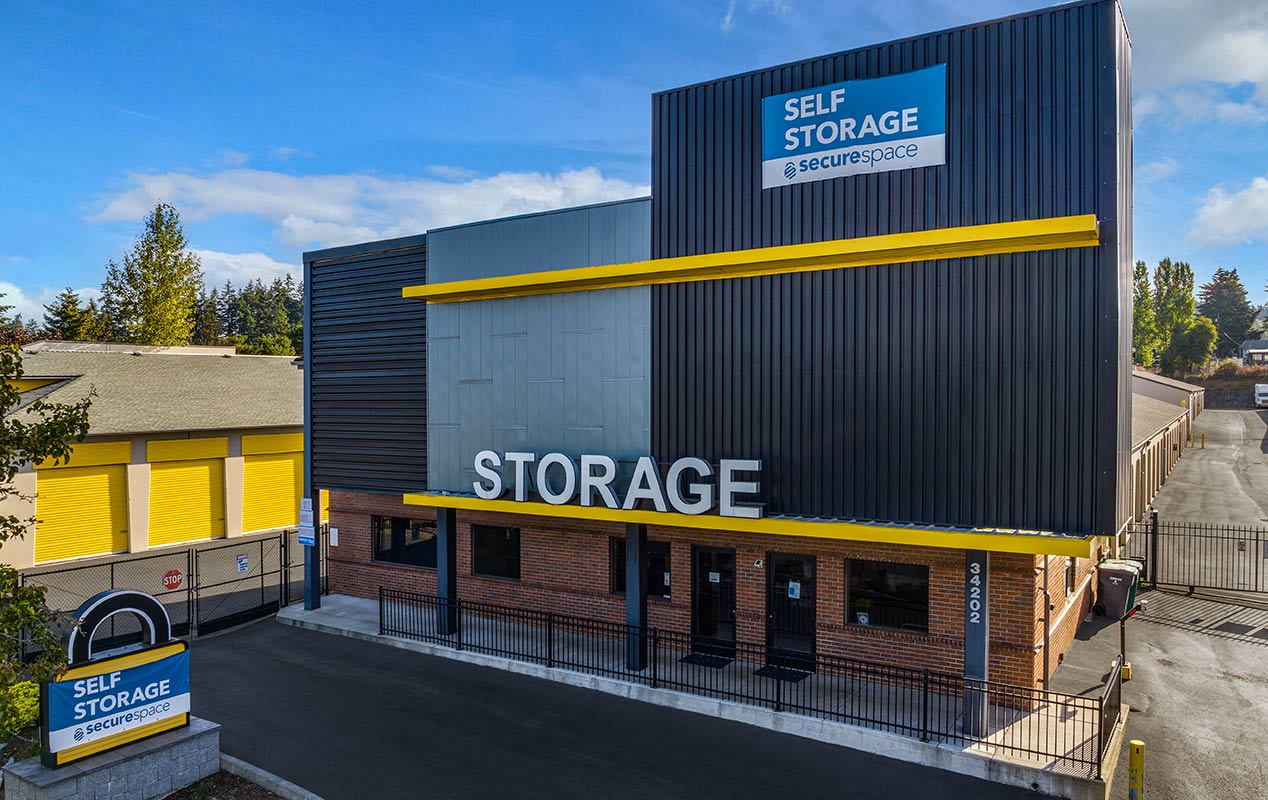
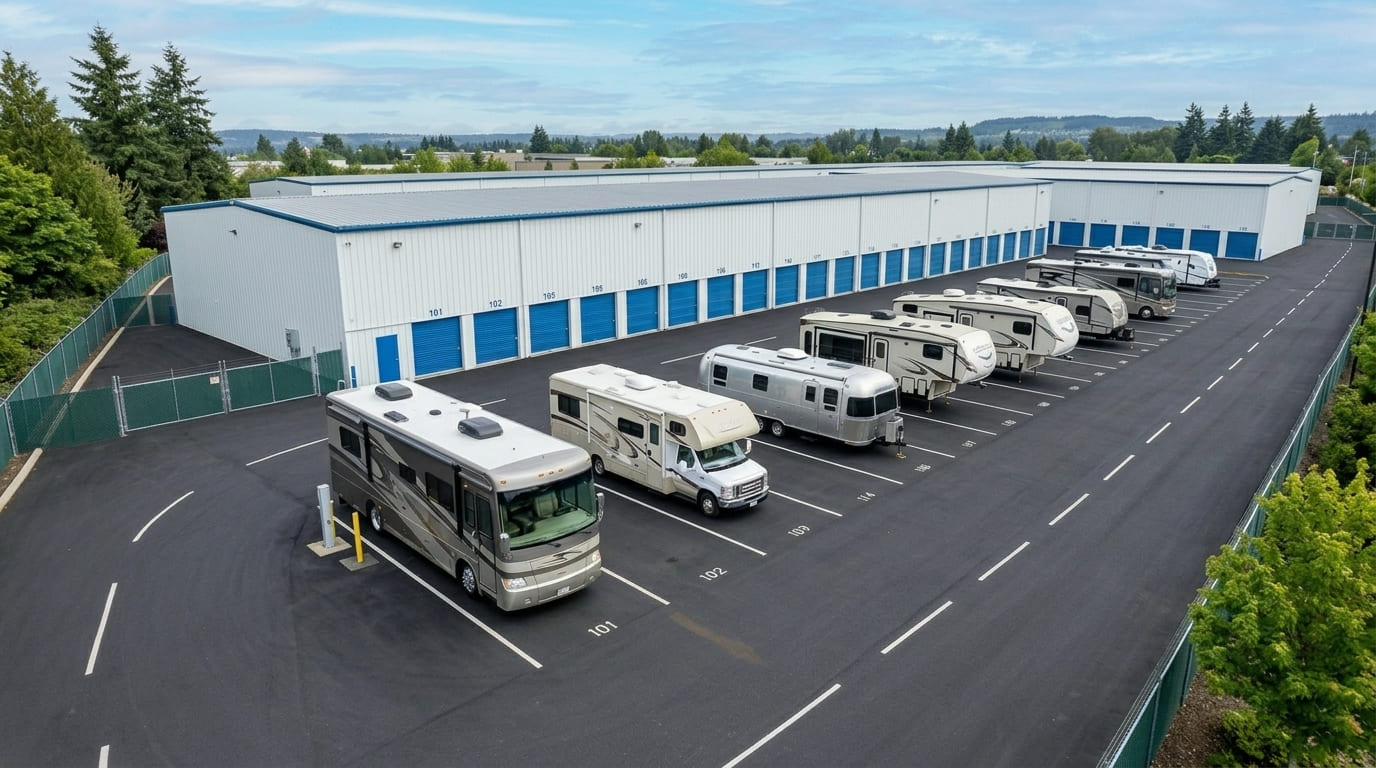
SecureSpace Self Storage Federal Way offers uncovered outdoor parking for eligible RVs. Space eligibility depends on the vehicle's dimensions, documentation, condition, facility rules, and current availability.
This guide covers local parking considerations, outdoor storage expectations, practical preparation steps, and the facility details to review before moving an RV into storage.
RV parking rules may vary depending on whether the vehicle is parked on a public street, private residential property, or property governed by an HOA or lease agreement.
Before leaving an RV on a public street, review Federal Way Revised Code 8.50.010 and current city guidance for applicable restrictions, exceptions, permits, and time limits.
Residential parking may also depend on:
The location of the driveway or parking area
Vehicle length and width
Setback requirements
Access to the parking area
HOA covenants
Apartment or lease terms
Whether the vehicle is registered and operable
Temporary loading or unloading rules
Do not assume that an RV may remain in a driveway, side yard, alley, or street simply because it fits physically. Check the current municipal rules and any private-property restrictions that apply to the address.
Off-site storage can be a practical option when an RV does not fit at home or residential parking rules limit where it can remain.
SecureSpace Self Storage Federal Way offers outdoor parking for eligible RVs, cars, motor vehicles, and boats.
RV parking at this location is:
Uncovered
Subject to vehicle dimensions
Subject to required documentation
Subject to vehicle condition
Subject to facility rules
Subject to current availability
Covered RV parking is not available. The facility also does not offer indoor or enclosed vehicle storage.
Trailer and fifth-wheel parking should not be assumed. Confirm the exact vehicle type, overall dimensions, and documentation requirements before arrival.
RV model names do not always reflect the vehicle's complete storage dimensions.
Measure the RV from its outermost points, including:
Front bumper
Rear bumper
Spare tire
Ladder
Hitch
Bike rack
Cargo carrier
Mirrors
Awnings
Slide-outs when retracted
Roof-mounted equipment
Record the overall length, width, and height.
Ask whether the available parking space can accommodate the complete vehicle without extending beyond the designated area. Do not rely solely on the manufacturer's nominal model length.
Also confirm whether detachable accessories must be removed before storage.
An uncovered outdoor parking space keeps the RV off a residential street or driveway but does not shield it from rain, sunlight, wind, airborne debris, or temperature changes.
Before choosing outdoor parking, consider:
The RV manufacturer's storage recommendations
How long the vehicle will remain parked
Whether the roof and exterior seals are in good condition
Battery-maintenance requirements
Plumbing and winterization needs
Tire-care instructions
Insurance requirements
Whether a compatible RV cover is appropriate
No outdoor storage arrangement can guarantee prevention of weather exposure, moisture, theft, corrosion, fading, pest activity, or mechanical deterioration.
Inspect and prepare the RV according to its owner's manuals or guidance from a qualified RV service provider.
RV systems vary considerably. Preparation for a motorhome may differ from preparation for a travel trailer, camper van, or fifth wheel.
Use the vehicle manufacturer's instructions as the controlling guidance.
Before parking the RV:
Remove perishable food.
Empty trash containers.
Clean food-preparation areas.
Remove valuables and important documents.
Check cabinets, drawers, and storage compartments.
Remove items that could leak, spoil, or attract pests.
Do not leave medications, identification, firearms, cash, irreplaceable items, or temperature-sensitive property inside the RV.
Clean floors, counters, seating areas, appliances, and storage compartments.
Make sure fabric, flooring, cabinets, and other surfaces are fully dry before closing the RV for storage.
Follow manufacturer instructions for:
Refrigerator doors
Cabinet ventilation
Window coverings
Interior vents
Dehumidifying products
Upholstery care
Avoid using household chemicals, moisture absorbers, or pest products unless they are appropriate for the RV and its materials.
Check the RV for visible signs of:
Roof damage
Cracked sealant
Loose trim
Damaged vents
Window leaks
Awning problems
Worn weather seals
Exterior openings
Fluid leaks
Repair concerns before storage rather than assuming a cover or parking location will prevent further damage.
Use only cleaning products, sealants, and covers recommended for the RV's exterior materials.
Plumbing preparation depends on the RV, weather conditions, storage duration, and manufacturer requirements.
Consult the owner's manual or a qualified RV technician regarding:
Freshwater systems
Wastewater tanks
Water heaters
Pumps
Fixtures
Filters
Drain lines
Winterization procedures
Use only products intended for the specific RV system. Do not substitute automotive fluids or general-purpose chemicals.
Battery requirements vary by battery chemistry, RV configuration, connected equipment, and storage duration.
Follow manufacturer guidance for:
Disconnecting batteries
Charging or maintaining batteries
Shore-power connections
Solar systems
Battery ventilation
Alarm and detector systems
Parasitic electrical loads
Do not connect chargers, extension cords, or external electrical equipment at the storage facility unless expressly permitted.
Before storage:
Inspect tires for visible damage.
Check inflation according to the vehicle and tire manufacturer.
Confirm that valve caps are installed.
Review parking-brake recommendations.
Follow manufacturer guidance for long-term parking.
Inspect the parking area around the RV during periodic visits.
Do not use jack stands, blocks, tire cradles, or other supports unless they are suitable for the RV and permitted by the facility.
Motorhomes and other powered RVs may require preparation for fuel, oil, engine, generator, and emission systems.
Follow the manufacturer's instructions or consult a qualified technician regarding:
Fuel level
Fuel stabilizers
Oil changes
Generator maintenance
Engine operation
Diesel exhaust fluid
Propane systems
Long-term starting procedures
Do not run the engine or generator inside a building or in any location where operation is prohibited.
Inspect exterior compartments, vents, utility connections, and openings for signs of damage.
Use only manufacturer-compatible materials and pest-control methods. Avoid filling openings with products that could block required ventilation, damage wiring, trap moisture, or interfere with vehicle systems.
A compatible cover may reduce direct exposure to sunlight and debris, but the wrong cover can create abrasion, trap moisture, interfere with ventilation, or damage exterior components.
Before using one:
Check the RV manufacturer's recommendations.
Select a cover designed for the vehicle type and dimensions.
Make sure the RV is clean and dry.
Protect sharp corners and protruding components.
Secure the cover according to its instructions.
Confirm that facility rules permit covers.
Inspect the cover periodically.
Do not use a loose plastic tarp as a substitute unless the RV manufacturer specifically recommends it.
The Federal Way property has:
An access gate
Digital video recording
Overnight surveillance
These features cannot guarantee protection against theft, vandalism, weather, or damage.
Customers should also:
Lock the RV's doors and exterior compartments.
Remove valuable and irreplaceable property.
Keep keys and access credentials private.
Photograph the RV before storage.
Record the vehicle identification number.
Maintain registration and insurance documentation.
Review insurance coverage for stored vehicles.
Visit and inspect the RV periodically when practical.
Do not assume the facility provides perimeter fencing, personalized logged entry, individual motion alerts, security patrols, or continuous live monitoring.
Gate access is available daily from 6:00 a.m. to 9:00 p.m.
The facility does not offer 24-hour vehicle access. Plan departures and returns within the posted gate hours.
Leasing-office hours are:
Monday: 9:30 a.m.-6:00 p.m.
Tuesday: 9:30 a.m.-6:00 p.m.
Wednesday: Closed
Thursday: 9:30 a.m.-6:00 p.m.
Friday: 9:30 a.m.-6:00 p.m.
Saturday: 9:00 a.m.-5:30 p.m.
Sunday: Closed
Office hours and gate hours serve different purposes. Confirm rental documentation and parking eligibility before arriving with the RV.
Month-to-month leases are available at SecureSpace Federal Way.
Review the rental agreement for:
Current monthly rent
Billing dates
Rate adjustments
Required notice
Access rules
Documentation requirements
Vehicle-condition standards
Insurance or coverage requirements
Prohibited maintenance activities
Move-out procedures
Parking-space reassignment terms
Month-to-month leasing provides flexibility, but it does not eliminate the agreement's notice, payment, or vehicle-storage requirements.
Online payments are available, along with ACH and credit card payment plans.
Before move-in, confirm:
Do not assume that online payment availability means the entire move-in process is touchless or that parking credentials will be delivered instantly.
SecureSpace Federal Way does not provide:
Covered vehicle parking
Indoor vehicle storage
A loading dock
Semi-truck access
Moving-pod staging
A moving truck
24-hour gate access
These limitations may matter if an RV is being delivered by another vehicle, transported on a trailer, or serviced before storage.
Mechanical repairs, washing, fueling, dumping tanks, connecting utilities, or operating a business from the parking space should not be assumed to be permitted.
Before moving the RV into storage:
Review current city, HOA, and lease parking rules.
Measure the complete vehicle.
Confirm parking-space eligibility and availability.
Gather current registration and insurance documents.
Review the RV manufacturer's storage instructions.
Remove food, trash, valuables, and sensitive property.
Clean and fully dry the interior.
Inspect the roof, windows, seals, vents, and exterior.
Follow the correct plumbing and winterization procedures.
Prepare batteries and electrical systems as directed.
Check tires according to manufacturer guidance.
Review engine, fuel, generator, and propane instructions.
Lock doors and exterior compartments.
Photograph the RV's condition.
Review applicable insurance coverage.
Note the facility's daily gate hours.
Schedule periodic inspections when practical.
Federal Way regulates recreational-vehicle parking on public streets. Review the current municipal code and contact the city when clarification about permits, exceptions, or time limits is needed.
Eligible RVs may qualify for uncovered outdoor parking, subject to dimensions, documentation, vehicle condition, facility rules, and current availability.
No. SecureSpace Federal Way does not offer covered parking.
No. RVs cannot be stored inside the facility's storage units.
No. Vehicles cannot be stored inside drive-up storage units.
Trailer parking should not be assumed. Confirm the exact vehicle type with the facility before making transportation arrangements.
Parking dimensions and availability can change. Measure the RV's complete length, width, and height, then check the current space requirements directly with the facility.
No. Outdoor parking is uncovered and does not prevent exposure to rain, sun, wind, debris, or temperature changes.
Preparation depends on the vehicle, weather, storage duration, and manufacturer instructions. Review the owner's manuals or consult a qualified RV technician.
Repairs, maintenance, washing, fueling, utility connections, and other activities should not be assumed to be permitted. Review the rental agreement and facility rules.
The property has an access gate, digital video recording, and overnight surveillance. These features cannot guarantee protection from theft or damage.
Gate access is available daily from 6:00 a.m. to 9:00 p.m.
No. The facility does not offer 24-hour gate access.
Yes. Review the rental agreement for billing dates, rate adjustments, documentation, notice requirements, and move-out procedures.
Yes. Online payments and ACH or credit card payment plans are available.
RV storage works best when the vehicle is measured, prepared according to manufacturer guidance, and cleared for the available parking space before arrival.
Check current options for RV storage in Federal Way, WA.
Everything you need to store your belongings securely, on your schedule.
Visit us online