Last updated Jul 31, 2026
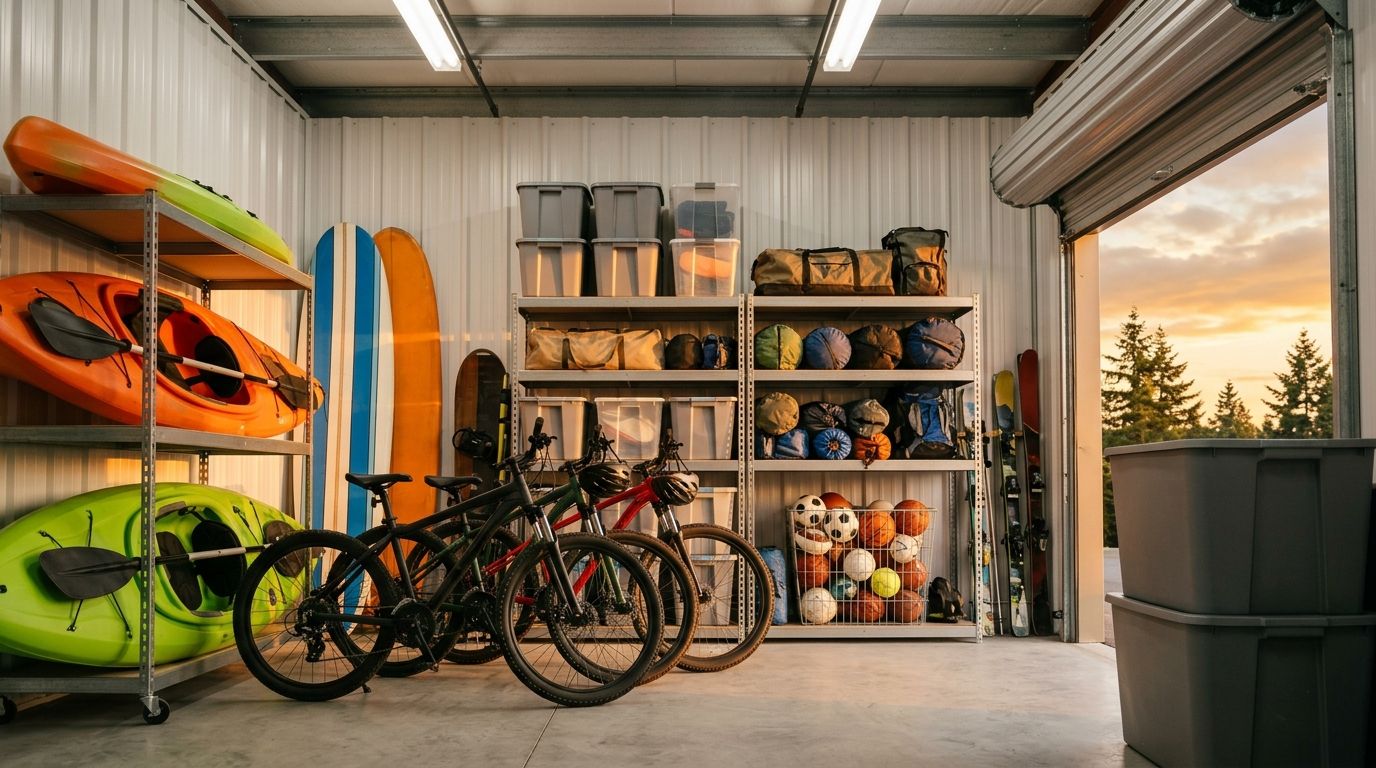
Outdoor recreation and organized sports often require more equipment than a garage, closet, or spare room can comfortably hold. Bikes, skis, snowboards, kayaks, camping supplies, team bags, protective gear, and seasonal clothing can quickly create clutter at home.
A storage unit can provide a dedicated place for equipment that is not being used regularly. The right setup depends on the size and shape of the gear, how often you need access, and whether any items have material-specific storage requirements.
In Everett's cool, wet climate, preparation remains especially important. Equipment should be cleaned, dried, maintained, and packed according to manufacturer guidance before it enters any garage, shed, or storage unit.
Self storage can accommodate many types of permitted recreational and athletic equipment. Always confirm the facility rules before moving unusual, powered, pressurized, or fuel-related items into a unit.
Kayaks, paddleboards, paddles, life jackets, fishing rods, tackle, and clean marine accessories may be suitable for storage.
Rinse away dirt, sand, or salt residue and allow every item to dry completely. Follow the manufacturer's recommendations for supporting a kayak or paddleboard so the hull is not distorted during storage.
Fuel-powered equipment, marine batteries, and items containing fluids may be restricted. Review the lease before bringing them to the facility.
Skis, snowboards, boots, helmets, goggles, roof racks, and winter clothing can be organized together between seasons.
Clean and dry the equipment first. Waxing, edge care, binding maintenance, and other preparation should follow manufacturer instructions or guidance from a qualified service provider.
Bikes, helmets, pumps, repair stands, apparel, and accessories can take up substantial room at home.
Clean the frame and drivetrain, dry the bicycle thoroughly, and complete appropriate maintenance before storage. Use a stable freestanding rack when desired rather than attaching hardware to the unit walls.
Tents, sleeping bags, backpacks, trekking poles, camp furniture, and dry cookware can be grouped together for easier seasonal access.
Tents and fabrics should be completely aired out before packing. Food, fuel, pressurized containers, and other prohibited materials should be removed from camping kits.
Bats, balls, rackets, nets, uniforms, pads, helmets, and equipment bags can be stored by sport or season.
Wash or wipe down reusable gear and make sure padded items are fully dry. Keep small accessories together in labeled containers so they are easy to locate before practices or tournaments.
How equipment is prepared can matter as much as the unit type.
Moisture, dirt, sweat, grass, and salt residue should be removed before storage.
The U.S. Environmental Protection Agency emphasizes moisture control when addressing mold. That guidance does not establish conditions inside a storage unit, but it reinforces the importance of packing only clean, dry equipment.
Different materials require different preparation.
Leather gloves, synthetic fabrics, bike components, ski bindings, waterproof membranes, and foam padding should be handled according to their specific care instructions. Avoid applying the same treatment to every item.
Check bags, tool kits, and equipment cases for fuel, food, batteries, chemicals, pressurized containers, or other restricted contents.
Do not assume an item is permitted simply because it is associated with a sport or outdoor activity.
Sturdy boxes, plastic bins, breathable bags, and equipment-specific cases may all be useful depending on the contents.
Plastic bins can simplify stacking and help keep smaller accessories together. They should not be treated as a substitute for drying gear first, since sealed containers may trap existing moisture.
Label containers by sport, season, family member, or activity.
A basic inventory can help you find uniforms, replacement parts, and accessories without opening every container.
Unit selection should begin with measurements rather than a general room-size comparison.
Kayaks, paddleboards, skis, bicycles, roof carriers, and nets may require more usable length or a different arrangement than boxes.
Measure the equipment, its case or rack, and the path into the unit. Confirm that the unit door and interior layout can accommodate the item without forcing or bending it.
A compact space may work for team bags, golf equipment, helmets, clothing, and seasonal accessories.
A medium space may better suit bikes, camping equipment, winter gear, and several organized bins.
A larger unit may be appropriate for multiple kayaks, paddleboards, family sports equipment, or gear stored alongside other household belongings.
The final choice should be based on your measured inventory and the actual unit layout.
Do not pack so tightly that retrieving an item requires unloading the entire unit.
Leave a practical path when possible and place frequently used gear near the entrance.

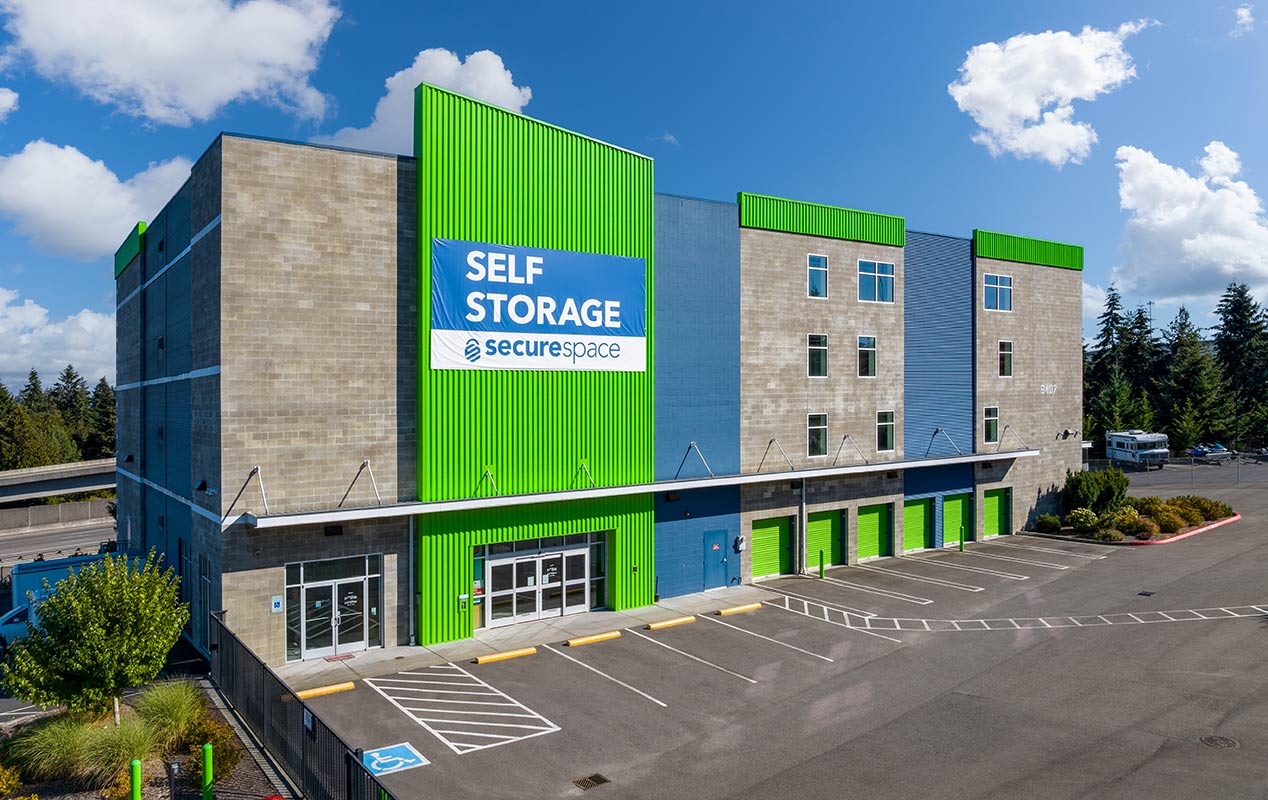
SecureSpace Everett offers climate-controlled and heated storage options.
These features may help reduce exposure to temperature swings and cold conditions compared with an unconditioned space. They should not be described as precise humidity-control systems or as guarantees against rust, mold, warping, cracking, or other deterioration.
Climate-controlled or heated storage may be worth considering for compatible equipment containing electronics, leather, adhesives, specialized fabrics, or other materials affected by temperature changes.
The needs of each item should still be checked against manufacturer guidance.
A planned layout can make seasonal changes much easier.
Keep cycling, camping, water sports, winter sports, and team equipment in separate areas.
This reduces the need to move unrelated belongings when preparing for a particular activity.
Place current-season equipment closer to the entrance and move off-season gear farther back.
When the season changes, inspect and reorganize the equipment rather than simply swapping piles.
Freestanding shelving, racks, and organizers can help use vertical space without modifying the unit.
Make sure each rack is stable, appropriate for the equipment, and permitted under the rental agreement.
Use manufacturer-approved supports, cradles, bags, or stands for kayaks, boards, skis, and bicycles.
Avoid resting heavy objects on equipment that may bend, dent, or lose its shape.
Use labeled containers for gloves, repair supplies, goggles, straps, pumps, protective pads, and similar items.
Clear containers may make contents easier to identify, but any sturdy and suitable container can work.
Record what is stored and where it is located.
Keeping frequently accessed items toward the front can also make regular visits more efficient.
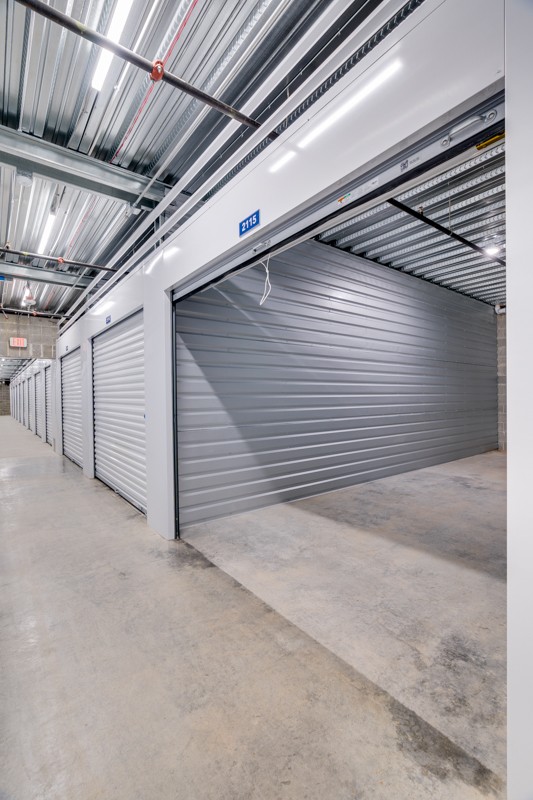
Indoor units are reached through the building and may provide elevator access.
Drive-up units allow customers to park closer to the storage door, which can be convenient for bulky gear. Vehicles cannot be stored inside drive-up units at SecureSpace Everett.
Elevator access is available for indoor units away from the ground level.
Carts and dollies are also available to help move bins, bikes, bags, and other equipment through the facility.
Outdoor parking is available for eligible boats, recreational vehicles, cars, and other approved motor vehicles.
Confirm eligibility, dimensions, documentation requirements, facility rules, and current availability before making plans. Covered parking and indoor vehicle storage are not available.
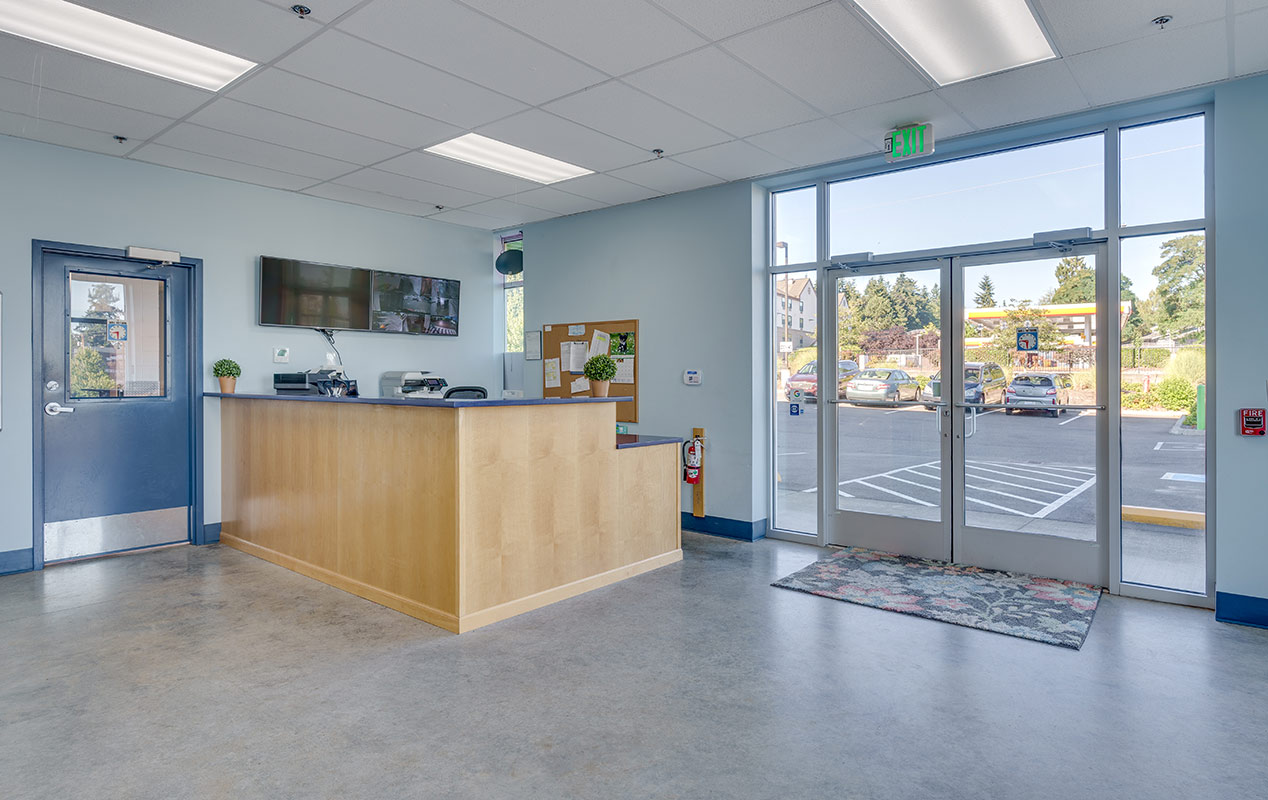
SecureSpace Everett provides daily gate access from early morning into the evening.
Review the current access schedule before planning early departures or late returns. Manager hours are separate from unit-access hours.
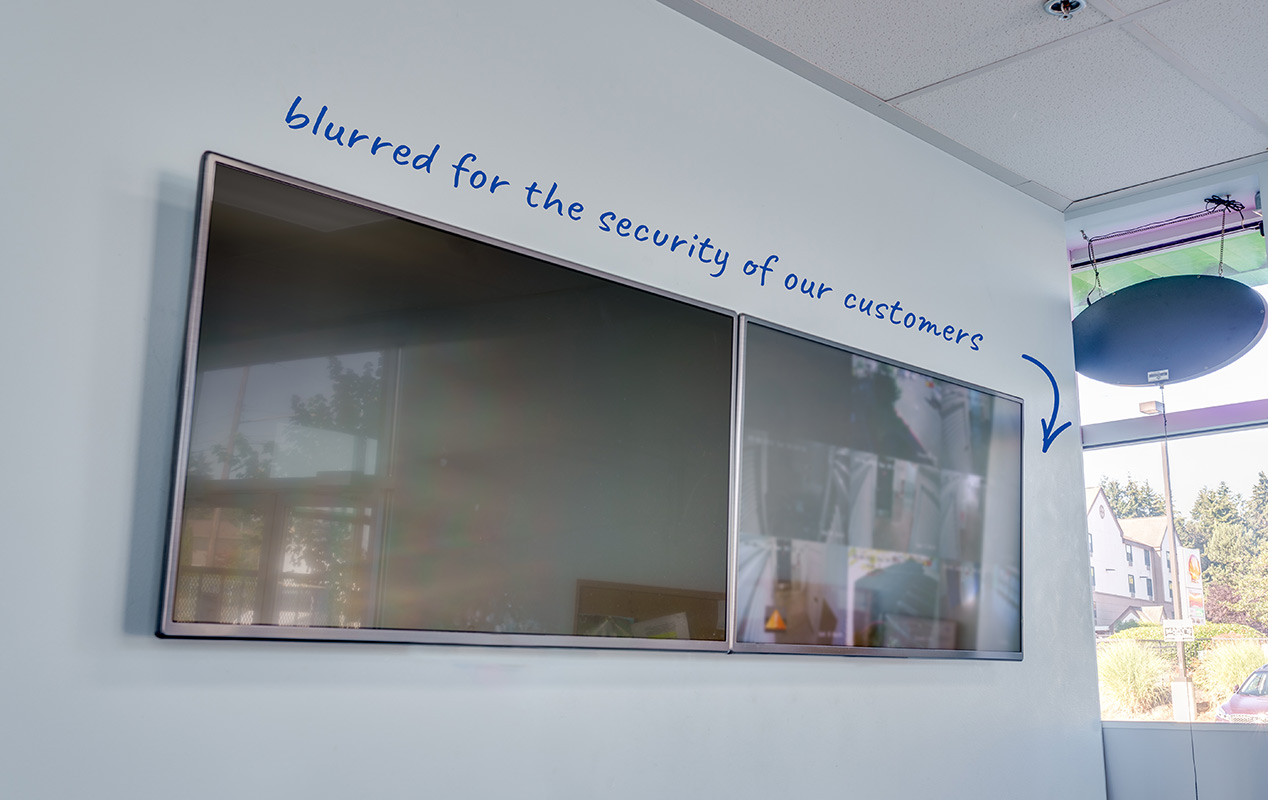
The facility includes an access gate, digital video recording, logged access, overnight surveillance, touchless computer-controlled access, and Turing-enabled monitoring.
These features support access and monitoring procedures but cannot guarantee protection against theft, loss, or damage.
Customers should also use a suitable lock, maintain an inventory, review applicable coverage requirements, and protect their access credentials.
Month-to-month leases, online rental, online payments, electronic payment plans, and touchless move-in are available.
Review billing dates, notice requirements, rate terms, and move-out procedures before completing the rental.

Not every item requires it.
The appropriate unit depends on the materials, manufacturer guidance, preparation, and expected storage period. Climate-controlled and heated options may help reduce exposure to temperature swings and cold conditions but do not guarantee humidity control or prevent damage.
Permitted kayaks and paddleboards may be stored when they fit within the unit and are prepared appropriately.
Measure the equipment and use manufacturer-recommended supports. Do not rely on a generic unit recommendation.
SecureSpace Everett offers outdoor parking for eligible boats, recreational vehicles, cars, and other approved motor vehicles.
Confirm current availability, dimensions, documentation, and facility rules before bringing the vehicle to the property.
Do not assume these items are permitted.
Batteries, fuel, fluids, pressurized containers, and powered equipment may be restricted. Review the lease and manufacturer guidance before storage.
Plastic bins may be useful for smaller accessories and repeated seasonal use, while sturdy boxes may work for other clean, dry items.
Neither option can correct for equipment packed while damp or dirty.
Do not drill, attach hardware, or modify the unit without written permission.
Use stable freestanding racks or equipment-specific stands instead.
No storage method can guarantee that equipment will not deteriorate, shift, or become damaged.
Careful cleaning, drying, maintenance, packing, organization, and periodic inspection can help reduce avoidable problems.
A storage unit can create a dedicated place for sports equipment while keeping gear organized between seasons.
Start by cleaning and drying every item, checking manufacturer instructions, measuring bulky equipment, and confirming that all contents are permitted. Then select a unit based on the actual inventory and access needs rather than a generic size estimate.
Everything you need to store your belongings securely, on your schedule.
Visit us online