Last updated Jul 31, 2026
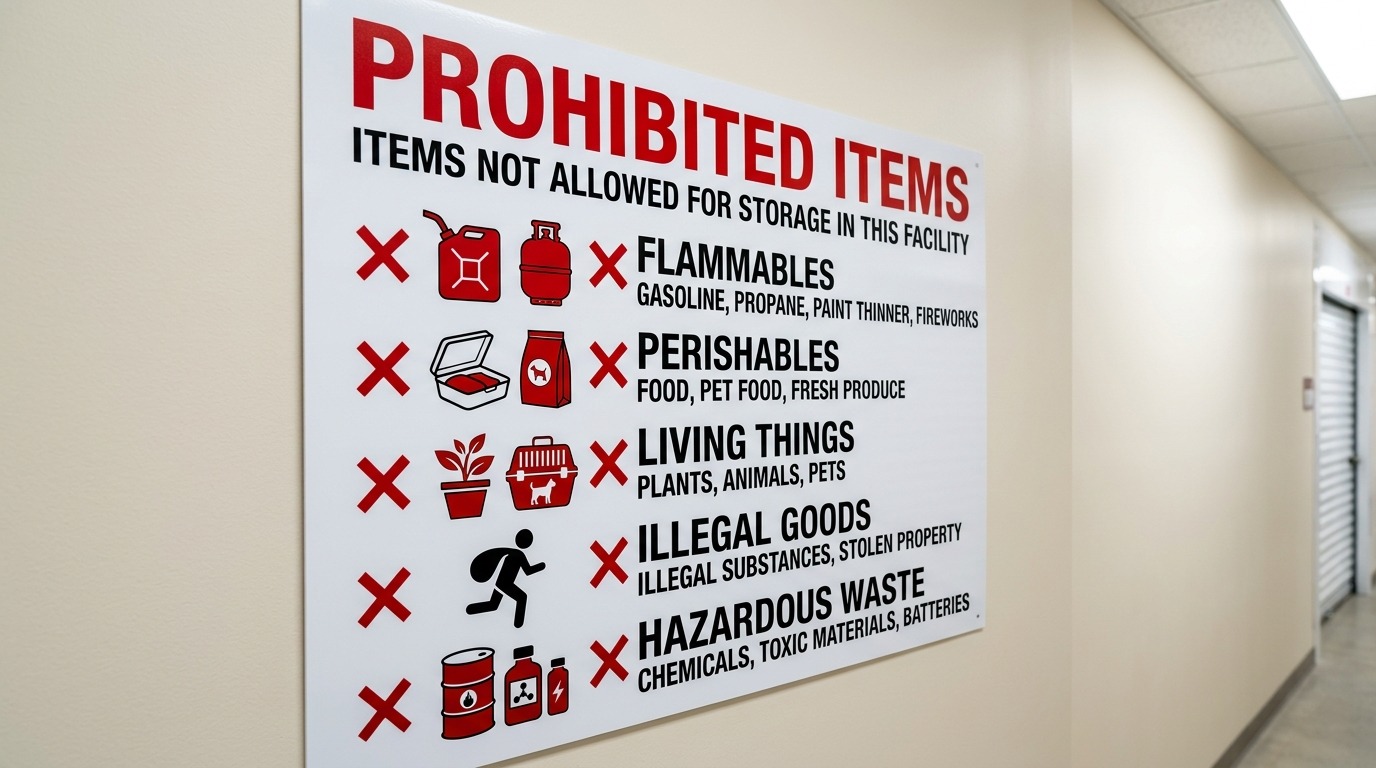
Storage units can hold many ordinary household and business belongings, but they are not designed for every type of property or activity. Hazardous materials, perishable goods, living things, illegal property, and items that require specialized environmental conditions may be restricted or unsuitable.
The rental agreement provides the controlling list of prohibited items for a specific facility. Before moving anything unusual, regulated, fuel-powered, or potentially hazardous into storage, confirm the current rules directly with the facility.
Prohibited-item policies are intended to protect customers, employees, stored property, and the facility itself.
Some items can leak, ignite, release fumes, attract pests, damage nearby property, or create health and safety concerns. Other belongings may require environmental conditions, security arrangements, or legal controls that a standard self-storage unit cannot provide.
Washington's self-service storage law also governs rental agreements, liens, insurance disclosures, and other aspects of self-service storage. The law does not replace the facility's lease or create a universal list of items that every location must accept.
Storage facilities commonly prohibit materials that can burn, explode, leak, release dangerous fumes, or react with other substances.
Examples may include:
Gasoline and diesel
Propane and other compressed gases
Fireworks and explosives
Solvents and paint thinner
Kerosene and combustible liquids
Hazardous chemicals
Certain pesticides and fertilizers
Unapproved fuel containers
Other flammable or reactive products
Do not assume that a container is safe because it appears empty. Residue or fumes may remain inside.
Review the lease before storing paint, cleaning chemicals, automotive products, lawn-care materials, or workshop supplies. When uncertain, ask the facility before move-in.
Lawn equipment, generators, marine equipment, and other fuel-powered devices may be subject to special preparation requirements or may not be permitted inside a storage unit.
Do not place equipment containing fuel, leaking fluids, or strong fumes into an enclosed unit. Review the manufacturer's storage instructions and confirm the facility's rules before bringing the item to the property.
Boat owners can also consult Port of Everett resources or a qualified marine service provider for maintenance and preparation guidance.
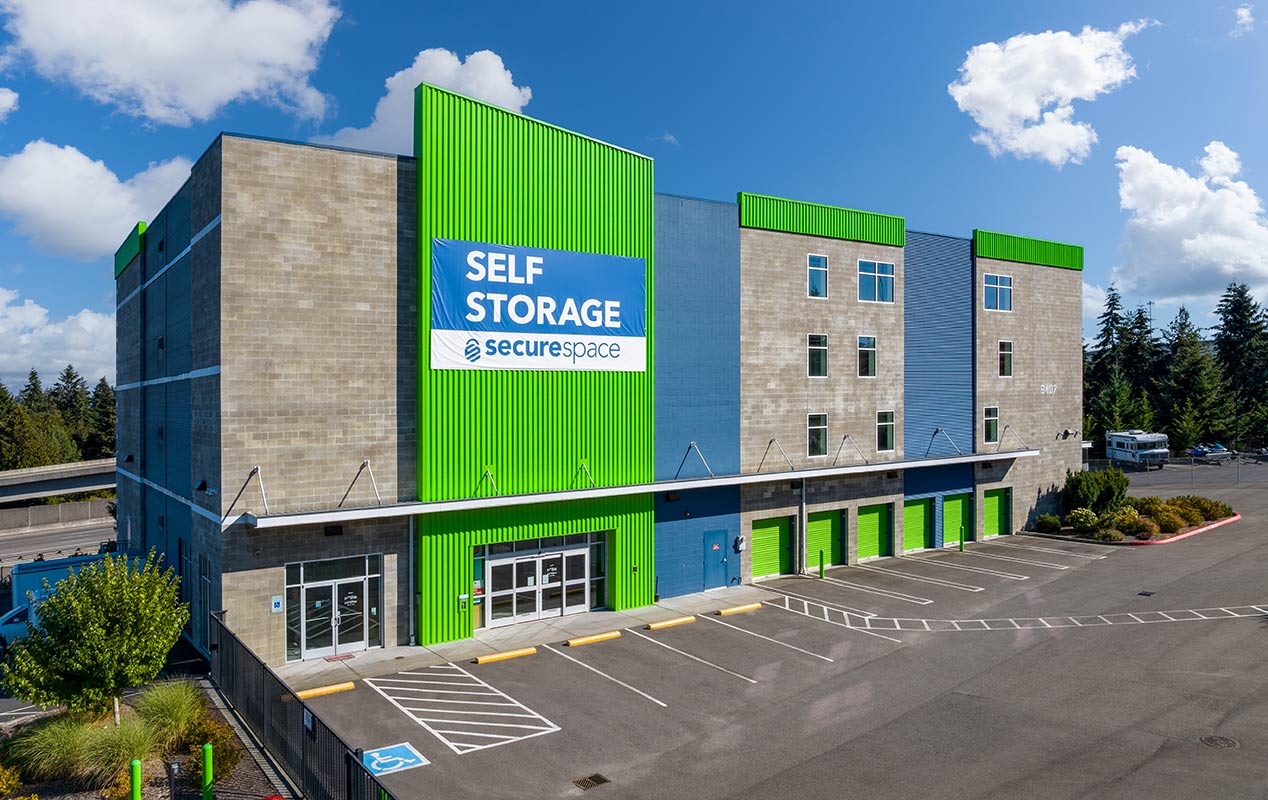
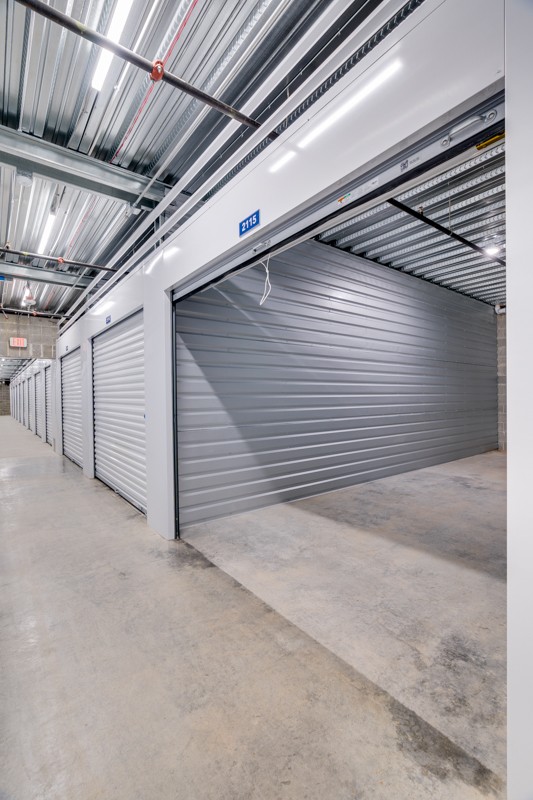
SecureSpace Everett offers outdoor parking for eligible boats, recreational vehicles, cars, and other approved motor vehicles. Vehicles cannot be stored inside drive-up units.
Perishable food should not be placed in a storage unit.
Fresh food, dairy products, meat, produce, and opened pet food can spoil, create odors, and attract insects or rodents. Climate-controlled storage does not turn a unit into a refrigerator or food-storage facility.
Rules for sealed, shelf-stable food may vary. Confirm the facility's policy before storing any food product, including canned goods, dry goods, animal feed, or packaged commercial inventory.

Storage units are not appropriate for animals, plants, or any other living organism.
They do not provide suitable light, ventilation, water, sanitation, temperature conditions, or supervision. Never leave pets, livestock, insects, plants, or people inside a unit.
A storage unit cannot be used as a home, sleeping area, or temporary living space.
Washington's law on self-service storage facilities prohibits residential use. Storage units are not designed to provide the ventilation, plumbing, sanitation, emergency access, or other features required for habitation.
Do not use a unit for sleeping, cooking, bathing, or maintaining a living arrangement. Residential use may also violate the rental agreement and other applicable requirements.
Illegal property should never be placed in a storage unit.
This includes stolen goods, unlawful substances, counterfeit merchandise, and any other property that cannot legally be possessed.
Facility employees may handle suspected illegal items according to the rental agreement and applicable law. Customers remain responsible for ensuring that everything placed in the unit is lawful.
Policies involving firearms, ammunition, and other weapons can vary by facility and jurisdiction.
Do not assume that these items are permitted. Review the rental agreement and applicable laws before attempting to store any firearm, ammunition, weapon, or related material.
A specialized provider may be more appropriate when an item requires controlled access, particular security measures, or regulated storage conditions.
Even when damp items are not expressly listed as prohibited, they should not be placed into storage.
Wet tents, patio cushions, furniture, clothing, appliances, rugs, and outdoor equipment can develop odors or deterioration during storage. Moisture already present on an item can create problems regardless of whether the unit is standard, heated, or climate controlled.
The Washington State Department of Health recommends keeping materials dry as part of controlling mold growth.
Before move-in:
Allow washed items to dry completely
Air out tents and camping equipment
Drain and dry appliances
Clean dirt and plant matter from outdoor gear
Check upholstered furniture for dampness
Avoid sealing moisture inside containers
Use packing materials appropriate for the item
Climate-controlled and heated options may help reduce exposure to temperature swings and cold conditions, but they do not guarantee humidity control or prevent mold.
A storage unit may not be the best place for cash, jewelry, original legal records, identity documents, or other irreplaceable property.
Even facilities with access controls and monitoring features cannot guarantee protection against theft, fire, water intrusion, or other loss.
Consider a bank, secure records provider, home safe, or another specialized solution for belongings that cannot be replaced.
Review any value limits in the rental agreement and discuss coverage with an insurance professional before storing expensive business or household property.
Medication, cosmetics, chemicals, and other products with strict temperature requirements may be unsuitable for self storage.
Climate-controlled storage should not be treated as pharmaceutical, laboratory, or refrigerated storage. Conditions may not meet the product's required range.
Follow the manufacturer's instructions and use a specialized provider when controlled environmental conditions are necessary.
Business customers should confirm that every product and material is permitted before placing commercial inventory in storage.
Restricted items may include:
Flammable liquids
Pressurized containers
Hazardous chemicals
Perishable inventory
Regulated materials
Products that release odors or fumes
Items requiring refrigeration
Materials requiring specialized fire protection
A storage unit can be useful for approved tools, packaged products, office supplies, records, and other compatible inventory. It should not be used as a workshop, manufacturing space, chemical-storage area, or freight facility.
Some belongings may be legal to possess but unsuitable for a standard unit because they require precise environmental conditions or special handling.
Examples may include sensitive scientific materials, temperature-regulated products, confidential records with strict compliance requirements, and equipment requiring continuous power.
Ask whether the selected unit can realistically support the item. Climate-controlled and heated storage may help moderate temperature conditions, but they do not provide guaranteed humidity levels, uninterrupted electricity, or laboratory-grade controls.
The response depends on the item, the rental agreement, and applicable law.
A facility may require removal of the property or take other action allowed under the lease. Serious safety concerns or suspected illegal activity may be referred to the appropriate authorities.
Do not assume that a minor violation will be handled informally or that access will remain unchanged. Read the lease before move-in and promptly contact the facility when you are unsure about an item.

Many clean, dry, lawful, and permitted belongings may be suitable for self storage.
Examples can include:
Household furniture
Clean appliances
Clothing and linens
Books and ordinary records
Bicycles
Dry camping equipment
Sports gear
Seasonal decorations
Approved tools
Permitted business inventory
Moving boxes and packing supplies
Suitability depends on the item's condition, manufacturer instructions, lease restrictions, and required storage environment.
Climate-controlled and heated units may be useful for compatible belongings when reduced exposure to temperature swings and cold conditions is a priority. They do not guarantee protection from deterioration.
Do not assume propane tanks or similar pressurized containers are permitted.
These items may contain residual gas even when they appear empty. Review the facility's prohibited-items policy and use an approved alternative storage method.
SecureSpace Everett offers outdoor parking for eligible boats and other approved vehicles.
Confirm dimensions, documentation, availability, preparation requirements, and facility rules before making plans. Boats and vehicles cannot be placed inside drive-up units.
No. Residential use is prohibited.
A storage unit cannot be used for sleeping, cooking, bathing, or any other living arrangement.
Perishable food should not be stored.
Policies for factory-sealed, shelf-stable products may vary, so check the rental agreement before storing any food.
Camping gear should be completely clean and dry before storage.
Air out tents, sleeping bags, covers, and outdoor fabrics before packing them into containers.
Approved tools, equipment, supplies, and inventory may be suitable, but permission should not be assumed.
Confirm the items with the facility and keep active work, machinery use, repairs, customer meetings, and business operations outside the unit.
Washington law does not obligate a storage owner to provide insurance for stored belongings.
Review the rental agreement, existing homeowners or renters coverage, commercial insurance, and any facility requirements before move-in.
The safest approach is to review the rental agreement before packing and ask about anything unusual.
Remove hazardous, wet, perishable, illegal, living, or environmentally sensitive items before arriving. Confirm rules for business inventory, fuel-powered equipment, food, weapons, boats, and regulated materials directly with the facility.
For current storage options and rental details, visit SecureSpace Self Storage Everett.
Everything you need to store your belongings securely, on your schedule.
Visit us online