Last updated Jul 24, 2026
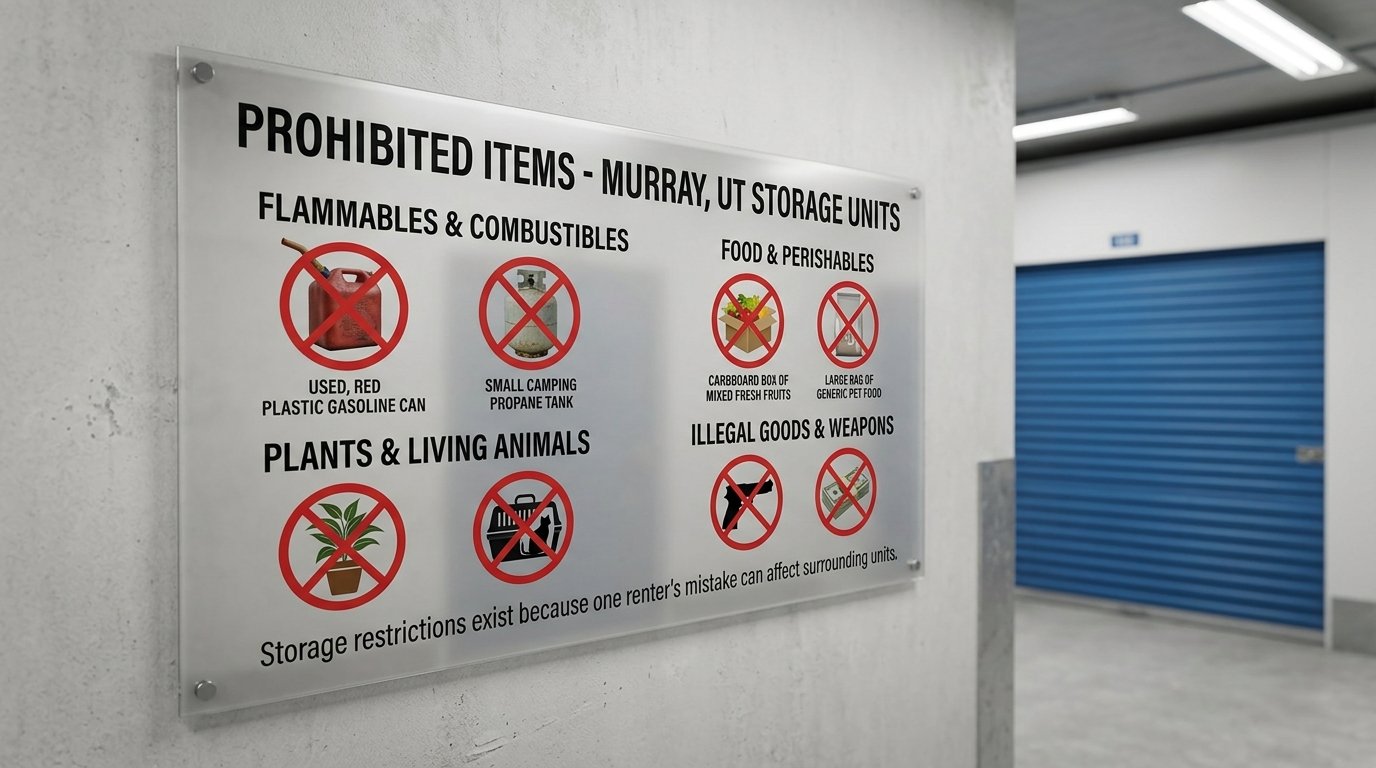
Renting a storage unit in Murray should be simple: pack the items that are allowed, prepare them correctly, and review the facility rules before move-in. Most household goods, seasonal items, furniture, documents, business supplies, and recreational gear can usually be stored without issue. The problems start with items that create fire, pest, health, legal, or safety risks.
Storage restrictions exist because one renter's mistake can affect surrounding units. A leaking fuel container, food that attracts pests, or an improperly stored hazardous material can create problems far beyond a single space.
This guide walks through the items that are commonly prohibited in storage units, why those restrictions exist, and how to prepare common items such as lawn equipment, recreational gear, and household belongings before move-in.
Self-storage rules in Utah are often similar across facilities, and they're shaped by rental agreements, state law, and local fire-code requirements. Each facility's lease controls the final list, so review your rental agreement before move-in.
Commonly restricted items include:
Food and perishables
Living plants or animals
Gasoline, propane, kerosene, lighter fluid, and other fuels
Hazardous or toxic chemicals
Medical, biological, or regulated waste
Illegal, stolen, or restricted items
Items used for living, sleeping, or operating a business inside the unit
The safest approach is simple: if an item could leak, rot, attract pests, ignite, create fumes, violate the law, or require special handling, ask before storing it.
Food is commonly prohibited in self-storage units because it can attract pests. That includes perishables, canned goods, boxed dry foods, pet food, and bulk emergency supplies.
Even sealed packaging can become a problem in a shared storage environment. Rodents, ants, cockroaches, flour beetles, and other pests can be drawn to stored food and may spread beyond one unit. According to Utah State University Extension, proper food storage requires stable, controlled home environments-not shared commercial units.
This rule can surprise Murray families who keep emergency food supplies or extra pantry goods. If your pantry is overflowing, store non-perishables in a cool, dry spot inside your home, or donate surplus to local organizations like the Murray Children's Pantry or the Utah Food Bank.
Flammable and combustible liquids are commonly prohibited in storage units. That includes gasoline, propane, kerosene, lighter fluid, diesel, white gas, some oil-based paints, and similar materials.
These items can create fire, explosion, and fume risks, especially when stored in containers that may leak, expand, or deteriorate over time. The Murray Fire Marshal enforces the International Fire Code, which tightly regulates how and where combustible liquids can be kept.
Do not assume that home-storage rules apply to a commercial self-storage unit. If you are storing equipment that normally uses fuel, drain and prepare it according to the facility's requirements before move-in.
No. Storage units are for property, not living things.
Plants need sunlight, airflow, and care. Animals cannot be housed or kenneled in a unit. People also cannot live, sleep, or work from a storage unit as if it were a residence or office.
These restrictions are not just technicalities. Storage units are not built with the ventilation, plumbing, light, emergency access, or life-safety features required for habitation. If you need housing, workspace, or animal care, a storage unit is not the right solution.
Hazardous materials, toxic chemicals, biological waste, used sharps, pharmaceuticals, asbestos, lead paint, pool chemicals, and similar regulated items should not be placed in a standard consumer storage unit unless the facility and applicable rules specifically allow it.
This is especially important for business customers. A storage unit may work for general supplies, documents, displays, or non-hazardous equipment, but regulated materials need proper handling. If an item has disposal rules, safety data sheets, refrigeration requirements, prescription controls, or biohazard handling requirements, check the facility rules and applicable regulations before storing it.
For ordinary medical or accessibility equipment, such as a wheelchair or mobility aid, ask the facility if you are unsure. The key distinction is whether the item is clean, non-hazardous, and appropriate for standard storage.
Illegal, stolen, or restricted items should never be stored in a storage unit. That includes illegal drugs, stolen property, and other items that are unlawful to possess or store.
Firearms and ammunition can involve separate legal, lease, and safety requirements, so do not assume they are allowed. Check the rental agreement and applicable laws before storing anything regulated.
If you are unsure whether an item is allowed, ask the facility before moving it in.
Some items may not be prohibited, but they are still better kept somewhere else. Cash, passports, sensitive legal documents, irreplaceable records, and one-of-a-kind personal items may be safer in a bank safe deposit box, fire-resistant home safe, or another location designed for those materials.
Storage units can be useful for boxes, furniture, household goods, seasonal gear, and business records, but they should not replace a secure document plan for items you cannot easily replace.
Many Murray residents own ATVs, snowmobiles, camping gear, lawn equipment, and other recreational items. Some of these items may be allowed in storage, but the fuel and fluids are the issue.
Before storing gas-powered equipment, ask the facility what preparation is required. Common steps may include:
Draining fuel from the tank and lines
Removing or disconnecting the battery
Cleaning off mud, debris, and residue
Checking tires before longer storage periods
Making sure no loose fuel, oil, or hazardous materials are stored with the equipment
A drive-up unit or outdoor parking space may make loading and unloading larger recreational equipment easier, depending on the item, availability, and facility rules.
Storage facilities enforce restrictions to reduce fire risk, pest problems, contamination, legal issues, and damage to surrounding units. A storage property is a shared environment, so one restricted item can create problems for other renters.
Clear rules also make move-in smoother. If you separate prohibited items before loading the truck, you avoid last-minute delays and reduce the chance that you will need to remove items after arrival.
Before move-in, review the rental agreement, ask about any questionable items, and prepare permitted belongings so they are clean, dry, and ready for storage.
Food is commonly prohibited in storage units, including canned and non-perishable items. Even sealed food can attract pests in a shared storage setting. Keep emergency food supplies in an appropriate home-storage area or consider donating extra pantry goods.
Possibly, but only if the equipment is prepared according to facility rules. Ask about fuel, oil, battery, and cleaning requirements before bringing gas-powered equipment to the property. Loose fuel and combustible liquids should not be stored in the unit.
No. Storage units are not designed or permitted for living or sleeping. They lack the safety, plumbing, ventilation, and utility features required for habitation.
Do not store pharmaceuticals, used sharps, biological waste, or regulated medical materials in a standard storage unit unless the facility and applicable rules specifically allow it. General business supplies, documents, displays, or clean non-hazardous equipment may be more appropriate, but check the lease first.
Do not store gasoline, propane, kerosene, lighter fluid, or other combustible liquids in a storage unit. If you are storing equipment that uses fuel, ask how it should be drained and prepared before move-in.
Knowing what not to store makes move-in easier. Separate food, fuel, hazardous materials, regulated items, and anything living before loading your vehicle. Then pack permitted belongings clean, dry, and organized so they are easier to place in the unit.
Need space for household goods, seasonal gear, or business supplies? Review current options for self storage in Murray, UT at SecureSpace.
Everything you need to store your belongings securely, on your schedule.
Visit us online