Last updated Jul 24, 2026
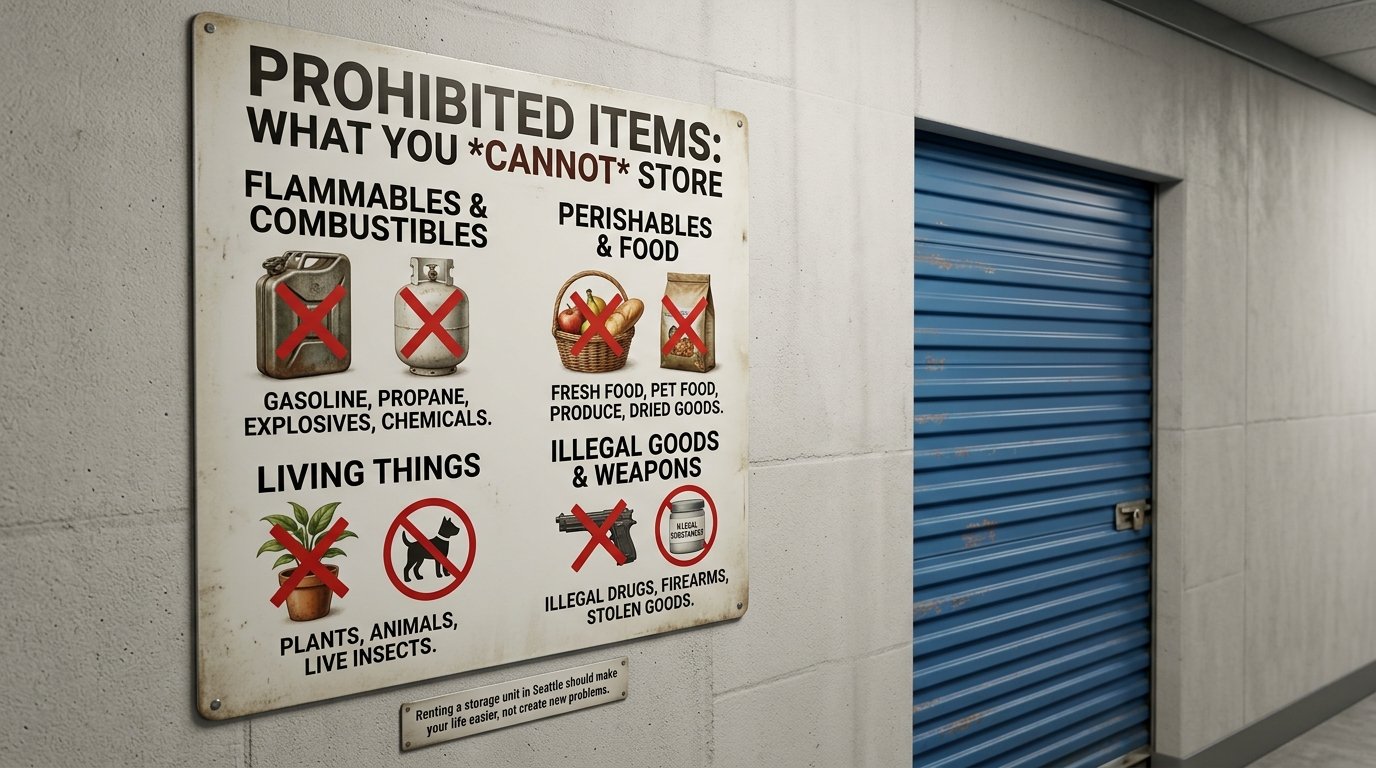
Renting a storage unit in Seattle should make your life easier, not create new problems. Before move-in, it's worth knowing which items are not allowed, which items need special handling, and when you should ask the facility before bringing something to your unit.
Most prohibited items fall into a few clear categories: hazardous materials, perishables, living things, illegal goods, weapons, and items that create safety or pest risks. This guide breaks down what is generally off-limits in a Seattle storage unit, why those rules exist, and how to prepare allowed belongings for storage.
Self-storage facilities across Seattle and Washington typically prohibit the same core categories of items. These rules are meant to protect customers, staff, neighboring units, and the facility itself. Storing a prohibited item can violate your lease and may lead to additional costs or loss of access.
If you're unsure about a specific item, ask the facility before you store it. A quick question before move-in can help keep your lease in good standing.
This is one of the biggest sources of confusion for Seattle renters. Many residents own e-bikes, electric scooters, portable power stations, and rechargeable tools, all of which may rely on lithium-ion batteries.
The concern is fire safety. Lithium-ion batteries can fail if damaged, charged improperly, stored incorrectly, or exposed to unsafe conditions. The Seattle Fire Code includes safety guidance for lithium-ion batteries, and the Seattle Fire Department enforces strict storage rules for certain lithium-ion battery and energy storage system setups.
For a self-storage customer, the practical takeaway is simple: do not charge batteries inside a storage unit, do not store damaged or swollen batteries, and confirm the facility's battery and e-bike rules before move-in.
Seattle also has disposal rules to keep batteries out of regular trash. Seattle Public Utilities has banned batteries of all sizes from garbage collection because of fire risk, so damaged or unwanted batteries should go through approved recycling or disposal channels.
Not until it is completely dry.
Seattle sees frequent rain, and the city is often described as receiving around 37 inches of rain a year. For storage, the exact number matters less than the practical reality: outdoor gear often comes home wet, muddy, or salty, and it should not be packed away that way.
Before storing outdoor gear:
Rinse off salt, dirt, and debris.
Dry everything completely before storage.
Avoid sealing damp tents, clothing, or gear inside boxes or bins.
Use sturdy containers where appropriate.
Confirm oversized-item rules with the facility before storing large gear.
For general rainy-season guidance on protecting your belongings from moisture, focus on preparation first: clean items, dry them fully, and pack them in a way that fits the item and the storage unit.
No. SecureSpace and many self-storage facilities prohibit firearms, ammunition, explosives, and similar hazardous items in storage units.
Because storage facilities are private commercial properties, the lease and facility rules control what can be stored on-site. Washington also has broader rules around the unsafe storage of a firearm, so customers should use an appropriate, lawful storage option outside of a self-storage unit.
If you need to store a firearm or ammunition, look into a licensed firearms dealer, gun safe, or another lawful storage method designed for that purpose.
Storing a prohibited item is not a small mistake. It can violate your rental agreement, create safety risks, and make you responsible for damages, cleanup, or other costs.
Washington law also gives storage operators certain lien rights when rent or other charges go unpaid. The Washington Self-Service Storage Facility Act (RCW 19.150) outlines the legal framework for self-service storage facilities, including lien and sale procedures. The exact process depends on the facts, notices, and amounts owed, so customers should not rely on general summaries as legal advice.
The best approach is simple: follow the prohibited-items list, pay rent on time, and ask before storing anything questionable.
The vast majority of everyday belongings are generally appropriate for storage when they are clean, dry, allowed by the lease, and packed properly. Common examples include:
Household furniture and home goods
Appliances allowed by the facility
Consumer electronics with batteries removed where possible
Seasonal wardrobes and clothing
Thoroughly dried camping and outdoor gear
Non-hazardous business inventory and documents
Boxes, bins, and household overflow
Always check the facility's prohibited-items list before storing anything unusual, high-value, battery-powered, regulated, oversized, or potentially hazardous.
Picking the right unit comes down to matching your belongings to the right space and facility rules.
Heated indoor storage can be useful in Seattle, especially during colder months. It can help reduce exposure to cold conditions compared with non-heated spaces, while keeping items inside a building.
Standard storage may work for sturdy, non-hazardous items that are fully dry, properly packed, and allowed by the facility.
Do not assume vehicle, boat, motorcycle, or RV storage is available. Parking and vehicle storage vary by facility, and some locations do not offer it at all. Confirm directly before planning storage for anything with a motor, title, fuel system, or oversized footprint.
If an item is regulated, battery-powered, high-value, oversized, potentially hazardous, or difficult to classify, ask the facility before storing it.
Perishable food, opened food, pet food, and pest-attracting items are typically prohibited. These items can attract rodents and insects, create odors, and cause sanitation problems. If you are unsure about unopened canned goods or shelf-stable items, check the facility's prohibited-items policy before storing them.
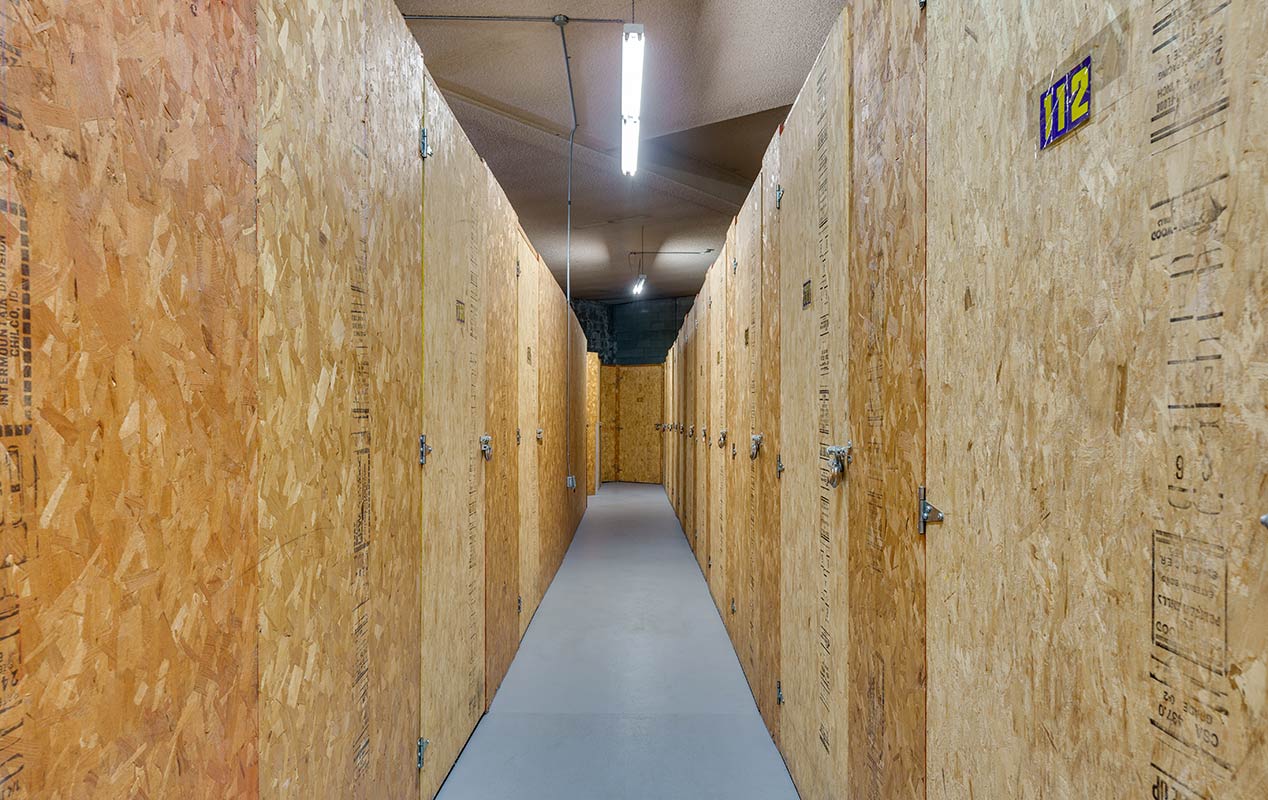
Some Seattle storage facilities offer heated indoor storage. Availability varies by location, so review the facility page or contact the storage office before renting.
Do not assume vehicle storage is available. Cars, motorcycles, boats, and RVs may require specific vehicle storage options, and not every facility offers them. Contact the facility directly before planning to store any vehicle.
Washington's self-storage lien process is governed by RCW 19.150, and the exact timeline depends on the notices, account status, and legal requirements involved. If your account is past due, contact the facility immediately and review the statute or speak with a qualified professional.
Contact the facility directly. They can confirm whether a specific item is allowed and whether any packing, safety, or lease restrictions apply.
Knowing the rules takes the guesswork out of storage. Keep flammable materials, hazardous items, perishables, living things, illegal goods, weapons, ammunition, and damaged or loose batteries out of your unit. Make sure everything you store is clean, dry, and allowed under your lease.
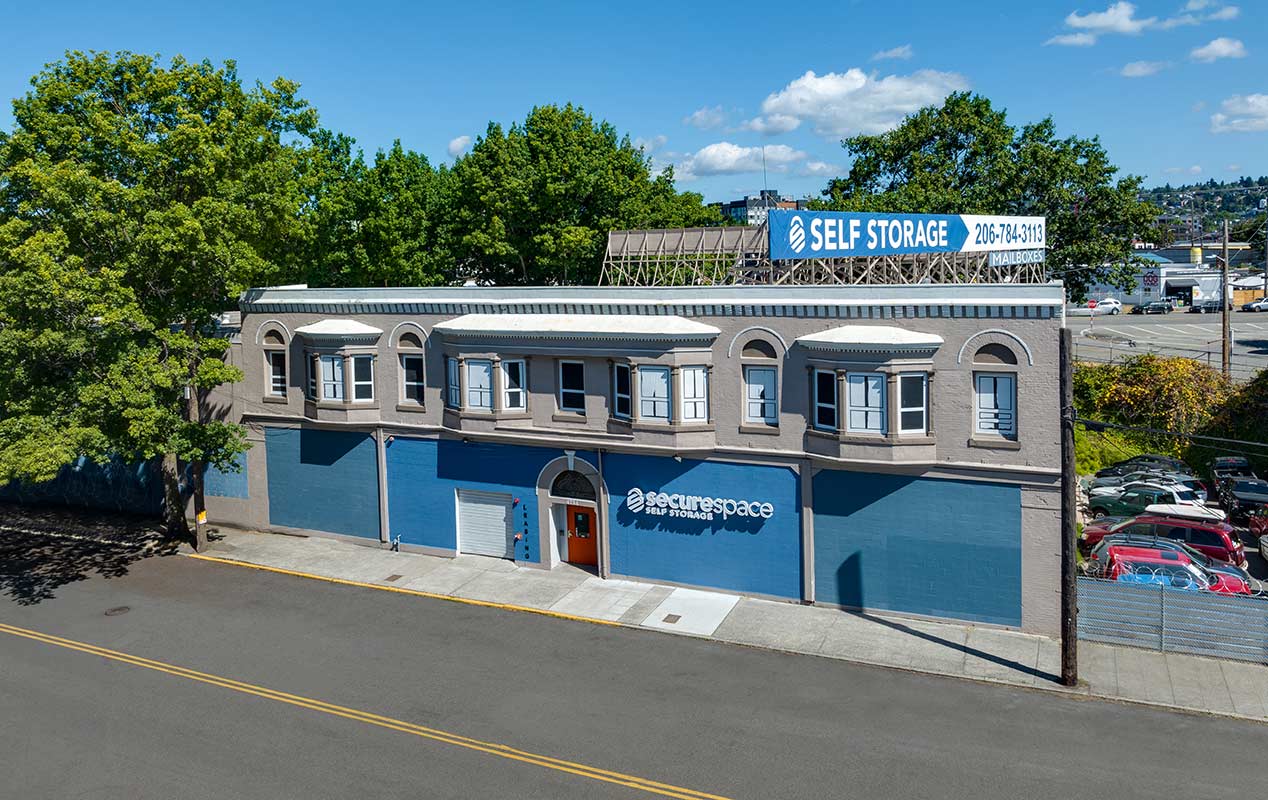
Ready to find storage in Seattle? Explore SecureSpace Self Storage locations across Seattle and reserve your space today.
Everything you need to store your belongings securely, on your schedule.
Visit us online