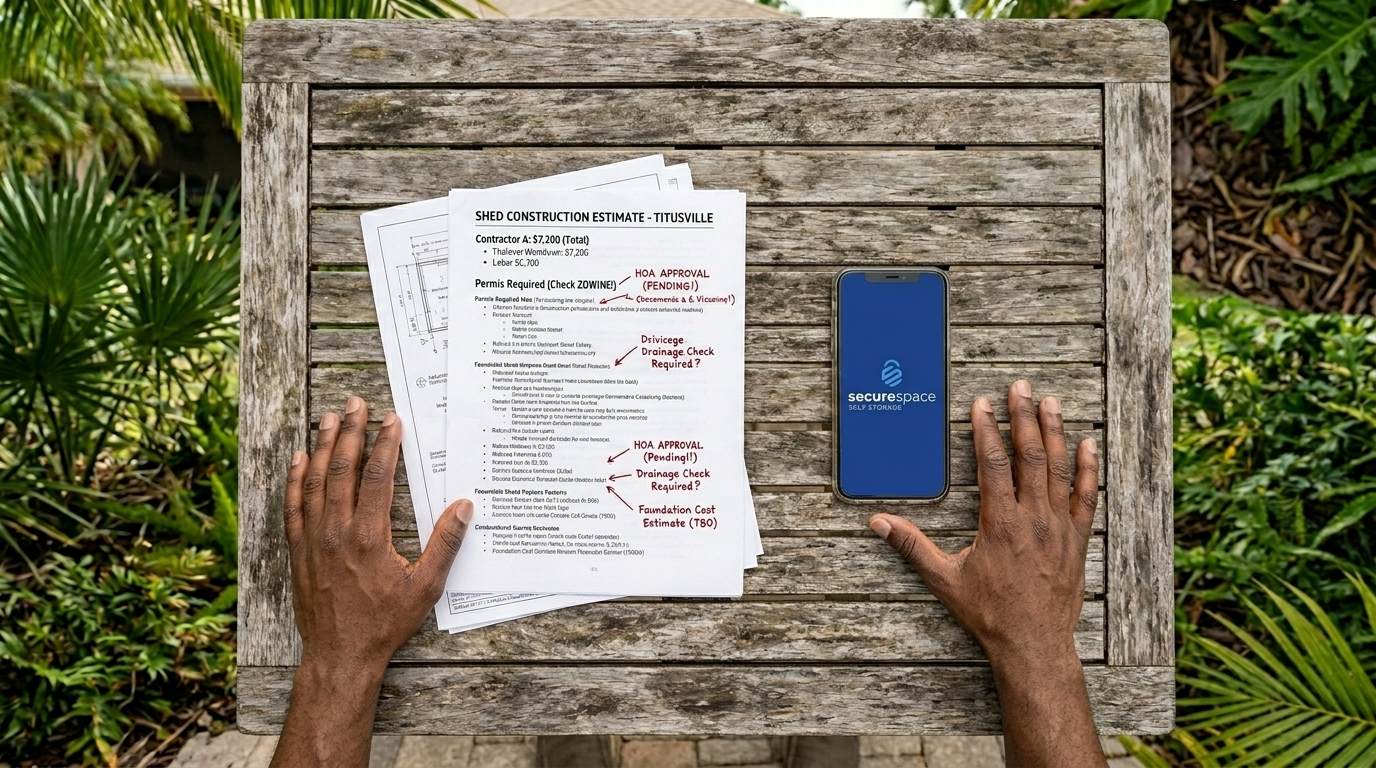
Finding extra space in your home often feels like a constant battle. Maybe you are finally tackling a major home renovation, downsizing to enjoy a more relaxed Space Coast lifestyle, or simply need a safe spot for your golf clubs and seasonal gear. When the closets overflow and the garage is packed to the brim, you are faced with a significant choice: build a permanent shed in your backyard or rent a local self-storage unit.
At first glance, buying a prefabricated shed seems like a straightforward project. You pick out a design, place it in your yard, and fill it up. However, the reality of adding a permanent structure to your property in Florida is far more complex. It involves a web of hidden expenses, municipal regulations, and environmental challenges that can quickly turn a weekend project into a frustrating, months-long ordeal.
If you are a homeowner in Titusville weighing your options, understanding the true financial and logistical impact of a backyard shed is crucial. This guide breaks down the real costs, regulatory hurdles, and environmental risks you face, helping you choose a secure, flexible, and less stressful solution for your belongings.
The initial motivation to buy a shed usually stems from the idea of a one-time, low-cost investment. You might see a base price tag of $4,500 for a standard 10x12 shed and think the budgeting stops there. Unfortunately, the sticker price of the building itself is only a fraction of the total required capital.
In Florida, you cannot simply drop a heavy structure onto the grass. To meet building codes and help prevent your new shed from warping or sinking into the sandy soil, you may need a level, reinforced foundation.
Pouring a standard 4-inch reinforced concrete slab averages about $6.23 per square foot in Florida, according to construction cost data from resources like This Old House. For a basic 10x12 space, the foundation alone may add roughly $600 to $750 to your project.
Beyond the concrete, you may also need to prepare the site. If your backyard is uneven, heavily wooded, or filled with deep root systems, land clearing and stump removal may be required. Grading a build site can add anywhere from $1,200 to almost $4,000 to your overall expenses before a single drop of concrete is even poured. Suddenly, your $4,500 shed can become a much larger capital expenditure.
A pervasive myth in real estate is that any permanent structure you build automatically adds equivalent resale value to your home. While a high-end, custom-built workshop might attract a specific buyer, a basic storage shed may not yield a significant return on investment when it comes time to sell.
Adding a permanent concrete foundation or utility connections may trigger a property reassessment by the Brevard County Property Appraiser. While the structure might not boost your home's market value dollar for dollar, the added improvement can affect assessed value and may result in a higher property tax bill. Your shed can become a financial liability that requires ongoing costs long after the initial construction is finished.
The financial shock of building a shed is often matched by the frustration of municipal bureaucracy. In Brevard County, including the jurisdiction of the City of Titusville, installing a shed may involve a regulated permitting process.
According to the City of Titusville's permitting guidelines, any accessory structure measuring 100 square feet or larger demands a formal, paid building permit prior to installation. This is not just a simple form you fill out online; depending on the project, it can involve documentation, fees, and review before installation.
Because the Space Coast is exposed to tropical weather and high-wind events, shed plans must comply with applicable Florida Building Code wind-load requirements. This can immediately eliminate cheaper, low-tier shed options from big-box retailers.
You may be required to purchase a wind-rated model and submit appropriate documentation to the city. Furthermore, you may need to pay application fees, building permit fees based on the total valuation of the construction work, and mandatory state surcharges. If you begin site preparation before the formal permit is issued, you may face additional penalties or fees.
If you live in one of Titusville's planned communities, like The Great Outdoors or Harbor Pointe, you may also have to navigate Homeowner Association (HOA) rules. Many HOAs impose aesthetic guidelines designed to maintain visual uniformity.
You might have heard about recent changes to Florida law. Florida Statute 720.3045 prevents HOAs from restricting items like sheds-but only if those items are entirely shielded from the view of the street or an adjacent parcel. Here is the catch for many Space Coast residents: communities are often built around golf courses, artificial lakes, or open conservation areas. In these neighborhoods, backyards may remain visible to the public or common areas.
Because of this visibility, the statutory protections may not apply in every situation. Homeowners may still need to submit to architectural review processes that dictate the height, color, roofline, and materials allowed. Opting for a commercial storage facility can help you bypass these architectural review committees, stay out of neighborhood disputes, and avoid another layer of approval.
The natural environment in Florida can be tough on outdoor storage. Placing your valuable belongings in an uninsulated backyard shed can expose them to extreme heat, moisture, pests, and storm-season concerns.
Titusville experiences heat and humidity that can be difficult on stored belongings. According to the Florida Department of Health, indoor humidity should be kept below 60% to prevent rapid mold and mildew growth.
Over time, the combination of high heat and moisture inside a basic shed can create conditions that are hard on wood furniture, electronics, fabrics, tools, and stored household goods. Metal tools and automotive parts may also be more vulnerable to oxidation and visible rust. Climate-controlled storage can help reduce exposure to temperature swings compared with non-climate-controlled spaces, which may be useful for belongings that are sensitive to Florida's climate.
Beyond atmospheric moisture, the structural integrity of a wood-based shed is under constant threat by subterranean termites. These pests thrive in the humid environments of Central Florida, silently chewing through structural components 24 hours a day.
The financial consequences of a termite infestation can be significant. A standard termite fumigation or treatment ranges from $1,000 to $3,000, and replacing damaged structural beams or subfloors can easily scale into the thousands, according to data from home repair platforms like Angi. Most homeowners insurance policies may exclude termite damage, categorizing it as preventable maintenance. This can leave you responsible for costly repairs.
When you step back and evaluate the true scope of building a shed, spatial flexibility becomes a major deciding factor. A shed represents a permanent, static commitment. If you miscalculate and build a 10x10 shed, you cannot easily expand it when your storage needs grow. If you eventually downsize your belongings, you are left with an empty, depreciating box permanently occupying your valuable backyard real estate.
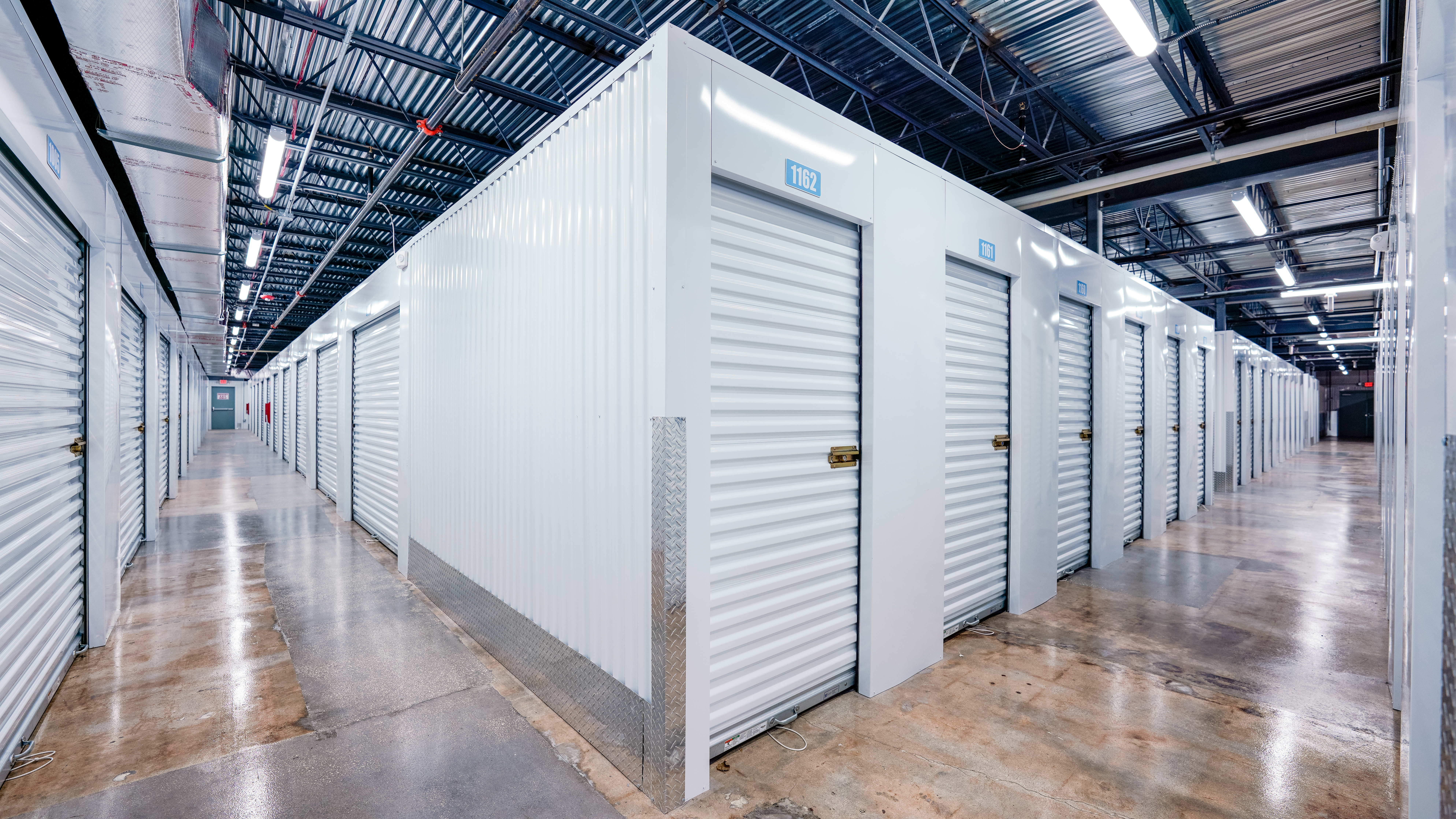
Self-storage offers a more flexible model. You can review current unit availability, choose an option that fits your present needs, and adjust your storage plan as your situation changes. Instead of pouring concrete or pulling a municipal permit, you can rent storage space for household goods, seasonal items, tools, furniture, or belongings that fit inside a rented unit.
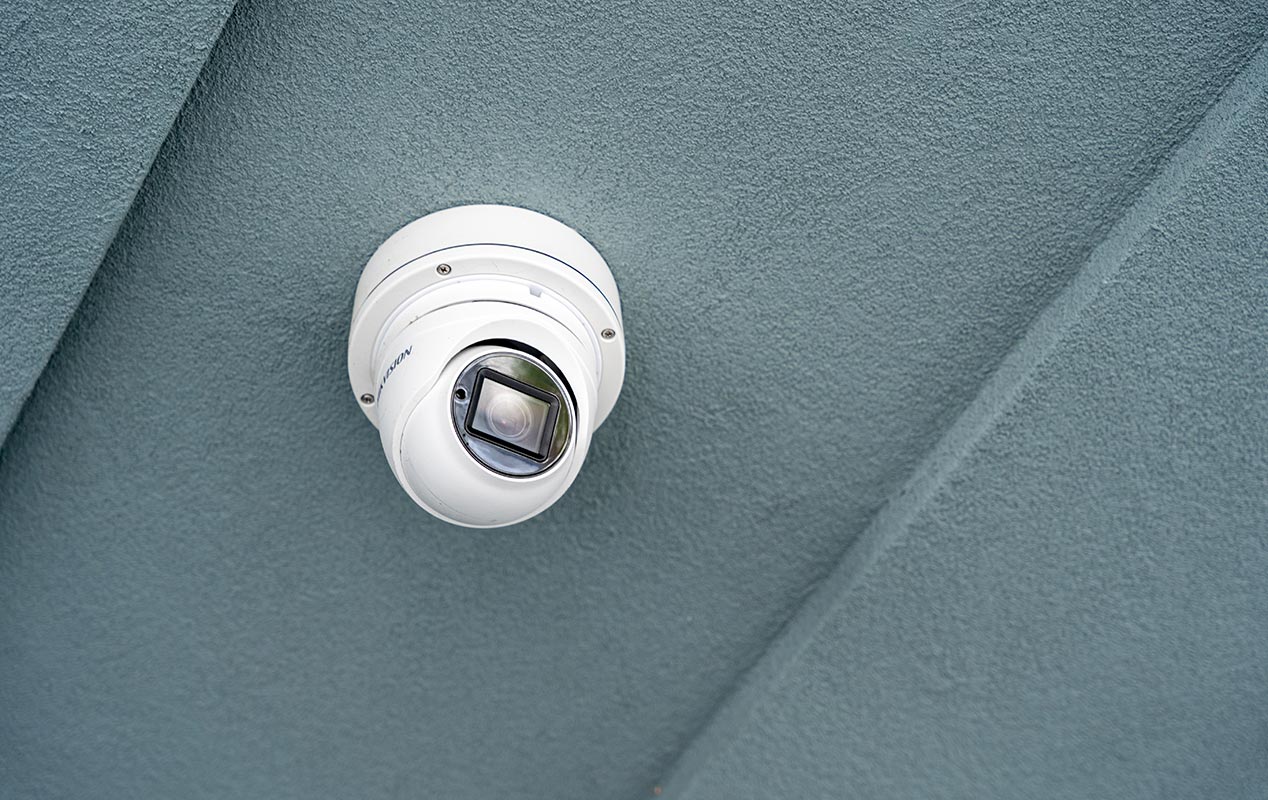
Furthermore, you gain practical security features. A residential backyard shed may be vulnerable to opportunistic theft, as standard padlocks can be bypassed. SecureSpace Self Storage Titusville offers an access gate, touchless computer-controlled access, digital video recording, logged access, and overnight surveillance to support a more controlled storage environment.
The decision to acquire extra space should not involve navigating a maze of municipal bureaucracy, risking avoidable environmental damage, or depleting your cash reserves on a major upfront construction project. A backyard shed is not just a purchase; it can become an ongoing liability that demands maintenance and may affect your property taxes.
By choosing a dedicated storage facility, you can store belongings away from Florida's intense humidity and termite threats while maintaining flexibility as your life changes. You gain a clean, climate-controlled extension of your home without the headaches of HOA approvals or the financial sting of hidden construction costs.
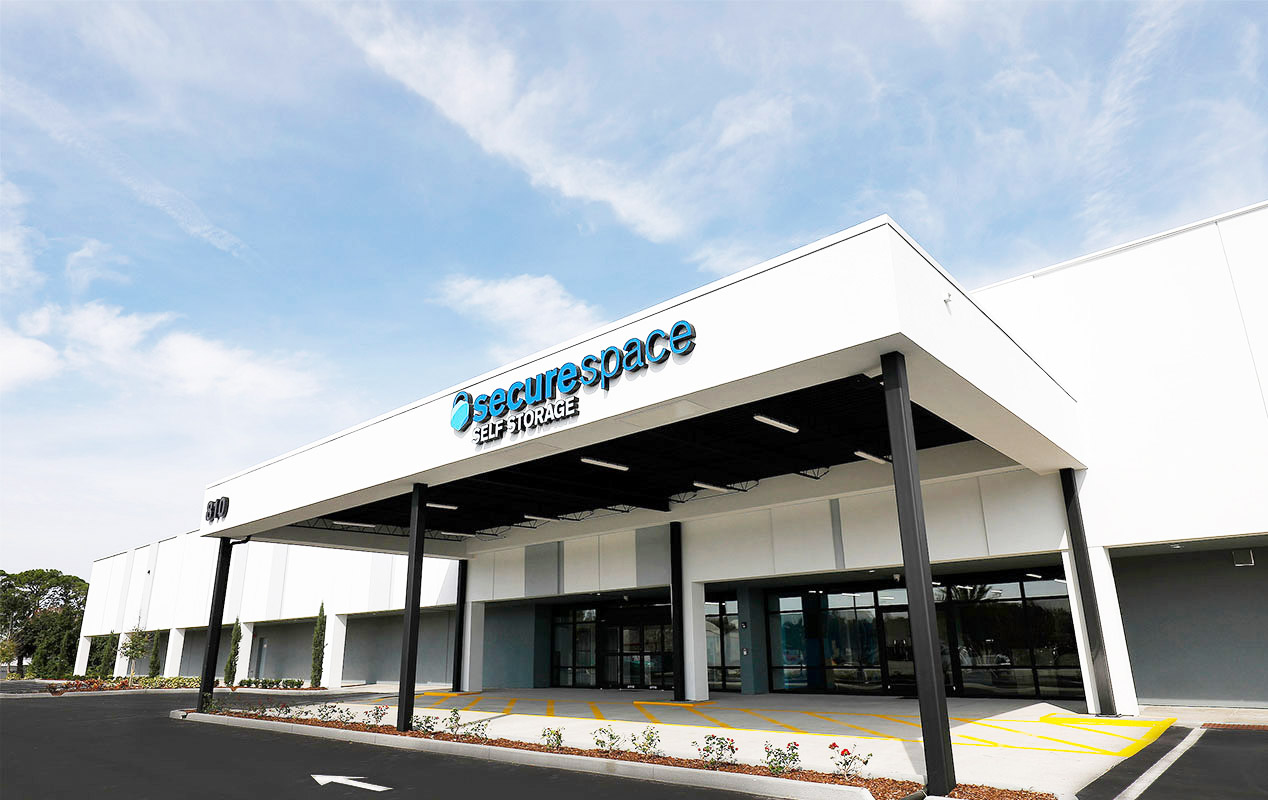
If you are ready to skip the installation fees and the stress of potential property tax changes, review your storage options today. Visit SecureSpace Self Storage at 810 Cheney Hwy in Titusville to view available climate-controlled units and reserve storage online.
Yes, many sheds require permitting. The City of Titusville and Brevard County may require a formal building permit for accessory structures that meet certain size or utility thresholds. Sheds may also need to comply with applicable Florida Building Code wind-load requirements, so homeowners should confirm current rules before purchasing or installing a shed.
It can. Building a permanent shed, especially one with a poured concrete foundation or utility connections, may affect your property's assessed value. While it may not dramatically increase your home's resale value, the added improvement can result in a higher property tax bill depending on the project and assessment.
Florida Statute 720.3045 limits how HOAs can regulate certain backyard storage installations or displays if they are entirely hidden from the view of the street or adjacent parcels. However, if your home backs up to a golf course, lake, common area, or another visible location, those protections may not apply in the same way. In those cases, you may still face architectural review requirements.
It depends on your needs, timeline, and property. A shed can require upfront costs for the structure, concrete slab, site preparation, permits, and ongoing maintenance. A storage unit avoids those construction steps and may provide climate-controlled storage, practical security features, and more flexibility for changing storage needs.
Everything you need to store your belongings securely, on your schedule.
Visit us online